US Clears $1.96 Billion Saudi Arms Deal Amid Rising Middle East Tensions
rdware Transfer to Riyadh US Clears 1 96 Billion Saudi - The United States government has officially sanctioned the transfer of military equipment valued at
Washington Approves Significant Military Hardware Transfer to Riyadh
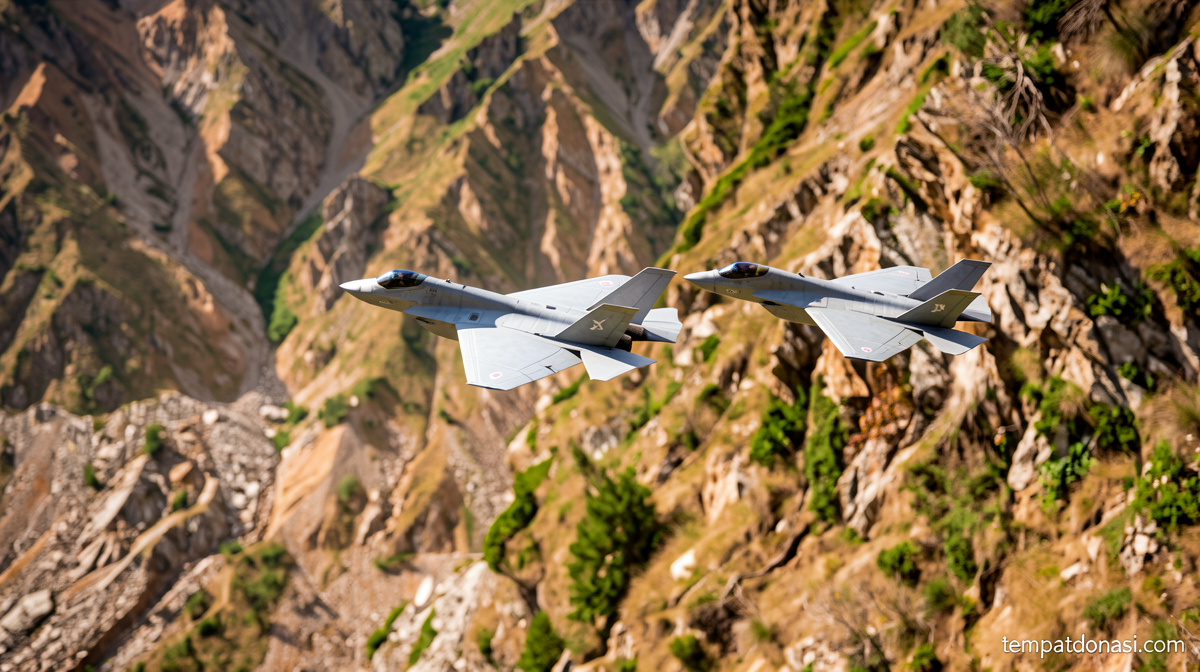
Tempatdonasi.com – The United States government has officially sanctioned the transfer of military equipment valued at approximately $1.96 billion to Saudi Arabia. This substantial financial commitment, equivalent to roughly Rp35 trillion in local currency, was confirmed by officials at the State Department on Wednesday, July 16. The primary objective behind this authorization is to bolster the Kingdom’s aerial defense mechanisms during a period of heightened instability across the Middle Eastern region. According to reports from Al Jazeera, this transaction falls under the Foreign Military Sales framework and arrives as various conflicts within the area continue to intensify. Notably, these tensions involve direct confrontations between Washington, Israel, and Tehran.
Details of the Weaponry Package
Information provided by TRT World indicates that the core of this shipment consists of up to twenty thousand Advanced Precision Kill Weapon Systems, commonly referred to as APKWS, accompanied by their respective warheads. A statement released by the US Navy highlights that the APKWS represents a cost-effective solution for neutralizing targets while significantly limiting collateral damage during engagements at close quarters. Beyond these precision munitions, the agreement covers the procurement of essential launchers, high-explosive warheads, rocket motors, and several other critical pieces of defense infrastructure. BAE Systems, headquartered in Nashua, New Jersey, has been identified as the lead contractor responsible for managing this complex logistical operation.
Strategic Objectives and Interoperability
Officials within the US Department of State emphasized that this specific weaponry package serves a dual purpose: improving Saudi capabilities against emerging dangers while simultaneously lowering reliance on costly Patriot missile systems. The administration noted that proxy groups operating in the vicinity have increasingly utilized unmanned aerial vehicles to threaten Saudi territory. By integrating these new precision weapons, Riyadh can respond more flexibly to such assaults. Furthermore, the department highlighted the importance of military coordination. As stated in their official communication:
“The proposed sale will enhance Saudi Arabia’s ability to counter current and future threats by strengthening its homeland defense, as well as interoperability with US forces and regional and NATO forces.”
Additionally, Washington reassured stakeholders that this influx of equipment would not compromise American military preparedness. They clarified that the transaction poses no negative impact on existing defense readiness levels. This assurance aims to quell any concerns regarding potential resource diversion from other global commitments.
Escalating Threats from the Houthi Movement
The timing of this approval coincides with growing security challenges faced by Saudi Arabia due to the Houthi faction in Yemen, which receives backing from Iran. On Monday, July 13, 2026, the Houthi group executed a missile strike targeting Abha Airport located in the southern part of the Kingdom. This incident followed closely after an airstrike damaged Sanaa Airport, causing a flight carrying a Houthi delegation to divert its course. The passengers aboard that aircraft had recently attended the funeral of Iran’s supreme leader. In response to the Sanaa incident, Houthi representatives placed blame squarely on Saudi Arabia for the aerial bombardment.
Abdul-Malik al-Houthi, the leader of the movement, issued a stern warning on Thursday regarding potential retaliatory measures. He declared that if Riyadh decides