
Iran Strikes US Bases in Oman, Syria, and Jordan
Iranian Military Forces Execute Coordinated Strikes Against American Installations Across Three Nations Iran Strikes US Bases in Oman - The Islamic
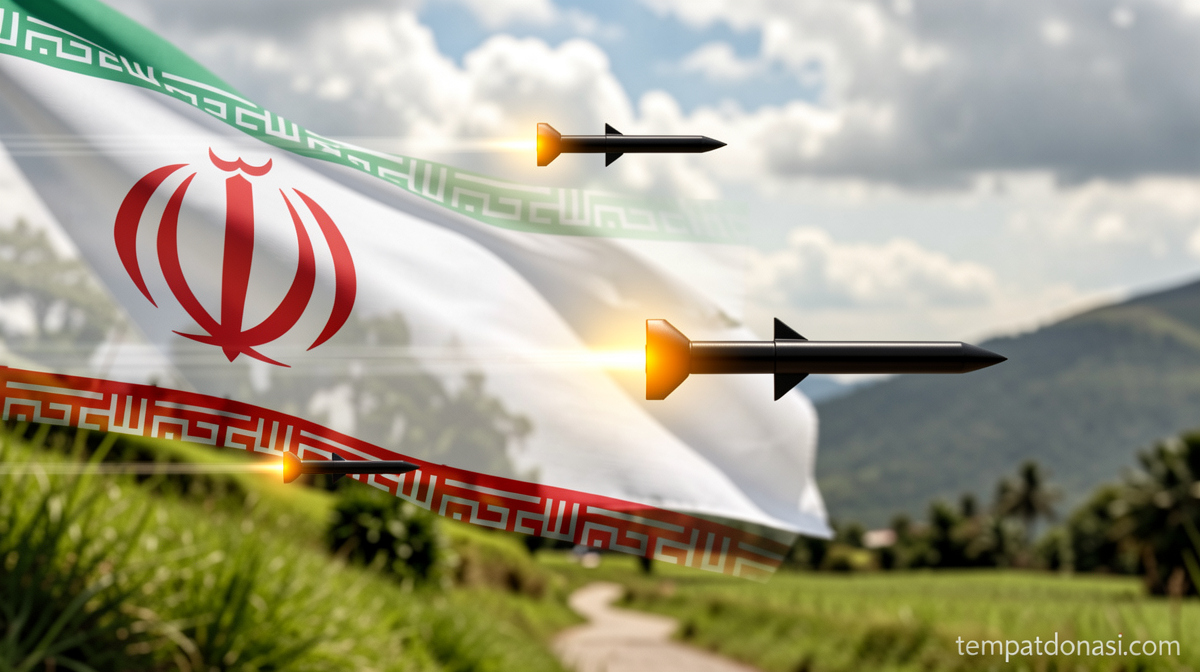
Iranian Military Forces Execute Coordinated Strikes Against American Installations Across Three Nations
Tempatdonasi.com – The Islamic Revolutionary Guard Corps (IRGC) made a significant announcement on Friday, July 17, revealing that Iranian military forces had successfully destroyed a United States surveillance radar positioned in Oman. This development marks another escalation in the ongoing tensions between the two nations, which had briefly de-escalated following diplomatic efforts earlier in the summer.
Naval Operations in Omani Waters
According to the IRGC statement, naval forces conducted precision strikes during the thirteenth wave of Operation Nasr-2. The operation targeted multiple facilities simultaneously, including a maritime surveillance radar located in the Salamah area and an additional US surveillance radar situated on Ghanam island in Oman. The coordinated nature of these attacks demonstrates Iran’s capability to execute complex military operations across different geographical locations.
“This morning, the IRGC naval forces targeted and destroyed a maritime surveillance radar in the Salamah area, as well as a US surveillance radar on the Ghanam island of Oman during the 13th wave of Operation Nasr-2,” the IRGC said in a statement as reported by Antara.
Surprise Attack on Syrian Command Center
Beyond Omani territory, the IRGC disclosed that it had launched an unexpected retaliatory assault against a US special operations command center positioned in the At Tanf region of southwestern Syria. This strike proved particularly devastating, resulting in the destruction of a US radar system alongside several special operations helicopters. Military personnel stationed at the facility were also casualties of the attack, though exact numbers were not specified in the initial report.
The IRGC emphasized that this operation served as direct retaliation for a previous US airstrike near the city of Iranshahr in southeastern Iran. That earlier American attack reportedly claimed the lives of at least seven Iranian personnel, comprising both career soldiers and conscripts. This causal relationship between the two events underscores the tit-for-tat nature of the current military confrontation.
Ballistic Missile and Drone Campaign in Jordan
Adding to the multi-front assault, Iran deployed both ballistic missiles and drones against American installations in Jordan. These attacks successfully destroyed several US refueling aircraft and fighter jets that had been stationed at facilities within the Jordanian territory. The use of diverse weaponry—ranging from precision missiles to unmanned aerial vehicles—demonstrates Iran’s comprehensive military capabilities and strategic depth in executing simultaneous operations.
Contextual Background and Recent Developments
The current wave of hostilities represents a significant reversal from diplomatic progress made earlier in the year. In mid-June, both the Iranian and US governments signed a memorandum of understanding (MoU) with the stated objective of ending the military conflict between the two nations. This agreement was widely viewed as a potential turning point in relations, offering hope for sustained de-escalation in the region.
However, the fragile peace proved short-lived. Since July 8, US forces have initiated a series of attacks against Iranian targets, marking a renewed phase of military engagement. US Central Command (CENTCOM) has publicly claimed that these American operations were conducted in response to Iranian actions targeting commercial vessels navigating through the strategically vital Strait of Hormuz. This maritime dispute has become a flashpoint for broader regional tensions.
In response to what Iran perceives as American aggression, Iranian forces have retaliated by launching multiple attacks on US bases throughout the Middle East. The geographic scope of these retaliatory strikes—spanning Oman, Syria, and Jordan—indicates that Iran is willing to engage American forces across multiple theaters simultaneously.
The situation remains fluid, with both nations positioning themselves for potential further escalation. The destruction of critical surveillance and operational infrastructure in three separate countries suggests that Iran is not merely conducting symbolic strikes but is actively working to degrade American military capabilities in the region. As both sides assess the situation, the international community watches closely to see whether diplomatic channels can be reopened or if the conflict will continue to expand.