Trump Vows to Hit Iran ‘Hard’ After First Exchange of Fire in Weeks
The fragile pause in hostilities between Washington and Tehran shattered on Sunday, August 30, when American forces struck two Iranian rocket launchers
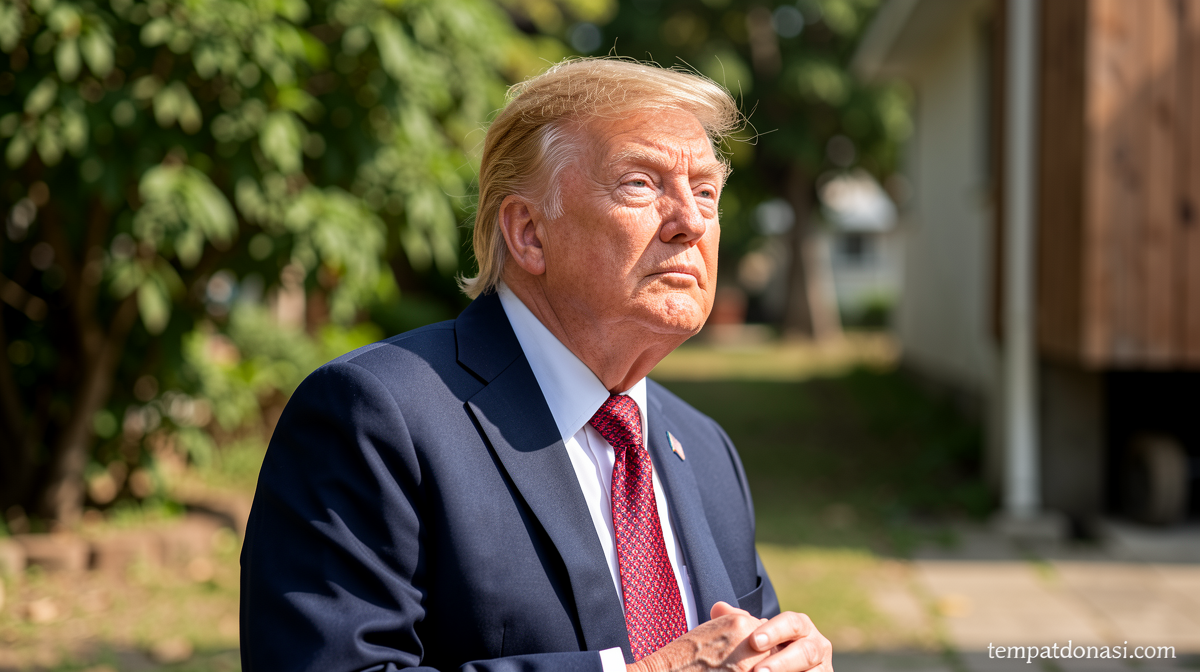
U.S.–Iran Tensions Spike After Weeks-Long Lull in Strait of Hormuz Fighting
Tempatdonasi.com – The fragile pause in hostilities between Washington and Tehran shattered on Sunday, August 30, when American forces struck two Iranian rocket launchers positioned on Larak Island, a small landmass sitting squarely inside the Strait of Hormuz. The blow marked the first direct exchange of fire between the two nations in over a month and immediately reignited fears that the conflict could spiral back toward full-scale confrontation.
U.S. officials explained that the launchers had been in the process of being loaded with rockets designed to carry naval mines into the narrow waterway — a move that would have threatened the flow of oil, gas, and other commodities through one of the world’s most critical maritime chokepoints. Before the current crisis, the strait carried roughly one-fifth of all seaborne energy shipments globally, making any disruption a matter of immediate concern for markets, shipping insurers, and governments dependent on Middle Eastern hydrocarbons.
Tehran’s Retaliatory Strikes
Iran answered the Larak Island strike within hours, firing ballistic missiles toward American military installations in Jordan and aiming at U.S.-linked assets inside the United Arab Emirates. Jordan announced it had intercepted the incoming projectiles, and the UAE confirmed it shot down an Iranian drone over its territorial waters. No casualties were reported on either side from the retaliatory salvo, though the episode underscored how quickly a localized incident can ripple across multiple national borders.
The Islamic Revolutionary Guard Corps (IRGC) later specified that its missiles had been aimed at the King Hussein and Al-Azraq air bases in Jordan, framing the strikes as proportional retaliation for what it called an unprovoked attack on Iranian soil. In a separate joint statement, Iran’s armed forces said Tehran honored the sovereignty of neighboring states but added that it would never accept aggression against its territory.
“Any further attack would trigger a much heavier response,” the statement warned, adding that the United States had “no choice but to leave the region.”
Iranian authorities also issued a broader caution: any country permitting its land, airspace, or infrastructure to be used as a platform for strikes against Tehran could itself become a target. The IRGC further challenged Washington’s assertion that the strait had been cleared for routine commercial passage, telling vessels that used routes it deemed unauthorized they might face consequences.
Trump Vows Escalation
President Donald Trump addressed reporters from the Oval Office on Monday, where he made clear he intended to press the advantage gained by the Larak strike.
“We’re going to hit them hard,” Trump told Fox News. “There will be a response.”
He simultaneously insisted the waterway was functioning well under American naval escort, claiming approximately thirty ships had transited each night under U.S. protection.
“We’re taking over. Many, many ships got through last night,” Trump said. “We’ve been averaging 30 ships a night.”
He described the strait as being in “extremely good shape,” a characterization Iran has publicly rejected. The administration had, in recent weeks, pivoted its strategy from kinetic operations toward economic pressure and expanded sanctions on Tehran, making the renewed shooting a notable reversal of that posture.
Trump’s Sharper Rhetoric on Iran’s Domestic Situation
Beyond the military dimension, Trump sharpened his public criticism of the Iranian government on Monday with a social-media post branding the country a “failed nation.” He alleged that Iran possessed “no Navy, no Air Force, no currency” and that its leadership was “in total disarray.” He also claimed more than 100,000 protesters had been killed during recent unrest inside Iran — a figure that has not been independently verified. Iranian officials have cited a substantially lower death toll and attributed the demonstrations to foreign-backed agitators.
Diplomatic Channels Remain Open
Despite the fresh hostilities, Iranian President Masoud Pezeshkian signaled on Monday that Tehran did not view a prolonged war as serving its national interest. Speaking by phone with Pakistani Prime Minister Shehbaz Sharif on the margins of a Shanghai Cooperation Organization summit in Kyrgyzstan, Pezeshkian said Iran remained prepared to implement a memorandum of understanding with Washington that Pakistan had previously helped broker.
The strait itself, however, continues to complicate any de-escalation. Iran and Oman have reached a verbal understanding on a temporary shipping corridor, but the arrangement has not yet restored the volume of normal commercial traffic that passed through before the conflict began.
Regional Mediation Proposals
Joey Hood, former U.S. ambassador to Tunisia, argued that neighboring states could play a constructive role in pulling both capitals back from the brink. He floated the idea of an Islamic naval coalition, led by Pakistan and Turkiye, to monitor the waterway and reassure Tehran that commercial shipping was peaceful rather than a cover for military activity.
“It’s going to require countries of the region getting together and finding those creative solutions that would allow both sides to save face and back away from this conflict,” Hood said, adding such an arrangement could give Tehran a way to step back “without saying that it gave up its rights to the strait.”
For now, the cycle of threat and counter-threat — Trump’s pledge to strike harder, Iran’s promise of a “much heavier” answer — leaves markets, shipping lanes, and regional governments watching closely to see whether the next few days bring another round of fire or a return to the uneasy quiet that had prevailed since late July.
Related Reading
Frequently Asked Questions
What is Trump Vows to Hit Iran Hard?
Trump Vows to Hit Iran Hard is the main topic of this guide. The article explains the context, practical details, and next steps readers should understand.
Why does Trump Vows to Hit Iran Hard matter?
Trump Vows to Hit Iran Hard matters because readers are looking for a useful answer, not just a short summary. Good content should match search intent and help them decide what to do next.