
Indonesia Launches Five Volumes of National History Book Series
The Indonesian government has released the first five volumes of an ambitious ten-part national history series, marking a major milestone in a project that
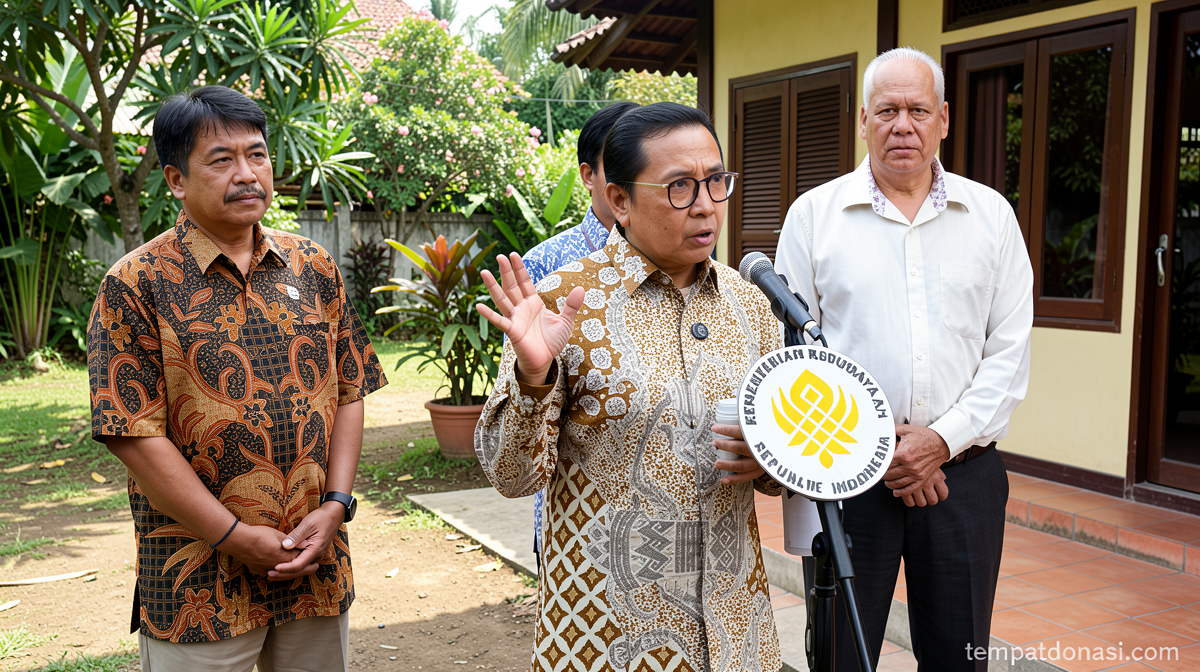
Indonesia Unveils Half of a Ten-Volume National History Project
Tempatdonasi.com – The Indonesian government has released the first five volumes of an ambitious ten-part national history series, marking a major milestone in a project that has drawn both scholarly attention and public debate since its inception. Titled Sejarah Indonesia: Dinamika Kebangsaan dalam Arus Global — translated as “Indonesia’s History: National Dynamics in the Global Current” — the work was commissioned at the outset of President Prabowo Subianto’s administration and represents one of the largest coordinated historiographic undertakings in the country’s recent history.
At the launch ceremony held in Jakarta and streamed by the Ministry of Culture on Monday, August 31, 2026, Culture Minister Fadli Zon confirmed that the writing phase had been finalized at the close of the previous calendar year, exactly on schedule. However, he acknowledged that completing the manuscript was only one step in a longer editorial pipeline.
“The text was completed at the end of last year, as scheduled. But it turns out that the text alone is not enough, we also need to proofread and edit the works,” Zon told attendees.
The ministry had originally announced the project in mid-December 2025, giving readers a brief preview before the full publication rollout. The five volumes now available span roughly 5,000 pages and trace the archipelago’s trajectory from its earliest civilizational foundations through the colonial period. The remaining five volumes, which will cover the independence struggle, the post-1945 republic, and the contemporary era, are expected to follow in a later phase.
Who Wrote the Books, and How
Zon emphasized that the Ministry of Culture functioned solely as a facilitator throughout the drafting process. All substantive decisions regarding methodology, narrative framing, and interpretive choices were delegated to the writing team itself. That team comprised 123 historians and specialists drawn from 34 universities and 11 independent research institutions across the country — a deliberately broad coalition intended to prevent any single academic faction from dominating the narrative.
The scope of the first five volumes breaks down as follows:
Volume One examines the civilization roots of the Indonesian archipelago, situating early societies within broader Southeast Asian and maritime networks. Volume Two turns to the long historical relationships between the islands and the civilizations of India and China, covering trade, religious transmission, and cultural exchange. Volume Three addresses contact with the Middle East and the gradual process of Islamization that reshaped the archipelago’s social fabric. Volume Four explores the earliest encounters with Western colonial powers during the sixteenth through eighteenth centuries. Volume Five covers the sweeping socio-political transformations from the eighteenth century into the early twentieth century, including the emergence of national consciousness among Indonesian intellectuals and activists.
Digital Access and Public Availability
The ministry made the digital editions of all five volumes freely downloadable from pustakabudaya.id, its official cultural-heritage portal. This open-access decision is notable: rather than restricting the text to libraries or institutional subscriptions, the government opted to place the full manuscript within reach of students, teachers, journalists, and general readers across the archipelago and abroad.
Controversy Over Narrative Framing
The project did not begin without friction. Drafting commenced in early 2025, and almost immediately, segments of the public and the academic community raised concerns about potential distortion of historical events — particularly those surrounding the presidency of Suharto and the turbulent transition into the Reform era of 1997–1998. Critics worried that a state-commissioned history might soften or omit episodes of authoritarian governance, mass violence, and economic crisis.
In response, Zon, a member of the Gerindra Party, offered a clarifying statement on June 6, 2025, explaining the editorial philosophy behind the series.
“During those periods, there are certainly strengths and weaknesses. We want to highlight the achievements, accomplishments, and events during their time,” he said.
That framing — foregrounding accomplishments while acknowledging limitations without dwelling on them — has since become the stated editorial principle for the entire ten-volume set. Whether readers and independent scholars will accept that balance remains an open question, particularly as the later volumes approach the most politically charged decades of the twentieth century.
Why the Project Matters
National history textbooks and state-sponsored historiographic projects have long carried outsized weight in Indonesia, where the archipelago’s 17,000-plus islands, hundreds of ethnic groups, and layered colonial past make a unified national narrative both politically desirable and intellectually fraught. Previous attempts to produce a single authoritative account of Indonesian history have been hampered by regional sensitivities, competing historiographic traditions, and the sheer scale of the subject matter. The Prabowo administration’s decision to commission a multi-volume, multi-institution effort — complete with a digital-first distribution model — signals an intent to settle, at least provisionally, the question of what the state considers its canonical historical narrative.
For educators, the availability of the first five volumes in open digital format means that classroom instruction on pre-colonial and colonial-era Indonesian history can now draw on a single, government-endorsed reference of considerable depth. For researchers, the involvement of 123 specialists from dozens of institutions offers a rare cross-section of current Indonesian historiographic thought, even as the project’s facilitator role invites scrutiny of how editorial decisions were ultimately arbitrated.
The second phase of the series, covering the independence era through the present day, will test whether the stated editorial balance can survive contact with the most contested chapters of the nation’s recent past.
Related Reading
Frequently Asked Questions
What is Indonesia Launches Five Volumes of National?
Indonesia Launches Five Volumes of National is the main topic of this guide. The article explains the context, practical details, and next steps readers should understand.
Why does Indonesia Launches Five Volumes of National matter?
Indonesia Launches Five Volumes of National matters because readers are looking for a useful answer, not just a short summary. Good content should match search intent and help them decide what to do next.