TAUD: 387 Arrested During Late August Protest in Jakarta
TAUD - A mirror seller named Bambang Setiawan, 59, was found dead after a mob assaulted him in the aftermath of a large-scale demonstration outside
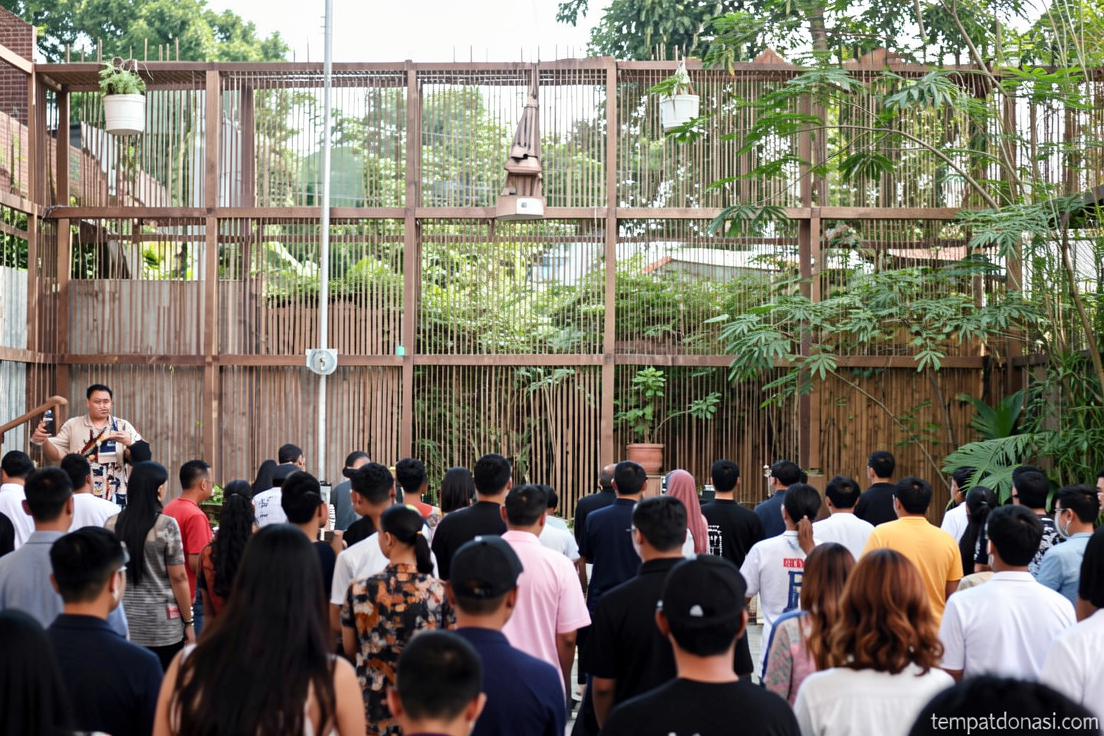
One Death, Hundreds Detained: Jakarta’s August 27 Protest Leaves a Trail of Injuries and Unanswered Questions
Tempatdonasi.com – TAUD – A mirror seller named Bambang Setiawan, 59, was found dead after a mob assaulted him in the aftermath of a large-scale demonstration outside Indonesia’s parliament complex on August 27, 2026. His death became the most visible casualty of a day that human-rights watchdogs say saw police deploy tear gas, conduct sweeping arrests, and effectively shut down public assembly across multiple routes in the capital. In total, 387 people were taken into custody during and around the protest, according to figures released by the Advocacy Team for Democracy (TAUD) and the Commission for the Disappeared and Victims of Violence (KontraS).
The Toll in Numbers
Dimas Bagus Arya, coordinator of KontraS, broke down the arrest figures at a press briefing held at the organization’s office in Central Jakarta on Monday, August 31, 2026. Of the 387 detainees, 64 were rounded up before the rally officially began at 10:00 a.m. local time on August 27 — some as early as the previous evening, August 26. The remaining 322 were seized during the demonstration itself, which drew crowds to the area surrounding the parliament complex.
“Consisting of 64 people arrested before the protest started on August 27, either on August 26 or before the rally kicked off at 10:00 a.m. local time on August 27, and 322 people were arrested during the protest,” Dimas said.
The organization’s monitoring team documented 22 individuals who sustained injuries during the day’s events. The catalogue of wounds included bruising, stab wounds, lacerations, cigarette burns, fractured bones, and thermal burns attributed to tear gas canisters discharged at close range. Bambang Setiawan’s death, which occurred after the main protest had dispersed, was linked to an assault by a group described as a “mysterious mob” that appeared once the demonstration had wound down.
Missing Persons and Detention
Beyond the confirmed arrest count, TAUD logged 11 separate reports of people who could not be located for more than 24 hours following the demonstrations. Friends, relatives, and family members filed those reports. After a verification process, all 11 were confirmed to be in the custody of the Jakarta Metro Police. Six had already been released by the time of the August 31 briefing; five remained detained.
KontraS noted that police operations extended well beyond the immediate protest site. Officers conducted sweeps along several rally routes, from buffer zones outward into surrounding neighborhoods of Jakarta, and erected blockades designed to prevent demonstrators from advancing. The organization characterized those measures as a deprivation of the right to express opinions in public and called on the police to release every person still held who had been subjected to violence or arbitrary detention.
“Also ensure recovery and non-repetition guarantees,” Dimas urged.
Police Response: 48 Suspects Named
The Jakarta Metro Police moved quickly to frame the post-protest unrest as a criminal matter. By the following day, Friday, August 28, 2026, the force had identified 48 suspects connected to a riot that erupted after the demonstration at the parliament complex. Those 48 were drawn from within the broader pool of 322 arrested during the protest itself. Chief Commissioner Iman Imanuddin, Director of General Crime Investigation at the Jakarta Metro Police, told reporters at a press conference that 315 of the detainees had already been questioned.
“At this time, the Jakarta Metro Police have questioned 315 people,” Iman Imanuddin stated.
The police sorted the arrested individuals into five investigative clusters: minors under the age of 18; general participants in the riot; those suspected of damaging public infrastructure or committing acts of physical violence; individuals believed to have carried sharp weapons; and a group identified as instigators and financiers behind the unrest. Investigators also opened a separate line of inquiry into persons suspected of exploiting children to carry out unlawful activities.
Context and Implications
The August 27 demonstration took place against a backdrop of sustained public pressure on the Indonesian government, with crowds converging on the parliament complex to voice grievances. The scale of the police response — including pre-emptive arrests the evening before the rally, mass sweeps along transit corridors, and the use of tear gas at close range — drew sharp criticism from civil-society organizations that monitor state conduct during public assembly. TAUD’s findings, presented jointly with KontraS, framed the day’s events not as isolated incidents of crowd disorder but as a coordinated pattern of excessive force, targeted sweeps, and mobilization of specific groups by law-enforcement officers.
The death of Bambang Setiawan, a small-scale vendor with no apparent political affiliation, underscored the human cost of what authorities described as post-protest rioting. His family and advocates have called for a transparent investigation into the circumstances of his killing and for accountability among those responsible. Meanwhile, the five remaining detainees identified through the missing-persons reports await formal charges or release, while the broader question of how many of the 387 arrested will face prosecution — and under what legal basis — remains unresolved as of the latest available reporting.
Related Reading
Frequently Asked Questions
What is TAUD?
TAUD is the main topic of this guide. The article explains the context, practical details, and next steps readers should understand.
Why does TAUD matter?
TAUD matters because readers are looking for a useful answer, not just a short summary. Good content should match search intent and help them decide what to do next.