
Jakarta Police Name 49 Suspects Over Parliament Protest Unrest
The aftermath of the August 27 demonstration outside Indonesia's legislative heart in Senayan, Jakarta, has moved from raw chaos into structured
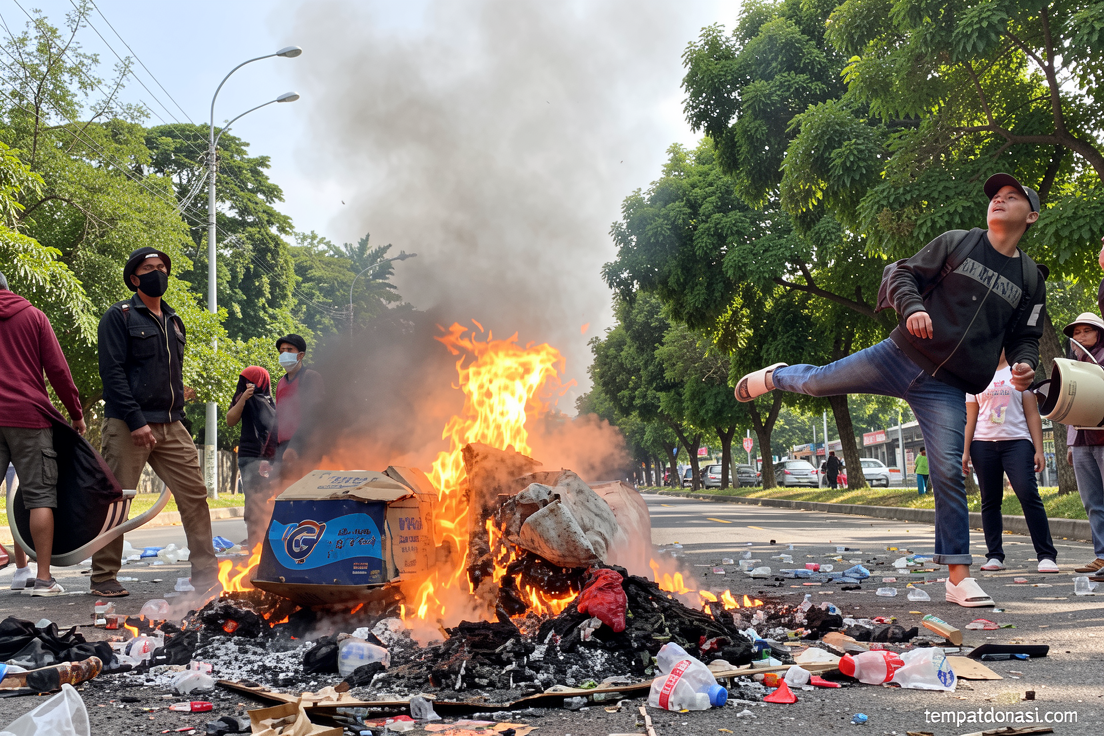
Forty-Nine Suspects Formalized After Senayan Parliament Complex Clashes
Tempatdonasi.com – The aftermath of the August 27 demonstration outside Indonesia’s legislative heart in Senayan, Jakarta, has moved from raw chaos into structured investigation. Jakarta Metro Police have now formally designated 49 individuals as suspects in connection with the unrest that erupted around the House of Representatives and People’s Consultative Assembly (DPR/MPR) compound — the seat of the nation’s parliament and its broader consultative body. The announcement, delivered by Senior Commissioner Budi Hermanto, spokesperson for the Jakarta Metro Police command, marks a significant escalation from earlier preliminary counts and signals that investigators have completed a round of verification across hundreds of detainees.
The DPR/MPR complex in Senayan sits at the symbolic and functional center of Indonesian legislative power. Protests gathering there routinely draw national attention because they place demonstrators directly in front of the chambers where lawmakers debate budgets, bills, and constitutional matters. When disorder breaks out in that precinct, police response tends to be swift and visible, and the subsequent accounting of detainees becomes a matter of public scrutiny.
Adults and Minors Split Across Separate Units
Of the 49 now formally charged as suspects, 44 are adults falling under the jurisdiction of the police’s general crimes division. The remaining five are minors — young people in conflict with the law — whose cases have been transferred to the specialized police unit that handles matters involving women, children, and juvenile offenders. This separation reflects Indonesian procedural norms requiring that minors be processed through distinct investigative and judicial channels, with added protections during questioning and detention.
From 322 Detainees to a Narrowed List
Budi Hermanto explained on Tuesday, September 1, that the 49 suspects were distilled from a pool of 322 people initially detained by officers during and immediately after the August 27 protest. The narrowing came after what he described as the latest round of verification and cross-checking of investigative data. The other 273 individuals were released following questioning and confirmation that they bore no direct involvement in the alleged disorder.
The spokesperson also corrected an earlier ambiguity in public reporting. Three individuals previously described as carrying bladed weapons during the unrest had, in some early accounts, appeared to be counted beyond the main suspect tally. Budi made clear that those three were already included within the 49 and were never a separate, additional cohort.
“The three were part of the 49 suspects and were not additional suspects counted separately,” Budi clarified.
Earlier in the investigation, police had publicly named 45 individuals as suspects following the clashes and alleged violence that accompanied the demonstration. The current figure of 49 therefore represents a modest upward revision as further evidence was consolidated.
Six-Group Classification of Detainees
On August 28, Senior Commissioner Iman Imannudin, director of the General Crimes division at Jakarta Metro Police, outlined how investigators had segmented the 322 detainees into six categories based on alleged roles, physical evidence, and witness testimony gathered at the scene.
The largest segment — 153 people under the age of 18 — was handed to the police unit responsible for women, children, and human-trafficking cases for continued inquiry. Within that cohort, Imannudin specified the following composition: 25 school dropouts, two children aged 12, one aged 13, three aged 14, 23 aged 15, 47 aged 16, 64 aged 17, and 10 who had just turned 18. Three of the 153 were girls. The presence of so many teenagers, some as young as 12, drew particular public attention and raised questions about how minors were drawn into a demonstration that turned confrontational.
A second group of 91 adults was classified by investigators as ordinary participants in the rioting — present at the scene and involved in general disorder but not singled out for specific acts of damage or assault.
The third group, numbering 71, comprised individuals allegedly implicated in damaging public facilities and committing acts of assault in the wake of the protest. At the time of Imannudin’s August 28 briefing, 45 of those 71 had already been elevated to suspect status.
A fourth, small group of three was identified as persons allegedly found in possession of bladed weapons during the unrest. All three were named suspects.
Investigators also flagged a fifth group they alleged functioned as instigators and financiers of the disorder, and a sixth group they said had recruited participants specifically to create chaos. As of the information made available, police had not publicly detailed the identities or the specific alleged conduct of individuals in those two upper-tier groups.
Implications and What Comes Next
The formalization of 49 suspects places the case squarely in the prosecutorial pipeline. Adults in the general crimes division will face standard criminal-justice proceedings, while the five minors will navigate a juvenile-justice track that emphasizes rehabilitation and parental involvement. The six-group framework suggests investigators are building layered charges — from general rioting to targeted property damage, assault, and potentially organized instigation — rather than treating the event as a single undifferentiated incident.
For Jakarta’s residents and for observers of Indonesian civic life, the episode underscores how quickly a parliamentary protest can transition from expression to confrontation, and how the subsequent police accounting becomes itself a matter of public interest. The transparency of the six-group breakdown, while still leaving the upper-tier categories unnamed, offers a partial window into how investigators are attempting to separate spontaneous disorder from more structured orchestration — a distinction that will shape both sentencing outcomes and public perception of the event’s character.
Related Reading
Frequently Asked Questions
What is Jakarta Police Name 49 Suspects Over?
Jakarta Police Name 49 Suspects Over is the main topic of this guide. The article explains the context, practical details, and next steps readers should understand.
Why does Jakarta Police Name 49 Suspects Over matter?
Jakarta Police Name 49 Suspects Over matters because readers are looking for a useful answer, not just a short summary. Good content should match search intent and help them decide what to do next.