
Indonesia Bids to Rejoin ICAO Council After 25-Year Absence
Jakarta's formal declaration of candidacy for a seat on the governing council of the world's principal aviation body marks a consequential diplomatic and
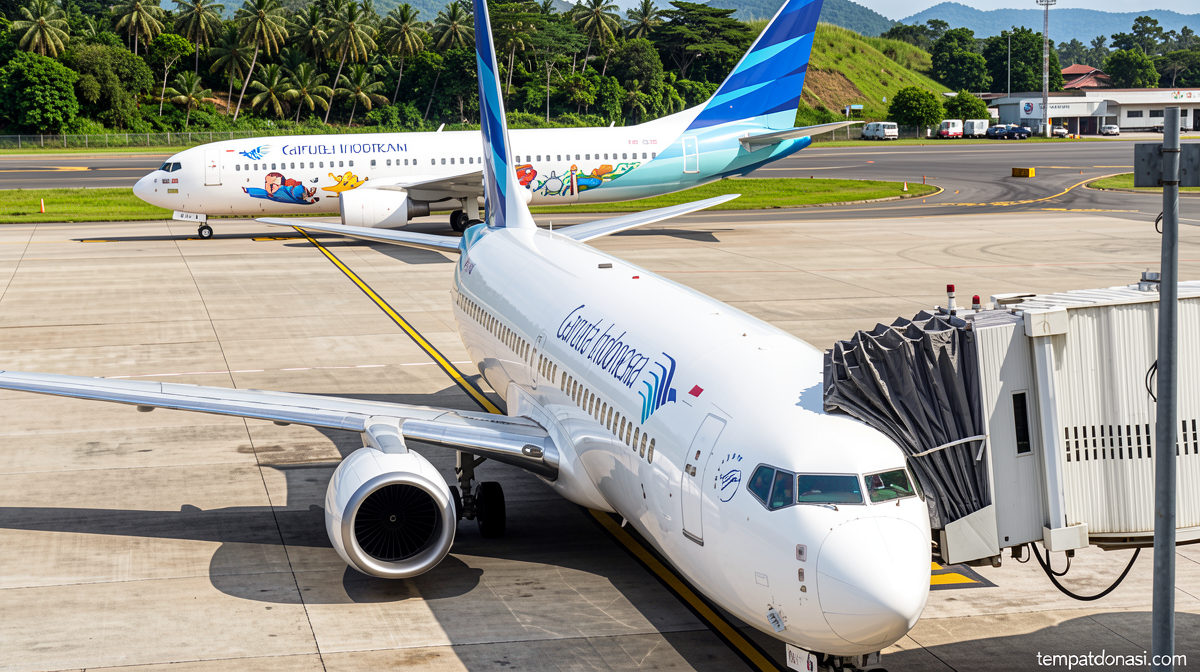
After a Quarter-Century Gap, Indonesia Seeks Return to ICAO Council
Tempatdonasi.com – Jakarta’s formal declaration of candidacy for a seat on the governing council of the world’s principal aviation body marks a consequential diplomatic and regulatory milestone. Having last occupied a council position in 2001, Indonesia is now positioning itself for re-entry following a recent structural expansion of that council’s membership. The move signals the country’s intent to reassert influence over the formulation of international civil aviation standards at a time when its own aviation sector has grown dramatically in scale and complexity.
A New Window Opens
The International Civil Aviation Organization recently enlarged its Council from 36 to 40 member states, creating four additional seats. Indonesia has formally declared its interest in one of those newly available positions. Lukman F. Laisa, Director General of Civil Aviation under the Transportation Ministry, confirmed the bid in Jakarta on Monday, framing it as a natural consequence of the council’s growth.
“With the increase in ICAO Council members from 36 to 40, an opportunity has opened for Indonesia to once again play a role and contribute to shaping the direction of international civil aviation policy,” Laisa said.
Laisa emphasized that the candidacy is underpinned by both Indonesia’s substantial interests in the aviation sector and its demonstrated operational capacity. The argument, in essence, is that a nation of Indonesia’s size and geographic significance should not be absent from the deliberative core of the organization that governs global air transport rules.
Scale and Strategic Weight
The factual basis for the bid rests heavily on the sheer magnitude of Indonesia’s aviation operations. As an archipelago spanning more than 17,000 islands and home to over 240 million people, the country commands one of the most intricate airspace environments anywhere in the world. Its geographic position at the crossroads of major flight corridors linking Asia, Oceania, and Africa confers a strategic role in global air-traffic networks that few other nations can match.
The operational footprint is considerable. Indonesia currently maintains 257 airports that serve 297 domestic routes and 160 international routes. Fourteen domestic carriers and 59 foreign airlines operate within its airspace. In the first half of 2026, the sector moved approximately 24.9 million domestic passengers and 18.5 million international passengers. Those figures underscore the depth of Indonesia’s stake in how international aviation rules evolve and the practical experience it can contribute to global policy discussions.
A Proven Contributor
Beyond raw operational scale, Indonesia points to a long history of active participation in the international aviation community. Through the Indonesia-ICAO Developing Country Training Program, the nation has delivered capacity-building training to more than 80 ICAO member states, helping build institutional competence in aviation administration across the developing world. Indonesian officials also maintain ongoing involvement in ICAO working groups focused on aviation human-resource development and sustainable aviation issues.
Laisa outlined the policy priorities Indonesia would advance should it secure a council seat: strengthening aviation safety and security standards, expanding human-resource development programs, extending technical assistance to partner nations, championing sustainable aviation practices, and deepening regional cooperation across the Asia-Pacific. Each of these priorities aligns with existing ICAO work programmes, suggesting that an Indonesian council member would operate within established institutional frameworks rather than seeking to redirect them.
Procedural Timeline
The candidacy will be put before delegates at the 43rd Extraordinary Session of the ICAO Assembly, convened specifically to elect the four additional council members created by the expansion. The session is scheduled for November 19–20, 2026, at ICAO Headquarters in Montreal, Canada. Election at that session would restore Indonesia to the council after an absence of roughly 25 years.
Historical Context and Institutional Background
Indonesia has been an ICAO member since 1950, shortly after the organization was established. Between 1962 and 2001, the country served on the ICAO Council for twelve consecutive terms — a span of nearly four decades of continuous participation before its current absence. That long prior record provides institutional memory and procedural familiarity that a returning member would bring to council deliberations.
The ICAO itself is a specialized agency of the United Nations, founded in 1944 to administer the Chicago Convention and establish standards and recommended practices for international civil aviation. Council members help set the organization’s budget, approve its work programme, and oversee the development of international aviation standards that govern everything from airworthiness requirements to airspace management and environmental performance. A seat on that council therefore carries substantial normative weight in shaping how 193 member states regulate their skies.
For Indonesia, the bid represents more than a diplomatic gesture. It is a practical assertion that one of Southeast Asia’s largest aviation sectors — with its archipelagic logistics challenges, its dense domestic route network, and its growing international passenger flows — warrants a direct voice at the table where global aviation policy is formulated. The coming vote in Montreal will determine whether that voice is restored.
Related Reading
Frequently Asked Questions
What is Indonesia Bids to Rejoin ICAO Council?
Indonesia Bids to Rejoin ICAO Council is the main topic of this guide. The article explains the context, practical details, and next steps readers should understand.
Why does Indonesia Bids to Rejoin ICAO Council matter?
Indonesia Bids to Rejoin ICAO Council matters because readers are looking for a useful answer, not just a short summary. Good content should match search intent and help them decide what to do next.