
Indonesia Steps Up Forest Fire Response as September Becomes ‘Battleground’
Jakarta — With seasonal rains stalled and smoke blanketing parts of Borneo and Sumatra, Indonesia's forestry authorities have escalated every available
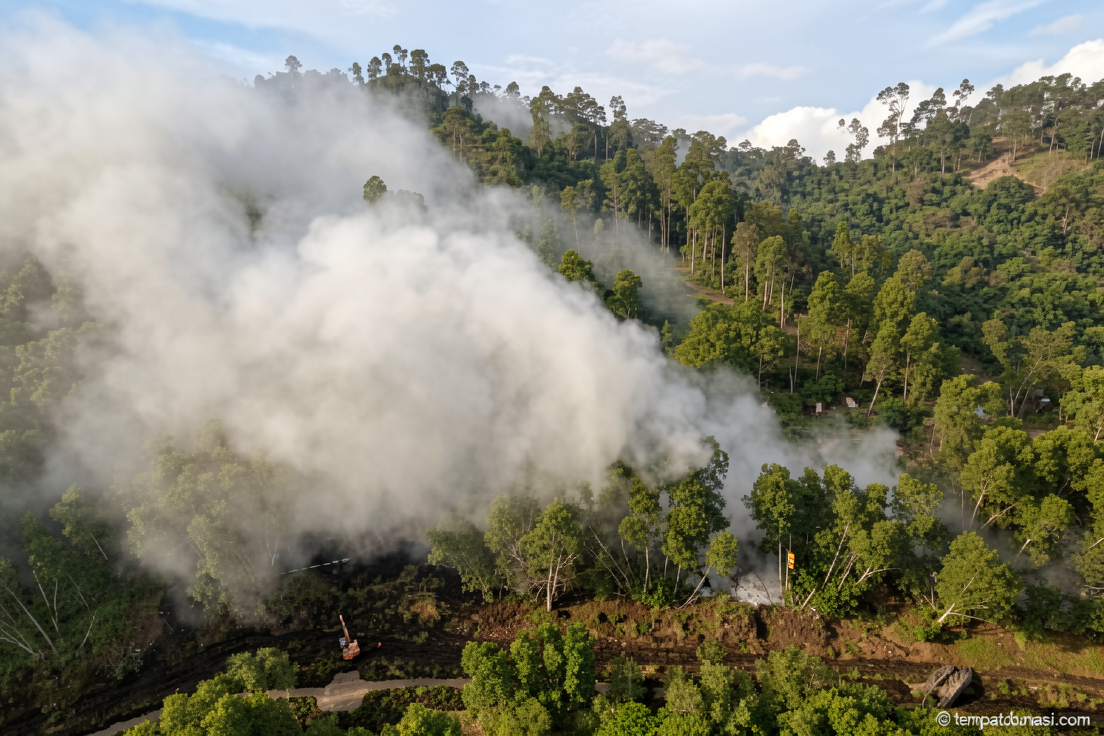
Indonesia Mobilizes Full-Spectrum Fire Suppression as September 2026 Becomes Critical Window
Tempatdonasi.com – Jakarta — With seasonal rains stalled and smoke blanketing parts of Borneo and Sumatra, Indonesia’s forestry authorities have escalated every available suppression tool into a coordinated national operation for the month of September 2026. The move comes after months of accumulating burn damage pushed the country’s fire statistics to levels that officials now describe as urgent.
Forestry Minister Raja Juli Antoni framed the coming weeks in stark operational terms, telling reporters in a Monday statement that the month ahead represents the single most consequential stretch of the annual fire season. His remarks followed updated outlooks from the Meteorology, Climatology and Geophysics Agency (BMKG), which project that dependable natural rainfall will not resume over the archipelago’s fire-prone zones before early October.
“September is our battleground,” Raja Juli said.
Layered Suppression Strategy
The ministry’s intensified playbook operates on three simultaneous fronts. At the atmospheric level, cloud-seeding missions — formally termed weather modification operations — will be flown whenever upper-air moisture profiles permit, injecting hygroscopic particles into developing cumulus to coax precipitation directly over active fire zones. Officials stress that the technique’s efficacy is entirely contingent on suitable atmospheric conditions; without adequate cloud cover and humidity gradients, seeding sorties cannot proceed.
Beneath the aircraft, aerial water-bombing sorties will continue to blanket hotspots that are inaccessible to ground crews, particularly in peat-dominated lowlands where subsurface smoldering can persist for weeks after surface flames are knocked down. On the ground itself, the ministry is injecting roughly 1,000 extra personnel into existing firefighting formations. The additional hands are intended to rotate frontline crews on structured daily schedules, preventing the fatigue that typically degrades response quality in the final weeks of a prolonged dry season, while also covering essential field logistics such as fuel resupply, equipment maintenance, and perimeter monitoring.
“Ground task forces must be deployed as optimally as possible in areas with high numbers of hotspots, supported by structured daily rotations,” Raja Juli said, adding that the supplemental personnel would manage critical field logistics.
Scale of the Damage
The urgency behind the escalation is underscored by burn-area data compiled through late August 2026. Nationwide, nearly 286,000 hectares of forest, peatland, and agricultural terrain have been consumed since January — a figure that dwarfs the typical annual average in non-El Niño years. The National Disaster Management Agency (BNPB) tallied more than 48,889 hectares of confirmed scorching across six provinces designated as priority intervention zones, where peat depth and fuel loads make fires especially difficult to extinguish once they gain depth.
The ministry’s own SIPONGI (Sistem Informasi Pengendalian Kebakaran Hutan dan Lahan) monitoring platform, which fuses satellite thermal signatures with ground-truth reports, logged more than 1,200 simultaneously active hotspots at peak intensity across Kalimantan and Sumatra during the worst stretch of the dry spell. Sustained hotspot counts above that threshold historically correlate with multi-day smoke events that degrade air quality across the region, including neighboring Malaysia and Singapore.
Drivers: El Niño and Illegal Land Clearing
Two forces have converged to produce the current crisis. The first is climatic: a prolonged El Niño episode has suppressed convective rainfall over maritime Southeast Asia, extending the dry season well beyond its climatological norm and leaving peat soils desiccated to depths where oxygen reaches subsurface fuel layers. The second is anthropogenic: illegal slash-and-burn clearing — often conducted by smallholders or contractors without permits — continues to ignite surface fires that, in peat terrain, descend below ground level and become extraordinarily costly to suppress.
Indonesia’s experience with large-scale haze events, most memorably the 1997 and 2015 episodes that blanketed the region for weeks, has driven successive governments to invest in early-warning satellite networks, rapid-response task forces, and inter-agency coordination protocols. The SIPONGI system and the BNPB’s provincial fire-task-force model are products of that institutional learning. Yet the recurring reliance on weather modification as a last-resort lever underscores how difficult it remains to keep pace with ignition rates during extreme dry spells.
What Comes Next
With BMKG’s forecast holding rainfall at bay through at least the first week of October, the ministry’s September operation effectively extends the peak-season response by an additional month. Success will depend on sustained aerial sortie capacity, adequate fuel and water logistics for ground units, and — critically — enforcement action against unpermitted burning in the provinces where hotspot density remains highest. Until rains return, every hectare saved this month reduces the fuel load that would otherwise carry fires into October and beyond.
Related Reading
Frequently Asked Questions
What is Indonesia Steps Up Forest Fire Response?
Indonesia Steps Up Forest Fire Response is the main topic of this guide. The article explains the context, practical details, and next steps readers should understand.
Why does Indonesia Steps Up Forest Fire Response matter?
Indonesia Steps Up Forest Fire Response matters because readers are looking for a useful answer, not just a short summary. Good content should match search intent and help them decide what to do next.