Indonesia’s Budi Gunadi Sadikin Says Prabowo Backed His WHO Chief Bid
The race to lead the World Health Organization has taken on a new dimension as Indonesia's Health Minister Budi Gunadi Sadikin confirmed that President
Indonesia Pushes for a Seat at the Top Table of Global Health Governance
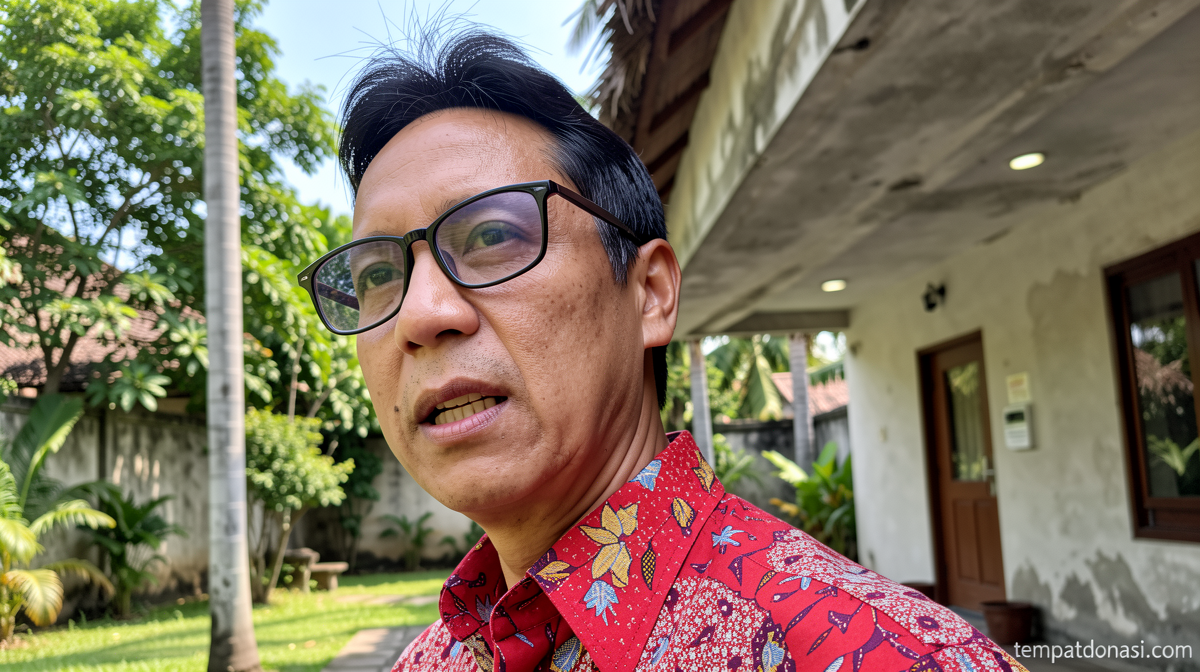
Tempatdonasi.com – The race to lead the World Health Organization has taken on a new dimension as Indonesia’s Health Minister Budi Gunadi Sadikin confirmed that President Prabowo Subianto personally encouraged him to enter the contest for the agency’s director-general post. Speaking to reporters in Jakarta on Monday, August 31, 2026, Sadikin framed his candidacy not as a personal ambition but as a national assignment rooted in what he described as a long-standing gap in Indonesia’s representation at the highest levels of multilateral institutions.
“The president pointed out that we are a large country but have never had a representative in a top position at a UN agency. Seeing this opportunity, he asked me to step forward.”
The remark underscores a broader strategic calculation in Jakarta: with a population exceeding 280 million and a growing role in regional diplomacy, Indonesia has historically occupied middle-management positions within UN bodies without ever placing one of its own at the helm. Sadikin’s bid, if successful, would mark the first time an Indonesian holds the director-general chair of a principal UN agency, a milestone the government appears keen to claim.
A Mandate to Amplify the Global South
Beyond the symbolic weight of national representation, Sadikin outlined a substantive policy agenda tied to his candidacy. He said Prabowo had specifically tasked him with ensuring that developing nations gain louder voices in shaping global health policy, from pandemic preparedness to vaccine equity and primary-care financing. The minister argued that the sheer demographic weight of the Global South makes its absence from leadership roles at institutions like the WHO a structural imbalance that distorts priorities.
“Therefore, there must be a representative from the Global South leading global institutions, such as the WHO.”
That framing positions the election not merely as a technical selection of an administrator but as a question of whose health priorities dominate the organization’s agenda. For countries across Africa, South Asia, and Southeast Asia, the argument carries particular resonance: decades of underfunded health systems, uneven access to essential medicines, and limited say in setting research agendas have fueled calls for a leadership that treats equity as a design principle rather than an afterthought.
The Field and the Process
The WHO’s official website lists four candidates currently in contention, each nominated by their respective governments. Alongside Sadikin, the slate includes Hans Henri P. Kluge of Belgium, a veteran of the agency’s European regional office; Hanan Balkhy of Saudi Arabia, who has served in senior roles within the WHO’s Eastern Mediterranean region; and Hanan Mohammed Al-Kuwari of Qatar, a physician and public-health administrator. The election will proceed through two further stages before the candidate pool is trimmed to three finalists, after which member states will vote in the World Health Assembly to select the next director-general.
Sadikin acknowledged that the timeline would be protracted, a reality that tempers any expectation of a swift outcome. The process, governed by WHO’s constitution and internal rules, typically spans several months and involves regional consultations, candidate interviews, and ultimately a majority vote among the 194 member states.
What Comes After Tedros
The outgoing director-general, Tedros Adhanom Ghebreyesus, is completing his second and final term, which runs from 2022 through 2027. An Ethiopian national who previously served as both foreign minister and health minister in Addis Ababa, Tedros became the first person from Africa to head the WHO when he assumed office in 2017. His tenure has been defined by the global response to the SARS-CoV-2 pandemic, the push for pandemic-treaty negotiations, and ongoing debates over the agency’s independence from donor influence.
The transition from Tedros to a successor will carry particular weight given the organization’s expanded mandate in the post-pandemic era. Questions of pandemic surveillance, antimicrobial-resistance strategy, mental-health funding, and the financing architecture of global health security will all shape the incoming leader’s first agenda. For developing-country advocates, the identity of that leader is therefore not a peripheral diplomatic detail but a determinant of whether their populations remain at the margins of decision-making.
Why This Bid Matters Beyond Jakarta
Indonesia’s entry into the race also signals a shift in how middle-power states approach multilateral leadership contests. Where such bids were once rare outside the traditional Western donor bloc, the current field — spanning Southeast Asia, Western Europe, and the Gulf — reflects a more pluralistic contest for institutional authority. Sadikin’s explicit invocation of presidential backing further illustrates how domestic political capital is being mobilized to project influence in global governance, a pattern likely to recur as other large developing economies eye comparable posts in the coming decade.
Whether the bid ultimately succeeds or fails, its announcement has already reframed the conversation around WHO leadership from a narrow administrative question into a broader debate about who gets to set the terms of global health policy. That debate, Sadikin made clear, is one he intends to carry into every stage of the election process.
Related Reading
Frequently Asked Questions
What is Indonesia s Budi Gunadi Sadikin Says?
Indonesia s Budi Gunadi Sadikin Says is the main topic of this guide. The article explains the context, practical details, and next steps readers should understand.
Why does Indonesia s Budi Gunadi Sadikin Says matter?
Indonesia s Budi Gunadi Sadikin Says matters because readers are looking for a useful answer, not just a short summary. Good content should match search intent and help them decide what to do next.