Why South Korea Awaits Indonesia’s Nickel Battery Incentives
Indonesia's vast nickel deposits have long made the archipelago a magnet for mining investment, but a new dimension is emerging: the country's role as a
Indonesia’s Nickel Reserves Put the Country at the Center of South Korea’s EV Battery Strategy
Tempatdonasi.com – Indonesia’s vast nickel deposits have long made the archipelago a magnet for mining investment, but a new dimension is emerging: the country’s role as a potential hub for nickel-based battery technology in electric vehicles. South Korean diplomats are now openly signaling that Seoul wants Jakarta to shape regulatory frameworks and incentive packages that would accelerate the adoption of nickel chemistry in the EV sector — a move that would deepen an already substantial bilateral industrial partnership.
Diplomatic Channels Open for Battery Policy Dialogue
Uhm Taeho, who serves as Political Section Chief and Counselor at the South Korean Embassy in Jakarta, confirmed that formal discussions between the two governments are underway regarding how nickel-based batteries might be integrated into Indonesia’s growing EV infrastructure. Speaking at a workshop organized under the Indonesian Next Generation Journalist Network on Korea (IKJN) on August 26, 2026, Taeho framed the conversation not as a one-sided ask but as a mutually beneficial policy alignment.
“Incentives and regulatory facilitation for nickel-based batteries will also benefit Indonesia,” Taeho said.
The remarks came during a panel hosted by the Foreign Policy Community of Indonesia (FPCI) in partnership with the Korea Foundation, a venue that regularly brings together Indonesian analysts, journalists, and foreign diplomats to examine bilateral policy questions. Taeho used the platform to explain why Seoul views nickel chemistry as strategically important for the next generation of EV powertrains.
The Environmental Case — and the Cost Caveat
Nickel-based battery architectures offer distinct advantages over lithium-ion alternatives in certain applications. They are comparatively straightforward to recycle at end-of-life, reducing the environmental burden associated with battery disposal. Their manufacturing footprint also tends to be lighter in terms of rare-earth dependency, a consideration that resonates with Indonesia’s own push to position itself as a cleaner-energy supplier rather than merely a raw-material exporter.
Taeho was candid, however, about the technology’s current limitation: nickel-based cells carry a higher unit cost than established lithium alternatives. His argument was that this gap is not a permanent technological ceiling but a market-price distortion that targeted government intervention — subsidies, tax credits, procurement mandates, or streamlined permitting — could compress over time. In other words, the cost disadvantage is a policy problem, not a physics problem, and both governments are treating it as such.
Hyundai as the Proof-of-Concept
The most visible expression of the Indonesia–South Korea EV partnership is Hyundai Motor’s multi-billion-dollar footprint in West Java. The Korean automaker is constructing vehicle-assembly facilities in the Cikarang industrial corridor while simultaneously building out a battery supply chain in collaboration with LG, its long-standing Korean battery partner. Local hiring and workforce training programs run alongside the construction, a deliberate strategy to embed the operation in the domestic economy rather than treating Indonesia as a mere export platform.
Taeho pointed to this layered investment as evidence of what he called mutualism: each side gains something the other cannot easily replicate. Indonesia receives manufacturing jobs, technology transfer, and downstream industrial capacity; South Korea secures proximity to a critical mineral supply and a large emerging consumer market.
“This truly demonstrates how comprehensive our partnership is. They see potential for collaboration in Indonesia,” Taeho said.
Nickel Smelting at Scale: EcoPro’s Multi-Billion Commitment
The battery conversation does not exist in a vacuum. It sits atop a broader Korean industrial presence in Indonesia’s nickel sector. EcoPro, a Korean firm, has committed more than US$1 billion to developing nickel smelting capacity on the island. That investment converts raw ore into intermediate products that can feed downstream battery-material processing, shortening the supply chain and reducing dependence on third-country intermediaries.
For Jakarta, the implication is straightforward: the country that controls the nickel ore increasingly controls the value-added steps that follow. Pairing that control with battery-manufacturing capability — the kind Hyundai and LG are assembling in Cikarang — positions Indonesia to capture a larger slice of the EV value chain rather than remaining locked into commodity exports.
A Decade of Sectoral Evolution
Mina Ryu, Director of Southeast Asia Division 1 at the South Korean Ministry of Foreign Affairs, addressed the same IKJN agenda and placed the current EV moment inside a longer arc of Korean investment in Indonesia. She traced a clear trajectory: early Korean capital entered through textiles, then migrated into electronics assembly, steel, petrochemicals, and biotechnology. The newest chapter is electric mobility and its enabling battery infrastructure.
“Contributing to the development of an integrated EV ecosystem,” Ryu said, describing the current phase of bilateral economic cooperation.
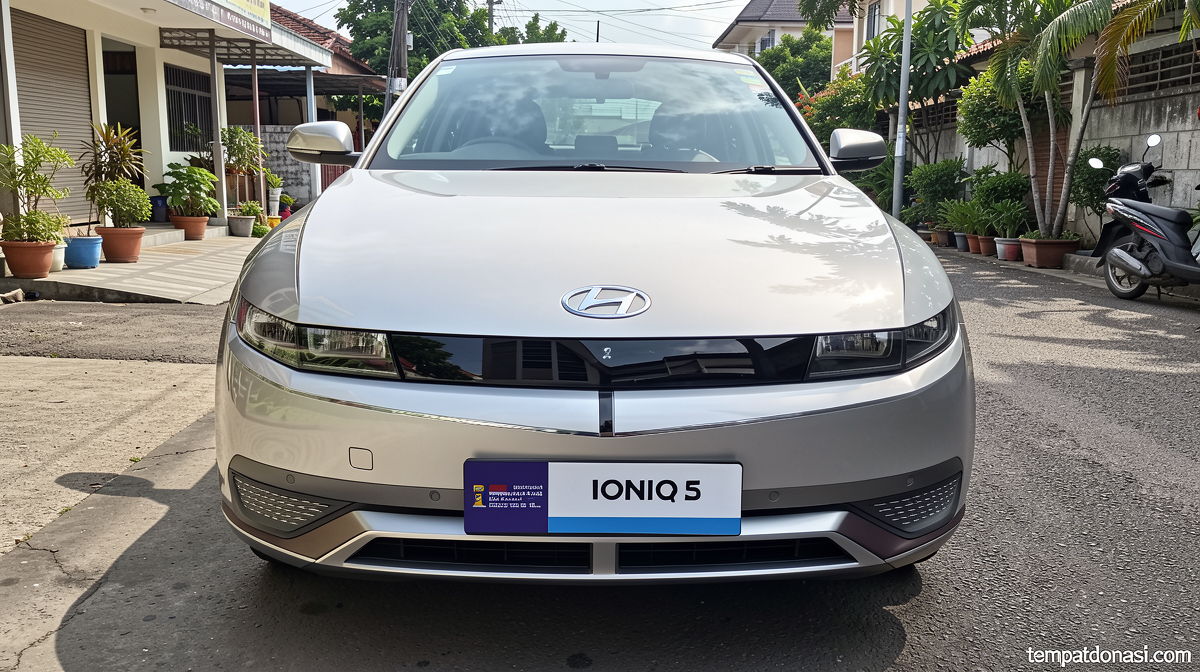
Ryu highlighted the Hyundai IONIQ 5 as the symbolic milestone: the first EV produced locally within Indonesia by a Korean group. Its launch is paired with the construction of battery-cell production facilities, meaning the country will not merely assemble finished vehicles but will manufacture the most expensive component in-house.
Scale of the Commitment
The numbers underscore the seriousness of the industrial bet. Hyundai Motor Group has committed up to US$3 billion toward building what it describes as an integrated electric fleet ecosystem in Indonesia — a phrase encompassing vehicle assembly, battery production, charging infrastructure, and after-sales service networks. Within that envelope, Hyundai Motor Manufacturing Indonesia (HMMI) has allocated approximately US$1.55 billion specifically to vehicle-manufacturing operations in the Delta Mas industrial zone at Cikarang, West Java.
These figures place Indonesia among the top destinations for Korean automotive capital globally and signal that Seoul views the archipelago not as a peripheral assembly point but as a core node in its EV supply architecture.
What Comes Next
The regulatory discussions Taeho referenced remain in an early stage. No specific incentive package has been announced, and the technical specifications of any future nickel-battery mandate or subsidy scheme have not been published. What is clear is the direction of travel: both governments see a window in which policy design can tilt the cost curve in favor of nickel chemistry before competing technologies lock in market dominance. For Indonesia, the stakes extend beyond one battery chemistry. They concern whether the country can convert its mineral wealth into durable industrial capability — or whether the value will continue to accrue downstream, in factories located elsewhere.
Related Reading
Frequently Asked Questions
What is Why South Korea Awaits Indonesia s Nickel?
Why South Korea Awaits Indonesia s Nickel is the main topic of this guide. The article explains the context, practical details, and next steps readers should understand.
Why does Why South Korea Awaits Indonesia s Nickel matter?
Why South Korea Awaits Indonesia s Nickel matters because readers are looking for a useful answer, not just a short summary. Good content should match search intent and help them decide what to do next.