
Garuda Indonesia Flight Lands Safely After Tire Blowout
A Boeing 737-800 operated by Garuda Indonesia touched down without incident at Sultan Hasanuddin International Airport in South Sulawesi on Thursday morning
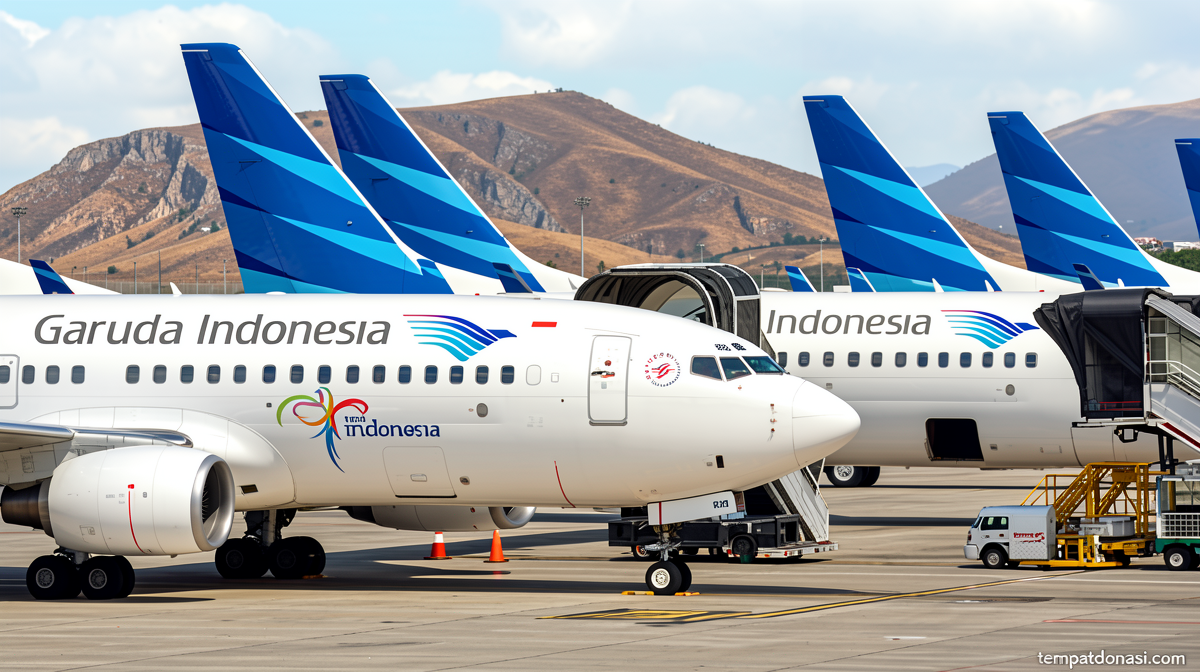
Garuda Indonesia Jet Completes Safe Landing After Main-Gear Tire Failure on Jakarta–Makassar Sector
Tempatdonasi.com – A Boeing 737-800 operated by Garuda Indonesia touched down without incident at Sultan Hasanuddin International Airport in South Sulawesi on Thursday morning, September 3, 2026, after one of its main landing-gear tires suffered a blowout during the approach phase. Flight GA604, which had departed Jakarta bound for Makassar, carried 156 passengers aboard when the mechanical failure occurred en route to the airport.
The event unfolded over roughly two hours, from the moment air-traffic control first flagged the aircraft’s abnormal condition until the runway was cleared for normal operations. No injuries were reported among passengers or crew, and the evacuation was completed within forty minutes of touchdown.
Early Warning and Airport Mobilization
AirNav Indonesia Tower relayed information about the aircraft’s degraded tire condition to airport management at approximately 7:00 a.m. WITA (Central Indonesian Time). That early notification gave ground crews a critical window to prepare before the jet reached the field.
Upon receiving the alert, Sultan Hasanuddin Airport activated its full emergency-response protocol. Airport Rescue and Fire Fighting (ARFF) units, designated F1 and F2 response vehicles, Nurse Tenders, and additional support craft were staged along the approach path. Simultaneously, coordination calls went out to AirNav Indonesia, the national Search and Rescue agency, the Health Quarantine Center (BBKK), and the Sultan Hasanuddin Air Force Rescue Base so that every stakeholder could confirm readiness before the aircraft arrived.
Go-Around and Controlled Landing
Rather than committing to a first-try landing with a compromised tire, the flight crew executed a go-around — a standard safety maneuver in which the pilot aborts the final approach, climbs back out, and circles the field to reassess conditions. This procedure is a cornerstone of instrument-approach training and is specifically designed to buy time when a mechanical anomaly is detected below decision altitude.
“The Boeing 737-800 was carrying 156 passengers. Despite technical difficulties, the aircraft landed safely after performing a go-around or fly-past as part of safety procedures,” said Acting General Manager of Sultan Hasanuddin International Airport, Lukman Mardian, in Maros on Thursday, September 3, 2026.
After completing the fly-past and confirming that the aircraft could be brought in under controlled conditions, the crew aligned with Runway 03 and touched down at 9:13 a.m. WITA. The aircraft came to a full stop without further incident.
Passenger Evacuation and Terminal Transfer
Once the jet was stationary, airport officers moved swiftly to secure the area and verify the well-being of everyone aboard. Four buses were positioned to shuttle the 156 passengers from the aircraft to the terminal building. The transfer proceeded in an orderly fashion, and the final passenger stepped off the aircraft at 9:53 a.m. WITA — roughly forty minutes after touchdown.
The crew remained with the aircraft while ground engineers assessed the damaged tire and determined whether the airframe could be taxied to a maintenance stand or required a tow.
Runway Closure and Inspection
To guarantee that no debris from the blowout remained on the pavement, the airport issued a Notice of Inspection (NOA) closing Runway 03-21 from 9:30 a.m. to 10:30 a.m. WITA. The closure took effect after the aircraft had been moved to its parking stand on the apron for technical maintenance.
A dedicated runway-technical team then conducted a thorough inspection of the pavement surface, checking for rubber fragments, foreign objects, or structural damage that could compromise subsequent landings. Once the inspection was complete and the runway was declared safe, normal operations resumed at 10:30 a.m. WITA.
Why Tire Blowouts Matter and How Airports Prepare
Tire blowouts on main gear are among the most common in-flight mechanical anomalies encountered by commercial jets. They can result from over-inflation, foreign-object damage on a previous landing, age-related tread separation, or an abnormal load during touchdown. While most blowouts do not endanger the airframe, they can reduce braking efficiency and, in rare cases, trigger secondary structural stress on the wheel assembly.
The go-around decision made by the GA604 crew reflects standard operating procedure: when a tire failure is confirmed before final approach, pilots are trained to climb out, communicate with ATC, and either divert to an alternate airport or, if conditions permit, complete a single fly-past to confirm the aircraft’s handling before committing to a controlled landing. The maneuver adds fuel burn and passenger discomfort but eliminates the risk of attempting a landing with an unknown degree of gear degradation.
For airports like Sultan Hasanuddin, which handles both domestic and international traffic for South Sulawesi, the ability to mobilize ARFF, medical, and rescue assets within minutes of an ATC alert is a matter of routine readiness. Lukman Mardian stressed that personnel preparedness and inter-agency coordination remain the top priorities whenever a flight-safety situation arises, underscoring that the airport’s response framework is tested regularly through drills and that the September 3 event followed established protocols without deviation.
The incident concluded without passenger injury, without runway damage beyond what a standard inspection could clear, and with the aircraft returned to service after tire replacement and maintenance checks. Garuda Indonesia’s Jakarta–Makassar route, one of the busiest domestic corridors in Indonesia, resumed normal scheduling following the brief operational pause.
Related Reading
Frequently Asked Questions
What is Garuda Indonesia Flight Lands Safely After?
Garuda Indonesia Flight Lands Safely After is the main topic of this guide. The article explains the context, practical details, and next steps readers should understand.
Why does Garuda Indonesia Flight Lands Safely After matter?
Garuda Indonesia Flight Lands Safely After matters because readers are looking for a useful answer, not just a short summary. Good content should match search intent and help them decide what to do next.