Forest Fires Rage Around East Java’s Lumajang as Semeru Blaze Persists
The western forests of Lumajang Regency in East Java have become the epicenter of a sprawling wildfire that has scorched more than 3,000 hectares of protected
Blaze Consumes Over 3,000 Hectares Around Bromo Tengger Semeru as Lumajang Fights Multi-Front Fire Crisis
Tempatdonasi.com – The western forests of Lumajang Regency in East Java have become the epicenter of a sprawling wildfire that has scorched more than 3,000 hectares of protected land within Bromo Tengger Semeru National Park. The fire, which has persisted through the peak of Indonesia’s dry season, continues to consume vegetation in the Senduro Subdistrict sector of the park, prompting sustained aerial and ground-based suppression operations that authorities say will run at least through Thursday, September 3, 2026.
The scale of destruction is staggering by regional standards. Data compiled by the Lumajang Regency Regional Disaster Management Agency (BPBD) as of September 1, 2026, places the total burned footprint inside the national park at 3,072 hectares. Of that total, 1,887 hectares fall within the Ranu Kumbolo zone, a highland area known for its dense montane forest and proximity to Mount Semeru’s lower slopes. The loss represents a significant blow to one of East Java’s most ecologically sensitive landscapes, where peat soils, endemic flora, and critical watersheds make every hectare lost difficult to replace.
Multiple Firefronts Across the Regency
The crisis is not confined to the park boundary. In the northern sector of Lumajang, the Forest Management Resort (RPH) Ranupakis zone in Papringan Village, Klakah Subdistrict, caught fire and lost roughly three hectares of timberland on Wednesday, August 2, 2026. Simultaneously, the Sengon area in the southern part of the regency experienced its own ignition on the same date. Both of those smaller outbreaks have since been brought under control, according to Isnugroho, the head of the Lumajang Regency BPBD, who confirmed that crews extinguished the flames in both locations.
Isnugroho outlined the operational plan for the continuing TN BTS response in a statement delivered on Thursday morning:
“Today, personnel will be divided into several teams, which will continue monitoring and handling if there are still any hotspots.”
The multi-team deployment reflects the difficulty of patrolling the park’s vast, rugged terrain, where smoke columns can mask active ground fires beneath the canopy. Crews rotate between observation posts and direct-attack lines, using a combination of traditional and mechanized tools to knock down residual embers before they reignite.
Aerial Water Drops and Ground Suppression
In the Ranupane sector, where the fire has been most persistent, water-bombing sorties are being flown in accordance with prevailing wind patterns and cloud cover. As of September 2, 2026, crews had completed 21 aerial drops, delivering a cumulative 21,000 liters of water onto active fire lines. The East Java Regional Disaster Management Agency has committed a helicopter bearing the registration PK-DAP, rated for a 1,000-liter payload per sortie, to sustain the aerial campaign.
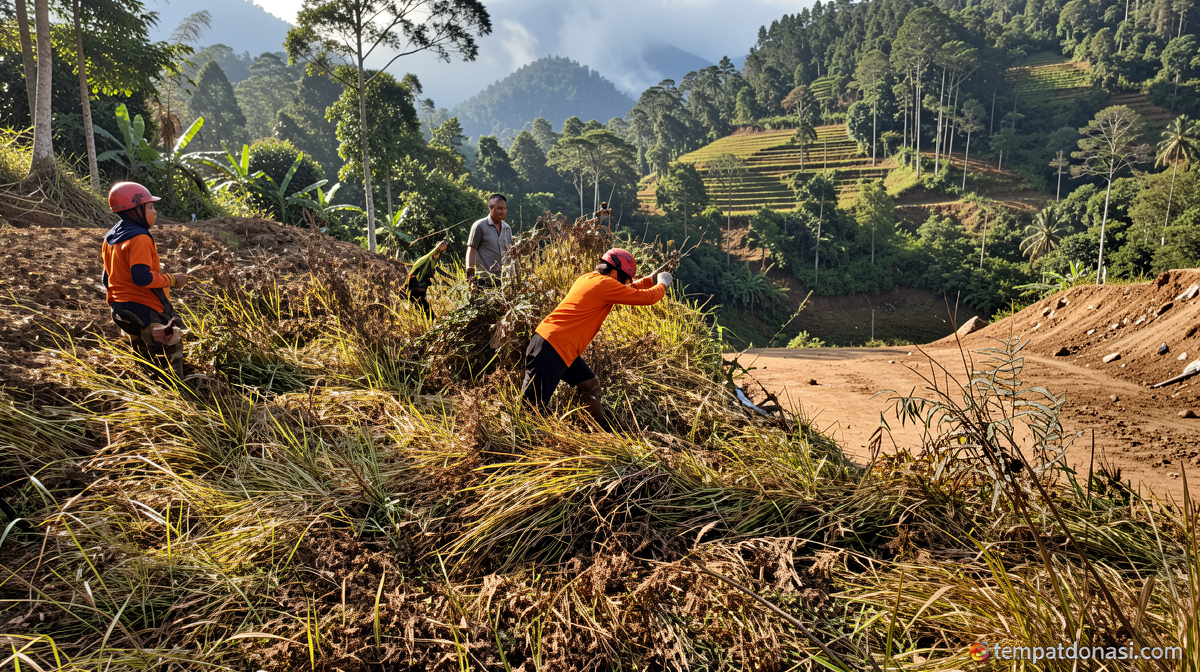
On the ground, suppression teams rely on a toolkit that blends low-tech and mechanized equipment. Gepyok—handheld leaf-beaters used to smother surface flames—work alongside jet shooters and blower units that push air into crevasses and undercut root zones. Isnugroho emphasized that both aerial and manual methods are deployed simultaneously, calibrated to the specific weather window available each morning.
National-Level Call for Vigilance
The Lumajang crisis has drawn attention at the national disaster-management level. Berton Panjaitan, Acting Head of the Data, Information, and Communication Center under the National Agency for Disaster Management (BNPB), issued a public advisory urging residents across drought-affected regions to treat every open flame as a potential wildfire trigger. He specifically warned against the common agricultural practice of burning brush or clearing planting plots with fire, a technique that becomes exponentially more dangerous when humidity drops below 30 percent and fine fuels dry to near-zero moisture content.
“Do not open or clear agricultural areas with fire, as it can easily spread and is difficult to control in dry conditions.”
The advisory lands amid a broader pattern of increased wildfire frequency across Java and Sumatra during the current dry spell, a trend that climate scientists attribute to shifting monsoon timing and prolonged heat episodes. For communities bordering protected forests like TN BTS, the stakes extend beyond timber loss: smoke from sustained burning degrades air quality in nearby towns, threatens the water supply of downstream villages, and accelerates erosion on steep volcanic slopes where topsoil has been stripped by flame.
With Mount Semeru’s lower flanks still smoldering and forecast rainfall remaining below seasonal norms through at least mid-September, Lumajang’s disaster-management teams face the prospect of weeks of continued vigilance. The 3,072-hectare figure recorded on September 1 is expected to grow unless a sustained rainfall event interrupts the fire cycle—a scenario that, given current meteorological outlooks, remains uncertain.
Related Reading
Frequently Asked Questions
What is Forest Fires Rage Around East Java?
Forest Fires Rage Around East Java is the main topic of this guide. The article explains the context, practical details, and next steps readers should understand.
Why does Forest Fires Rage Around East Java matter?
Forest Fires Rage Around East Java matters because readers are looking for a useful answer, not just a short summary. Good content should match search intent and help them decide what to do next.