Prabowo at EEF: Economic Growth Must Lift Millions Out of Poverty
Standing before delegates gathered in the Russian Far East port city of Vladivostok, President Prabowo Subianto made clear that Jakarta's economic ambitions
Prabowo Frames Indonesia’s Growth Agenda Around Poverty Eradication at Vladivostok Forum
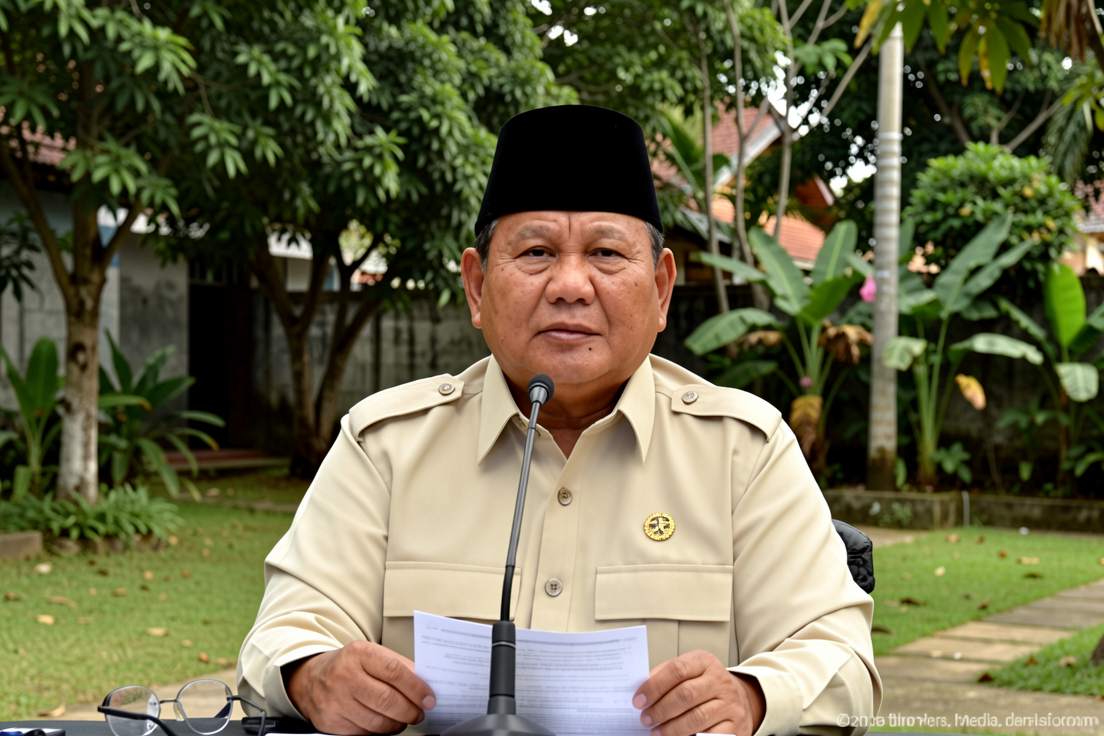
Tempatdonasi.com – Standing before delegates gathered in the Russian Far East port city of Vladivostok, President Prabowo Subianto made clear that Jakarta’s economic ambitions are anchored to a single moral test: whether ordinary households feel the difference in their daily lives. Speaking as guest of honor at the 11th Eastern Economic Forum on Thursday, the Indonesian leader rejected the notion that GDP expansion is an end in itself and instead positioned growth as a vehicle for pulling millions of citizens out of poverty and into what he called a life of dignity.
“This is why we seek faster economic growth, not growth for growth’s sake, but growth that can lift millions of people out of poverty and into dignity.”
The remarks, delivered in a speech later broadcast through the Presidential Secretariat’s official YouTube channel, placed Indonesia’s development philosophy squarely in conversation with the forum’s broader theme of regional prosperity. Rather than treating the gathering as a platform for trade diplomacy alone, Prabowo used the occasion to articulate a normative framework: economic policy must be judged by its tangible effects on families, not by abstract macroeconomic indicators.
A Philosophy of Pragmatic Distributive Justice
Prabowo described the guiding principles behind Jakarta’s economic strategy as rooted in realism and pragmatism, with the ultimate aim of delivering the greatest good to the greatest number of people. In his framing, development that concentrates gains among a narrow elite fails its purpose. The metric, he argued, should be found at the kitchen table of an average household — whether children are fed with nutritious meals, whether farmers can access affordable fertilizer and sell their harvest at fair market prices, and whether basic utilities such as electricity reach remote communities.
“Development can not only benefit the few. Development must be measured at the dinner table of ordinary families: whether children receive nutritious food, whether farmers can obtain fertilizer and sell their produce at a fair price.”
This language of household-level accountability marks a deliberate departure from technocratic growth rhetoric. By tethering macroeconomic targets to micro-level welfare outcomes, Prabowo signaled that the administration will evaluate policy success through social indicators — nutrition access, agricultural income, energy connectivity — rather than through headline growth rates alone.
Policies Anchored to the Dinner-Table Test
The President outlined several concrete programs that operationalize this philosophy. Among them is the provision of free nutritious meals targeted at children and pregnant women, a measure designed to interrupt intergenerational cycles of malnutrition and to support maternal health. Alongside nutrition, the administration is pursuing food self-sufficiency and energy security, seeking to reduce dependence on imported staples and volatile fuel markets that can erode household purchasing power overnight.
A third pillar is the acceleration of industrial downstreaming — the process of refining and manufacturing domestically rather than exporting raw commodities. Prabowo explained that downstreaming is intended to ensure Indonesia’s vast natural-resource endowment translates into domestic industrial capacity, skilled employment, and higher value-added output. In practical terms, this means building smelters, petrochemical complexes, and advanced processing facilities so that the economic rent generated by nickel, coal, palm oil, and other commodities stays within the national economy rather than flowing abroad as unprocessed exports.
The Forum’s Fundamental Question
Prabowo drew a direct parallel between the Eastern Economic Forum’s agenda and the questions his own constituents pose to him. The forum, convened annually in Vladivostok to discuss trade, investment, and infrastructure across the Asia-Pacific and beyond, asks how regional wealth can be harnessed for broad-based improvement. The President framed his participation as an answer to that question from the perspective of a lower-middle-income nation still grappling with significant poverty pockets.
“This forum is essentially asking the same fundamental question as the one asked by my people to me: how can the great wealth of a region translate into a better life for the people who live there?”
Indonesia, with a population exceeding 280 million and a poverty rate that, while declining, still leaves tens of millions below the national poverty line, faces the challenge of converting rapid GDP growth into measurable welfare gains. The administration’s emphasis on downstreaming, food sovereignty, and targeted nutrition programs reflects an attempt to close that gap while maintaining the investment climate needed to sustain growth.
Context and Implications
The Eastern Economic Forum has grown into one of the largest multilateral gatherings in the Asia-Pacific, drawing heads of state, ministers, and corporate leaders from dozens of countries. Indonesia’s participation as guest of honor at its eleventh edition underscores Jakarta’s growing role as a regional economic voice and its interest in deepening trade and investment links with Russia’s Far East and broader Eurasian markets. For Prabowo, the Vladivostok stage offered a high-visibility platform to communicate that Indonesia’s growth model is inseparable from social outcomes — a message aimed simultaneously at domestic audiences watching the broadcast and at international partners evaluating where to direct capital and technology.
Related Reading
Frequently Asked Questions
What is Prabowo at EEF?
Prabowo at EEF is the main topic of this guide. The article explains the context, practical details, and next steps readers should understand.
Why does Prabowo at EEF matter?
Prabowo at EEF matters because readers are looking for a useful answer, not just a short summary. Good content should match search intent and help them decide what to do next.