Lombok’s Sade Village Begins Reconstruction After Fire
For centuries, the terraced stone-and-timber dwellings of Sade Village have stood as one of the most recognizable symbols of Sasak identity in West Nusa
Sasak Heritage Returns to the Ground: Sade Village Breaks Ground on Its Rebirth
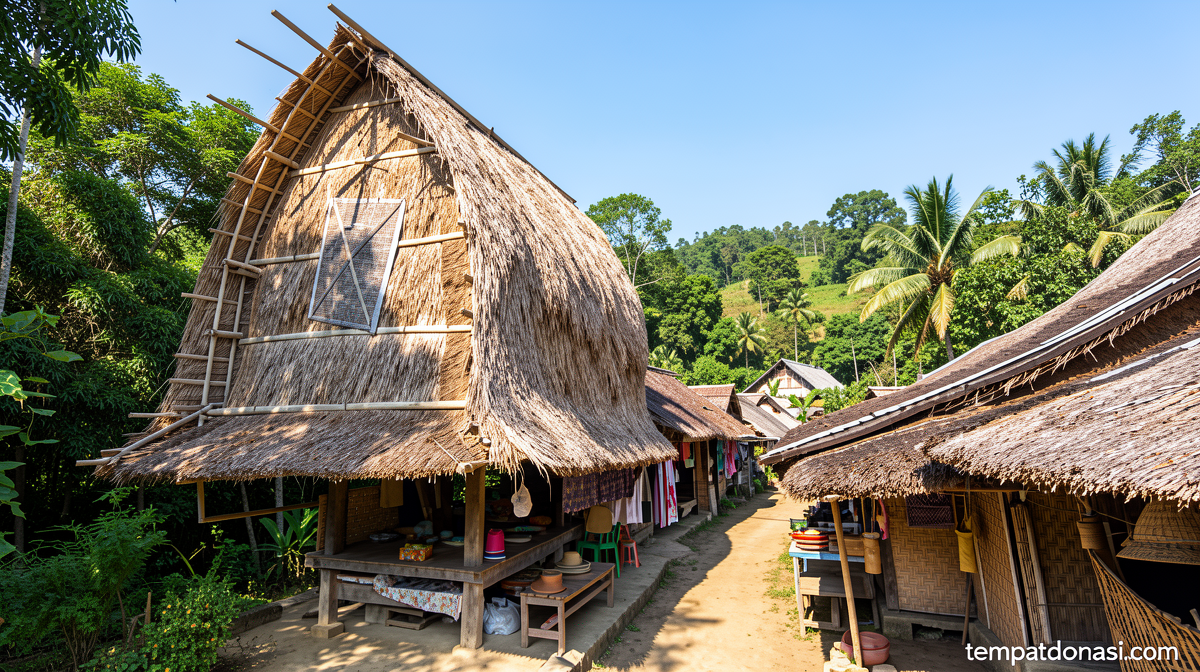
Tempatdonasi.com – For centuries, the terraced stone-and-timber dwellings of Sade Village have stood as one of the most recognizable symbols of Sasak identity in West Nusa Tenggara. Perched on the slopes of Mount Rinjani in Pujut District, Central Lombok Regency, the settlement’s distinctive architecture — with its steeply pitched roofs, carved wooden facades, and communal pavilions — drew visitors from across Indonesia and beyond. When fire consumed the village’s core structures, the loss was not merely structural; it struck at a living repository of ritual practice, communal governance, and intangible cultural memory. Now, more than a year after the blaze, the first timber posts are being driven back into the earth.
A Ritual Marks the Turning Point
On Thursday, September 3, 2026, residents gathered for the Nyemulak ceremony — a post-planting rite that, in Sasak tradition, sanctifies the moment foundational timbers are set into the ground. The choice of timing was deliberate. Central Lombok Regent Lalu Pathul Bahri explained that the month coinciding with the Maulid, the commemoration of the Prophet Muhammad’s birth, carried particular auspicious weight for commencing new construction.
“The birth month of the Prophet Muhammad (Maulid) is an auspicious time, which is why construction on the traditional houses in Sade begins today.”
Bahri used the occasion to thank donors whose contributions have made the rebuild financially possible, framing their generosity as an investment in the community’s capacity to resume ordinary life. He urged continued public backing, casting the project as one that ultimately serves future generations.
“We hope the community will continue to support this reconstruction for the well-being of the nation’s future generations.”
The regent also stressed that every rupiah flowing into the effort would be tracked openly and in line with applicable regulations, a point he framed as essential to public trust.
“The reconstruction process is being conducted transparently and in compliance with regulations for the benefit of the public.”
Governance, Transparency, and the Question of Scale
NTB Governor Lalu M. Iqbal, attending the same ceremony, described the Nyemulak act as a watershed moment in what he characterized as a protracted and complex rebuilding campaign. His remarks underscored that the work ahead would unfold over months, not weeks, and that impatience would be counterproductive.
“Patience is required throughout this construction process.”
Given the volume of external donations pouring in from government agencies, private firms, and individual citizens, the governor called for the creation of a dedicated task force paired with a single consolidated account. Pooling all incoming aid into one transparent ledger, he argued, would prevent fragmentation and answer the public’s evident appetite to contribute.
“Incoming aid is being pooled together.”
Iqbal also pressed for the rapid completion of a semi-permanent museum structure within the village footprint. With the site sealed off since the rebuild commenced, he noted that tourists arriving in Lombok still expect to walk through Sade’s lanes and observe its architecture firsthand. The absence of even a provisional interpretive space, he warned, prolongs economic stagnation for households that once depended on visitor traffic.
“Visiting tourists want to see what Sade looks like; the area has been closed since the reconstruction process began.”
Restoring Form, Not Merely Function
A recurring theme in the governor’s remarks was fidelity to the original architectural vocabulary. Sasak traditional houses are not interchangeable with generic timber construction; their proportions, joinery, and spatial relationships encode ritual meaning and communal hierarchy. Iqbal was explicit that the rebuild must reproduce those forms, because it is precisely the structures themselves that narrate Sasak cultural history to outside observers.
“This construction process must not be rushed. This is the first cultural preservation project in NTB.”
That framing — cultural preservation rather than simple disaster recovery — elevates the project’s stakes. It positions Sade not as one of many post-disaster rebuilds but as a precedent-setting intervention in how West Nusa Tenggara handles heritage assets damaged by catastrophe.
The Scope of What Must Be Rebuilt
Lalu M. Faozal, serving as coordinator for the Sade Traditional House Reconstruction initiative, confirmed that the plan reflects a consensus reached among all households in the Sade hamlet. The affected inventory is extensive: seventy-five traditional dwellings, eight berugak (open-sided gazebos used for communal gatherings), six sekenam pavilions (smaller ceremonial structures), one mosque, two public restroom facilities, and sixty-nine souvenir shops that once lined the village’s main thoroughfare.
“Today is the auspicious day agreed upon for erecting the main pillars to rebuild the Sade Mosque and traditional houses.”
Faozal cautioned that although the Nyemulak ceremony inaugurates the full construction sequence, completion will not arrive in a single phase. Work will proceed according to a sequenced reconstruction plan that places structural safety and phased habitability at the forefront, meaning some structures will be finished long before others.
“The entire construction process begins today, but the work cannot be completed all at once; instead, construction is proceeding according to a reconstruction plan that prioritizes safety.”
Why the Delay Matters
The interval between destruction and the first post being set is itself a story. It encompasses damage assessment, community deliberation over design fidelity, procurement of traditional timber species, coordination of artisan labor familiar with Sasak joinery techniques, and the negotiation of funding streams. The September 2026 ceremony closes that preparatory chapter and opens the physical phase. For the Sasak families of Sade, the next months will test whether institutional will, artisanal knowledge, and communal solidarity can converge quickly enough to restore not just walls and roofs, but the daily rhythms of a village that has existed, in continuous cultural form, for generations.
Related Reading
Frequently Asked Questions
What is Lombok s Sade Village Begins Reconstruction?
Lombok s Sade Village Begins Reconstruction is the main topic of this guide. The article explains the context, practical details, and next steps readers should understand.
Why does Lombok s Sade Village Begins Reconstruction matter?
Lombok s Sade Village Begins Reconstruction matters because readers are looking for a useful answer, not just a short summary. Good content should match search intent and help them decide what to do next.