The Fast-Tracked Oil and Gas Bill
The deliberation of Indonesia's most consequential energy legislation has taken an abrupt procedural turn. During a Wednesday session of the House of
Mid-Hearing Chair Swap Signals Urgency Behind Indonesia’s Oil and Gas Overhaul
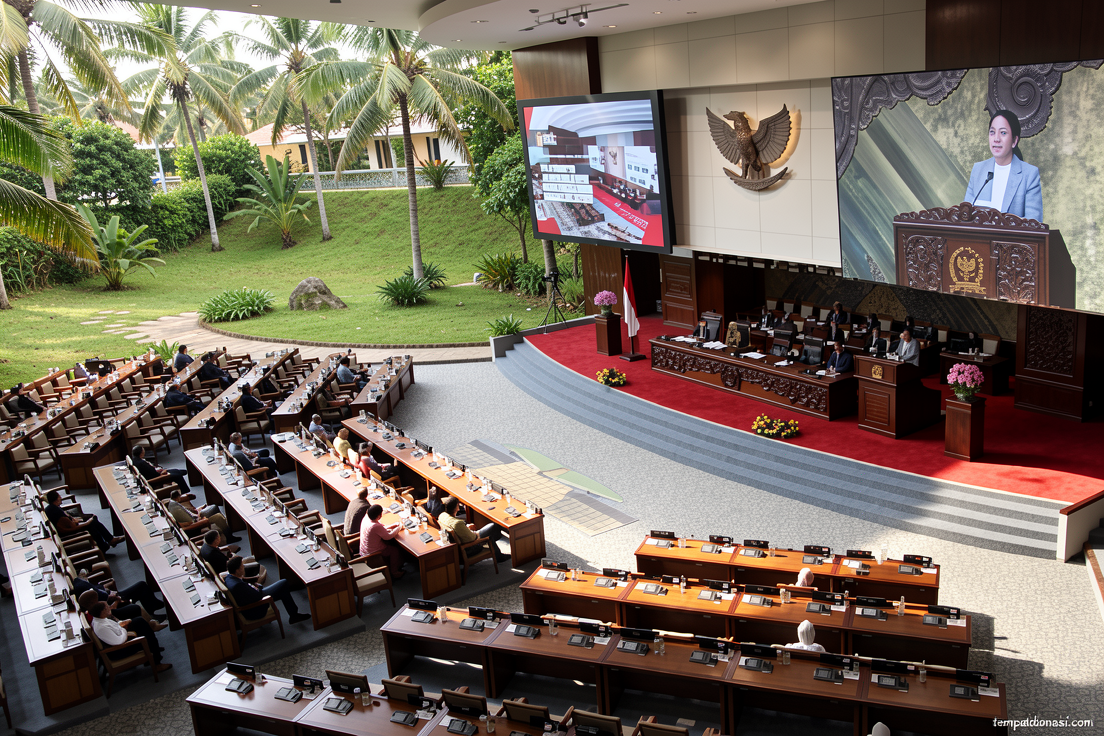
Tempatdonasi.com – The deliberation of Indonesia’s most consequential energy legislation has taken an abrupt procedural turn. During a Wednesday session of the House of Representatives’ Commission XII on August 26, 2026, the meeting was cut short without warning when the deputy chair, Sugeng Suparwoto, called a halt to testimony from oil and gas officials. Minutes later, three deputy speakers of the lower chamber—Sufmi Dasco Ahmad, Saan Mustopa, and Sari Yuliati—walked into the hearing room and seated themselves at the leadership table, a move that immediately shifted the room’s dynamic from routine committee work to a formal leadership announcement.
Dasco used the platform to inform attendees that Commission XII Chair Bambang Patijaya would be succeeded by Melchias Markus Mekeng. Both men belong to the Golkar Party, the largest single bloc in the current parliament. The swap, Dasco explained, followed a written communication delivered by the Golkar Faction on the preceding Tuesday, August 18.
“We received a letter from the faction,” Dasco told the assembled members and witnesses.
A Politician’s Rotation Through Two Powerful Committees
Mekeng is far from a novice in parliamentary proceedings. Hailing from the East Nusa Tenggara electoral district, he previously served on Commission XI, the body responsible for finance, banking, and state-budget oversight. His transfer to Commission XII—the committee with jurisdiction over energy policy, mineral resources, and upstream hydrocarbon regulation—places him at the helm of the very panel tasked with revising the country’s foundational oil and gas statute.
His predecessor, Patijaya, had occupied the Commission XII chair since November 4, 2024. That means the outgoing chair served barely two years before being displaced, and the incoming chair steps into a role already entangled with one of the most politically charged legislative files in the chamber.
The Bill at the Center of the Turbulence
Three officials present at the August 26 hearing confirmed to Tempo that the chair replacement was directly connected to the renewed deliberations on amendments to Law No. 22/2001, Indonesia’s Oil and Gas Act. Enacted in the early post-Soeharto era, that statute governs upstream exploration, production-sharing contracts, and the regulatory architecture of the national oil and gas sector. After more than two decades of operation, the law has drawn sustained criticism from industry stakeholders, provincial governments, and civil-society watchdogs who argue that its revenue-sharing formulas, environmental safeguards, and local-content provisions no longer reflect contemporary market realities or Indonesia’s evolving energy-mix ambitions.
The officials further indicated that the personnel change was executed at the explicit “direction” of Bahlil Lahadalia, who simultaneously holds the posts of Golkar Party General Chair and Minister of Energy and Mineral Resources. That dual mandate—party leadership plus the ministry that administers the very sector the revised law would regulate—gives the move an unmistakable top-down character. In practical terms, the minister who oversees upstream licensing, fiscal terms, and downstream supply security also commands the parliamentary faction whose letter triggered the chair swap.
Why the Timing Matters
The decision to replace the commission chair mid-hearing, rather than between sessions or at the start of a new legislative period, carries procedural implications. Commission XII hearings typically follow a structured calendar: witnesses testify, members question, draft articles are debated clause by clause, and a final report is prepared for plenary vote. Interrupting that sequence to install a new chair effectively resets the committee’s internal dynamics. New leadership often brings new priorities, new scheduling preferences, and—critically—a different posture toward industry witnesses who have already begun laying out their positions.
For the oil and gas sector, the stakes are substantial. Amendments to Law No. 22/2001 would touch on production-sharing contract fiscal terms, the role of the state-owned Pertamina in upstream operations, environmental and social-impact requirements, and the distribution of royalties between the central government and producing provinces. Any acceleration of the bill’s passage, whether through streamlined committee work or reduced scrutiny, would compress the window for public comment and stakeholder input.
Procedural Questions Left Unanswered
The episode raises questions that the chamber has not yet addressed publicly. Was the faction letter of August 18 subject to the usual internal coordination among the three deputy speakers before being acted upon? Does the mid-hearing announcement conform to the House’s standing rules on committee leadership changes, or did it rely on an informal understanding among Golkar-aligned leadership? And how will the incoming chair, Mekeng, handle testimony already scheduled under Patijaya’s tenure—will witnesses be recalled, or will their earlier statements stand as part of the record?
None of these questions have been answered in the public record as of the hearing’s conclusion. What is clear is that the oil and gas revision file, already one of the most watched items on the 2026 legislative calendar, now moves forward under a different chair, at a pace apparently set by the minister who also leads the governing party’s parliamentary faction. The fast track, in other words, is no longer merely a description of the bill’s ambition; it has become a feature of its procedural reality.
Related Reading
Frequently Asked Questions
What is The Fast Tracked Oil and Gas Bill?
The Fast Tracked Oil and Gas Bill is the main topic of this guide. The article explains the context, practical details, and next steps readers should understand.
Why does The Fast Tracked Oil and Gas Bill matter?
The Fast Tracked Oil and Gas Bill matters because readers are looking for a useful answer, not just a short summary. Good content should match search intent and help them decide what to do next.