Why Finance Minister Purbaya Ends Tax Amnesty Program
The Indonesian government has closed the door on any revival of its tax amnesty mechanism, a decision that reshapes how millions of taxpayers and business
Indonesia’s Tax Amnesty Era Is Over: Purbaya Draws a Firm Line Against Future Schemes
Tempatdonasi.com – The Indonesian government has closed the door on any revival of its tax amnesty mechanism, a decision that reshapes how millions of taxpayers and business owners will interact with the state’s revenue apparatus going forward. Finance Minister Purbaya Yudhi Sadewa made the position unequivocal at a major academic gathering in Jakarta, explaining that the legal architecture surrounding past amnesty participants creates ongoing exposure for revenue officers and, ultimately, for the taxpayers themselves.
Legal Exposure as the Core Objection
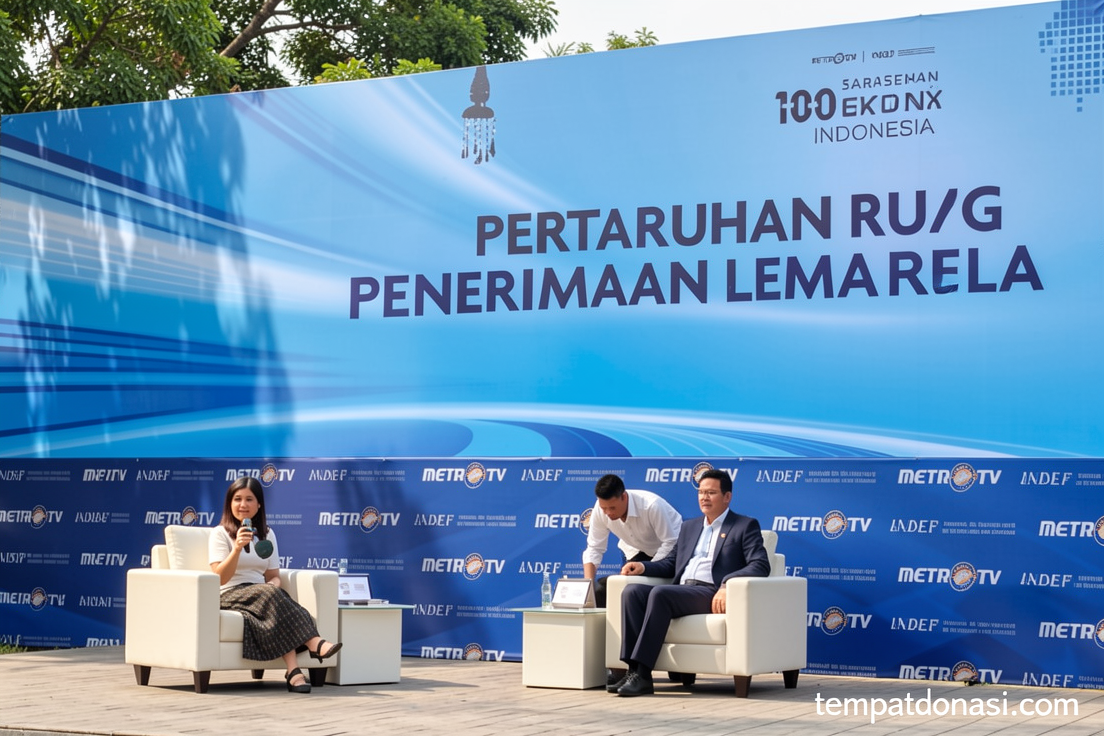
Speaking at the 100 Indonesian Economists Seminar 2026 held in Jakarta on Thursday, September 3, 2026, Purbaya identified a structural flaw in the amnesty design: even after a taxpayer settles outstanding liabilities through the scheme, the underlying records remain subject to routine audit cycles in later years. That combination, he argued, places revenue officers in a precarious position where they must examine data that may lack the granularity needed for a defensible assessment.
“In my opinion, it is detrimental to taxpayers. A few years later, they can still be audited,” Purbaya told the seminar audience.
The minister elaborated that when an auditor revisits a file belonging to a former amnesty participant, any ambiguity in the original disclosure can spiral into protracted legal disputes. Tax officials, caught between statutory audit mandates and the practical limits of incomplete data, become the focal point of litigation. Purbaya framed this not as a theoretical concern but as a recurring operational risk that undermines both enforcement credibility and taxpayer confidence.
A Blanket Prohibition Through His Tenure
Given those considerations, Purbaya declared that no amnesty instrument will be introduced during his time in office, explicitly including the fiscal year 2027. He left no room for incremental or partial schemes.
“There is none (no tax amnesty). I have stated that as long as I serve as Finance Minister, there will be no tax amnesty,” he affirmed.
The statement extends a commitment first articulated on September 19, 2025, when Purbaya warned that serial amnesties condition taxpayers to defer compliance, expecting another blanket forgiveness to arrive. His reasoning is straightforward: repeated resets erode the normative force of the tax code and incentivize strategic non-reporting.
“Repeated amnesties send the wrong message to taxpayers, suggesting they can evade obligations because another amnesty will follow.”
Shifting the Focus to Compliance and Collection Efficiency
Rather than offering periodic resets, the ministry will concentrate on tightening the existing collection pipeline. Purbaya’s stated priority is reinforcing voluntary compliance under current statutes—improving data matching, streamlining filing obligations, and reducing friction points that push taxpayers toward informality. In his view, sustained revenue growth is better achieved by making the system harder to game than by periodically wiping the slate clean.
Protection for Past Participants
In a separate press briefing at his office on Monday, May 11, 2026, Purbaya addressed anxieties circulating among business owners who had disclosed assets through earlier amnesty rounds. He confirmed that the ministry will not reassess or re-target assets already reported under the Voluntary Disclosure Program (VDP) or the original tax amnesty.
“In the future, they only need to pay according to their normal business development,” Purbaya said.
The sole exception he acknowledged involves payment commitments that participants agreed to but have not yet fulfilled. For all other compliant disclosures, no further tax claims will be pursued. Purbaya, who previously chaired the Deposit Insurance Corporation (LPS) Board of Commissioners, stressed that the amnesty program is now concluded and that its legal effects are final.
Curbing Misleading Public Statements
Earlier reports had suggested that the Directorate General of Taxes intended to scrutinize VDP participants who allegedly failed to report every asset. Purbaya indicated he would issue a formal reprimand to the Tax DG over that announcement. He criticized a pattern of public statements from the tax authority that, in his assessment, generated unnecessary alarm among taxpayers.
“There was talk of toll road taxes, this tax, and that tax. So, in the future, only I will announce tax policies, not the Director General of Taxes, to eliminate confusion,” he stressed.
By centralizing tax-policy communication at the ministerial level, Purbaya aims to prevent fragmented messaging that could be misread as new levies or enforcement threats.
Background: Two Rounds of Amnesty Under Law No. 7/2021
The Indonesian tax amnesty framework was established under Law No. 7/2021 on the Harmonization of Tax Regulations. The scheme was implemented in two distinct phases. The initial round operated during 2016–2017, inviting taxpayers to declare previously unreported assets in exchange for reduced final-tax rates. In 2022, the government launched the Voluntary Disclosure Program, which functioned as the second phase, extending similar incentives to additional categories of assets and entities. Both instruments are now closed, and Purbaya’s pronouncements confirm that no further iterations are planned.
For Indonesian taxpayers, the practical implication is clear: the era of periodic fiscal forgiveness has ended. Going forward, the state’s revenue strategy rests on the integrity of existing compliance mechanisms, and past amnesty participants can expect finality in their settled positions—provided all agreed payment schedules have been honored.
Related Reading
Frequently Asked Questions
What is Why Finance Minister Purbaya Ends Tax Amnesty?
Why Finance Minister Purbaya Ends Tax Amnesty is the main topic of this guide. The article explains the context, practical details, and next steps readers should understand.
Why does Why Finance Minister Purbaya Ends Tax Amnesty matter?
Why Finance Minister Purbaya Ends Tax Amnesty matters because readers are looking for a useful answer, not just a short summary. Good content should match search intent and help them decide what to do next.