Russia to Close Branches of Germany’s Goethe-Institut
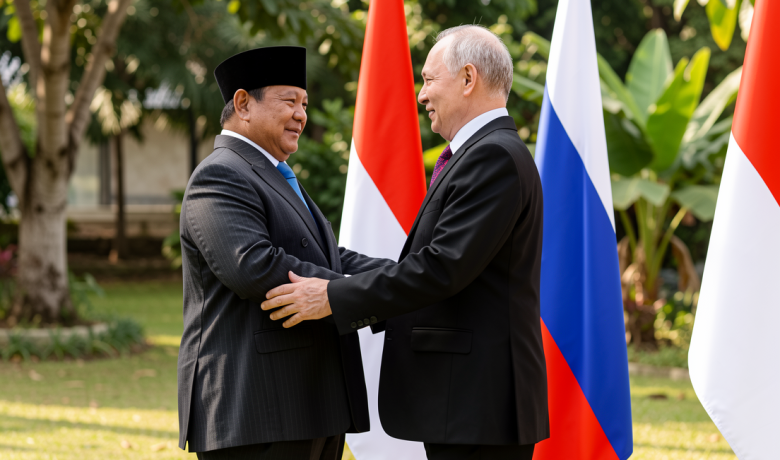
The last remaining German cultural institutions operating on Russian soil are set to shut their doors, Foreign Minister Sergey Lavrov announced on Thursday
Germany’s Cultural Footprint in Russia Faces Final Shutdown
Tempatdonasi.com – The last remaining German cultural institutions operating on Russian soil are set to shut their doors, Foreign Minister Sergey Lavrov announced on Thursday. Speaking at the Eastern Economic Forum in Vladivostok, Lavrov confirmed that Goethe-Institut branches in Moscow, St. Petersburg, and Yekaterinburg would cease operations, marking the effective end of an organized German cultural presence in Russia that had persisted for over three decades.
The decision follows a sharp escalation in bilateral tensions triggered by an August drone incident at Leipzig/Halle Airport, which Berlin attributed to Moscow. Germany’s retaliatory package included the closure of the Russian House cultural center in Berlin and the Russian consulate in Bonn. Lavrov framed the Goethe-Institut shutdown as a direct, proportional response to those measures.
“Of course they will be closed after our cultural center was expelled from there [from Berlin],” Lavrov said. “They deliberately took this step — they could not have failed to understand — which means the end of their cultural presence in Russia.”
The minister emphasized that the German cultural centers had continued operating through years of strained relations, noting they remained open “despite all the Ukrainian complications in our relations with the West.” His remarks signaled that Moscow views the closures not as a temporary diplomatic gesture but as a structural break in cultural exchange between the two countries.
Diplomatic Escalation Surrounding the Drone Incident
The closure announcement arrived amid a broader wave of diplomatic friction. On Wednesday, Russia’s Foreign Ministry summoned the charge d’affaires of the German Embassy in Moscow to lodge a formal protest over Berlin’s response to the August drone event. The ministry characterized the German leadership’s actions and public statements as anti-Russian measures warranting an official objection.
The following day, President Vladimir Putin went further, accusing Germany of planting evidence to pin blame on Moscow for the explosives-laden drone. The layered accusations — from the Foreign Ministry’s formal protest to the president’s public charge of fabrication — underscore how deeply the incident has fractured what little diplomatic goodwill remained between the two capitals.
Russia has also floated the possibility of additional punitive steps, including the closure of Germany’s consulate general in St. Petersburg, suggesting the cultural shutdown may be the first of several reciprocal measures yet to come.
What the Goethe-Institut Represents
The Goethe-Institut is Germany’s principal instrument for international language education and cultural diplomacy. Operating in roughly 100 countries, the organization promotes German-language study, offers information on German society and culture, and hosts exhibitions, lectures, and artistic programming. In Russia, its first branch opened in Moscow in 1992, shortly after the dissolution of the Soviet Union, and it became one of the few German institutions still functioning in the country even as other bilateral channels narrowed.
The three Russian locations slated for closure — Moscow, St. Petersburg, and Yekaterinburg — served as hubs for language instruction, academic partnerships, and public cultural events. Their shutdown removes a long-standing channel through which Russian citizens accessed German-language education and cultural programming outside state-controlled media.
A Pattern of Cultural Retaliation
The move fits a recognizable pattern in Russian foreign policy. Moscow has repeatedly used the closure of foreign cultural organizations as a lever of diplomatic pressure. In 2018, following a dispute with London over the Salisbury poisoning case, Russia ordered the British Council to close its offices. More broadly, the Kremlin has designated numerous foreign NGOs and cultural bodies as “undesirable,” a legal classification that effectively bars them from operating within Russian territory.
For Germany, the loss of its Goethe-Institut branches represents more than an administrative inconvenience. It eliminates the last structured, non-governmental channel through which Berlin could maintain a cultural and linguistic dialogue with Russian civil society. In a period when official diplomatic communication has grown thin, the absence of such institutions narrows the space for informal exchange, academic collaboration, and public-to-public contact.
Broader Implications
Analysts watching the situation note that the reciprocal closure of cultural centers tends to harden public perceptions on both sides. When a country’s language schools and cultural venues disappear overnight, the practical consequence is a generational gap: younger Russians lose routine exposure to German-language media, literature, and artistic traditions, while younger Germans lose a tangible point of contact with Russian culture beyond what state media provides.
The timing also matters. With the drone-incident dispute still unresolved and further Russian countermeasures under discussion, the Goethe-Institut shutdown functions as both a response and a signal — a declaration that Moscow considers the cultural dimension of German-Russian relations closed until Berlin reverses its own punitive steps. Whether that condition will ever be met remains an open question, but for now, the lights in the Goethe-Institut offices in Moscow, St. Petersburg, and Yekaterinburg are set to go dark.
Related Reading
Frequently Asked Questions
What is Russia to Close Branches of Germany?
Russia to Close Branches of Germany is the main topic of this guide. The article explains the context, practical details, and next steps readers should understand.
Why does Russia to Close Branches of Germany matter?
Russia to Close Branches of Germany matters because readers are looking for a useful answer, not just a short summary. Good content should match search intent and help them decide what to do next.