Putin Hails Indonesia as Russia’s ‘Trusted Friend’ in ASEAN
The port city of Vladivostok hosted a high-stakes diplomatic encounter this week when Indonesian President Prabowo Subianto sat down for a luncheon with
Indonesia Earns Russia’s “Trusted Friend” Label at Vladivostok Summit
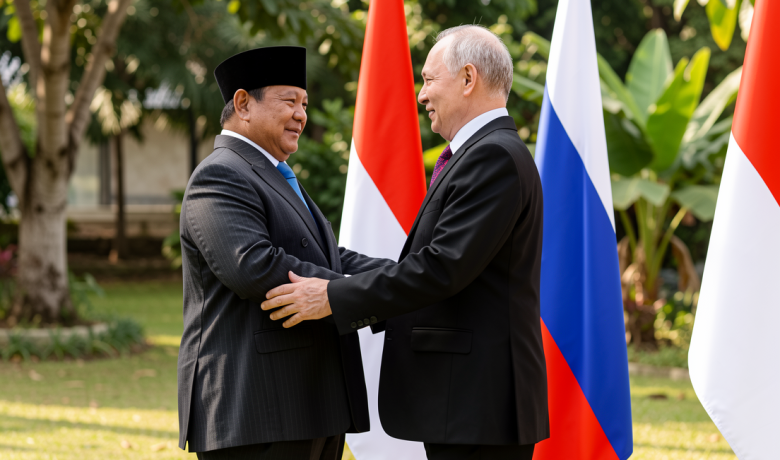
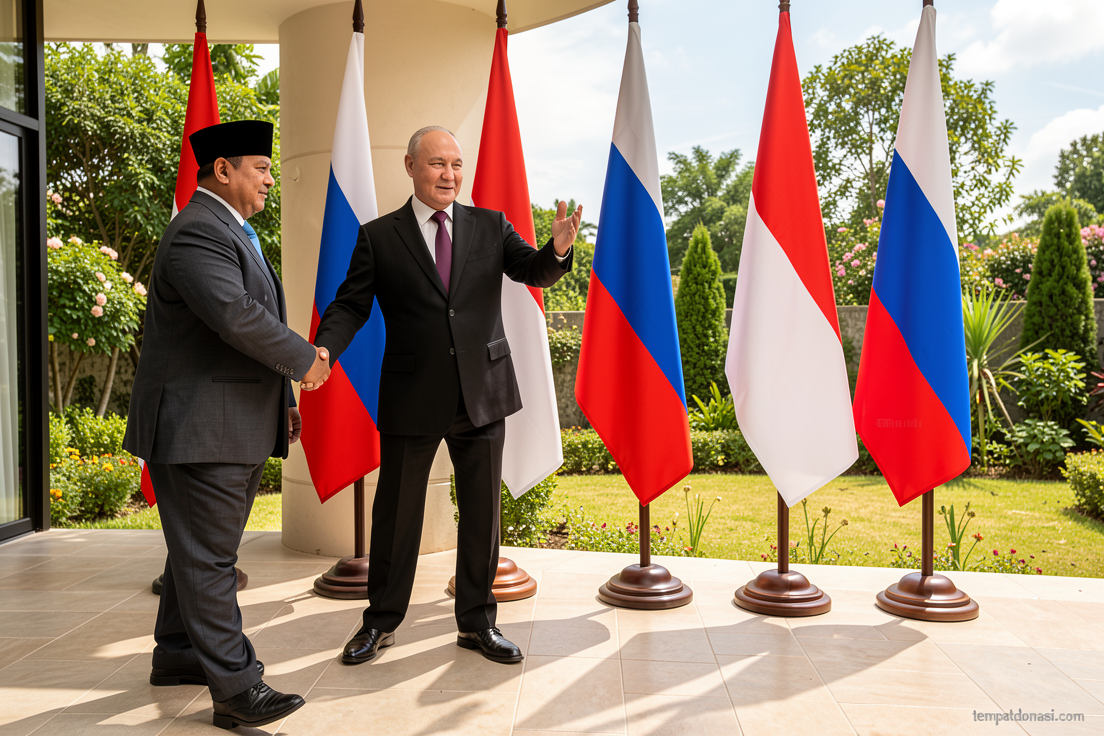
Tempatdonasi.com – The port city of Vladivostok hosted a high-stakes diplomatic encounter this week when Indonesian President Prabowo Subianto sat down for a luncheon with Russian President Vladimir Putin, an exchange that produced some of the warmest bilateral language the two nations have exchanged in recent years. Speaking to the Indonesian head of state, Putin positioned Jakarta as a cornerstone partner across the Asia-Pacific and, more pointedly, as a reliable ally within the ten-nation ASEAN grouping.
“Indonesia is one of Russia’s key partners in the Asia-Pacific region,” Putin told Prabowo during the private meal.
The remark landed at a moment when Moscow has been actively courting Southeast Asian economies to diversify trade routes and deepen strategic ties beyond its traditional European and Central Asian orbit. By singling out Indonesia — the archipelago’s 280-million-person economy and largest ASEAN member by population — Putin signaled that Jakarta occupies a tier above its regional peers in Russia’s diplomatic calculus.
A Second Sitting and Personal Chemistry
Putin noted that this luncheon marked the second face-to-face meeting between the two leaders since Prabowo assumed office, and he framed their personal rapport as a mirror of the broader strategic alignment between the states.
“This is the second time we have met and I am very happy. Our personal relationship reflects the strategic nature of bilateral relations between Russia and Indonesia. I would like to thank the President for his willingness to visit the city of Vladivostok and take part in the Eastern Economic Forum as the main guest of honor,” Putin said.
The gratitude was directed at Prabowo’s decision to travel to Russia’s Far East and assume the role of principal guest of honor at the 11th Eastern Economic Forum, a multi-day gathering scheduled for 1–4 September 2026. The forum, organized by the Russian government, functions as a showcase for trade, investment, and energy partnerships linking Moscow with Asia-Pacific economies. For Indonesia, participation at the summit’s highest tier carries symbolic weight: it places Jakarta on the same stage as other major Asian powers and underscores the depth of bilateral engagement.
Trade Momentum and Institutional Frameworks
Beyond rhetoric, the two leaders pointed to concrete commercial indicators. Putin disclosed that bilateral trade volume climbed by 12 percent over the preceding year, a figure he attributed in part to the continued operation of the Russian-Indonesian Joint Commission, the standing intergovernmental body that reviews sectoral cooperation and resolves trade barriers.
The commission’s mandate spans commodities, services, and regulatory alignment. Its sustained activity provides the institutional plumbing through which tariff negotiations, standards harmonization, and market-access discussions proceed between Jakarta and Moscow.
Expanding the Cooperation Menu
Putin outlined a broad agenda for deepening ties beyond existing trade flows. He named agriculture, shipbuilding, digital technology, and energy as priority sectors, with particular emphasis on nuclear power. Indonesia’s long-standing interest in small modular reactors and its domestic uranium resources make the nuclear dimension a natural intersection of national energy planning and Russian technological export capacity.
The president also highlighted the forthcoming free trade agreement between Indonesia and the Eurasian Economic Union, a bloc that includes Russia, Belarus, Kazakhstan, Armenia, and Kyrgyzstan. Ratification of that pact would open preferential tariff treatment for Indonesian goods across a combined market of roughly 190 million consumers and would formalize a trade architecture that currently operates largely on a bilateral, case-by-case basis.
“I am confident that today’s meeting will result in a new impetus to bilateral relations between our two countries,” Putin concluded.
ASEAN Context and Multilateral Coordination
The Vladivostok exchange did not occur in a vacuum. Indonesia, as ASEAN’s most populous member and a rotating chair of the bloc’s foreign ministers’ meetings, frequently mediates between Western-aligned and non-aligned positions within the grouping. Moscow’s characterization of Jakarta as a “trusted friend” within that framework suggests an expectation that Indonesia will continue to advocate for balanced, non-confrontational engagement with Russia in multilateral settings, including the United Nations, where both nations maintain permanent seats and coordinate on voting patterns in the General Assembly and Security Council.
Prabowo’s itinerary in Vladivostok included attendance at the EEF’s main summit session and a dedicated bilateral sitting with Putin. The visit forms part of a broader Indonesian strategy to recalibrate economic partnerships toward resource-rich, technology-exporting partners, reducing dependence on any single trade corridor while expanding market access for Indonesian palm oil, nickel, coal, and manufactured goods.
Strategic Implications
For regional observers, the Vladivostok luncheon reinforces a pattern: Russia is investing diplomatic capital in Southeast Asia not merely to offset Western sanctions pressure but to build durable, institutionally embedded economic relationships that survive shifts in global geopolitics. Indonesia’s willingness to host and reciprocate such engagement — while maintaining its long-standing free-and-active foreign policy doctrine — positions Jakarta as a bridge economy capable of engaging both Western and non-Western blocs simultaneously. The 12 percent trade growth figure and the pending EAEU free trade agreement give that bridge a concrete commercial foundation, while the nuclear and digital-technology ambitions outlined in Vladivostok point toward longer-term structural interdependence between the two economies.
Related Reading
Frequently Asked Questions
What is Putin Hails Indonesia as Russia s Trusted?
Putin Hails Indonesia as Russia s Trusted is the main topic of this guide. The article explains the context, practical details, and next steps readers should understand.
Why does Putin Hails Indonesia as Russia s Trusted matter?
Putin Hails Indonesia as Russia s Trusted matters because readers are looking for a useful answer, not just a short summary. Good content should match search intent and help them decide what to do next.