East Java’s Ijen Crater Tourism Park Closes Amid Wildfires
Visitors planning a trek to one of Indonesia's most iconic volcanic landscapes will find the trailhead locked. The East Java Major Natural Resources
Ijen Crater Tourism Park Shuts Down as Forest Fires Grip Banyuwangi and Bondowoso
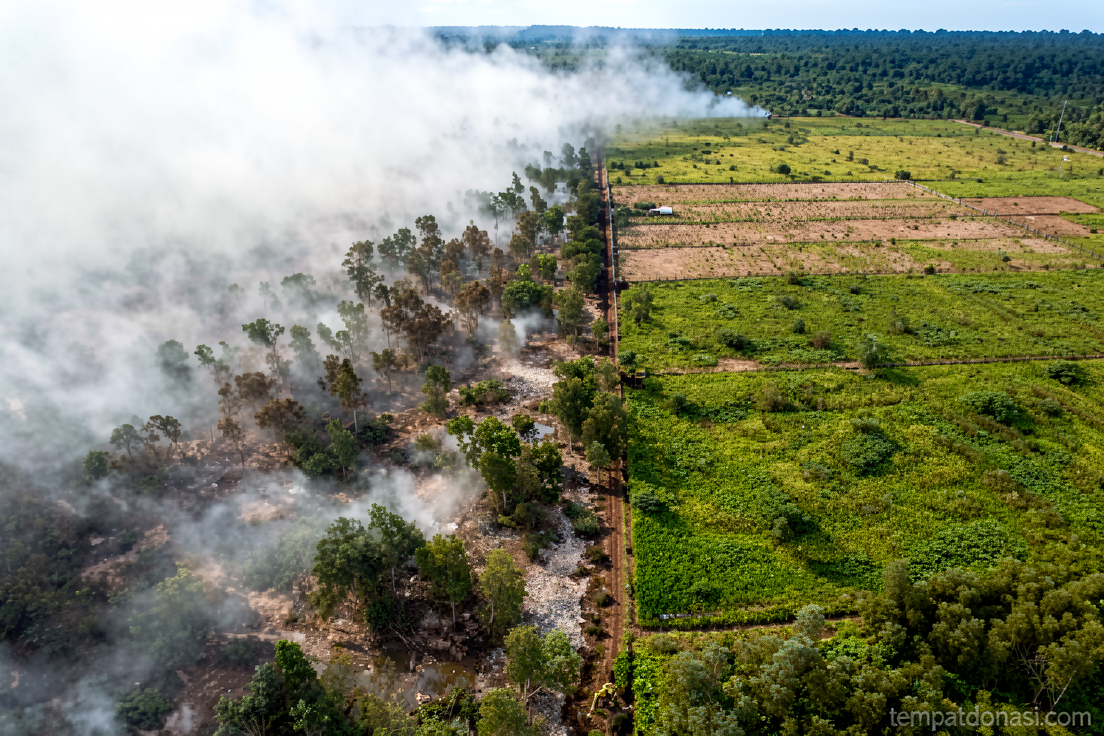
Tempatdonasi.com – Visitors planning a trek to one of Indonesia’s most iconic volcanic landscapes will find the trailhead locked. The East Java Major Natural Resources Conservation Center (BBKSDA) issued a formal closure order on September 4, 2026, halting all tourist access to the Ijen Crater Nature Tourism Park (TWA) following a series of forest fires that broke out on the preceding Friday. The shutdown, signed by BBKSDA head Nur Patria Kurniawan, carries no fixed reopening date.
“In order to minimize the risk to visitors, visiting activities in the Ijen Crater TWA area have been closed until an unspecified time.”
The announcement covers the full TWA zone spanning Banyuwangi and Bondowoso Regencies in East Java’s eastern reaches. For travelers accustomed to booking dawn hikes down into the crater rim, the indefinite nature of the closure means itineraries built around the site are now suspended until conservation authorities confirm conditions have stabilized.
What Makes Ijen Crater a High-Stakes Destination
The Ijen Crater is not merely a scenic overlook. It is an active volcanic caldera whose acidic, blue-green lake sits at roughly 2,386 meters above sea level, and whose slopes have long been worked by sulfur miners hauling yellow ore in bamboo baskets. The combination of volcanic gases, steep drop-offs, and narrow ridgelines already demands careful visitor management under normal conditions. Layer a wildfire onto that landscape, and the calculus of public safety shifts sharply toward closure.
The fires that triggered this shutdown ignited near the Pondok Bunder area, the very point where the standard hiking route descends toward the crater rim. Because the blaze sits at the trailhead itself, every incoming group would have passed through smoke, heat, and potential ember zones before reaching the crater. That proximity made a partial closure impractical; the entire visitor corridor had to be sealed.
Ground Response and Monitoring Post
Partana, head of the Banyuwangi Regional Disaster Management Agency (BPBD), confirmed that the hiking trail was shut as a precautionary measure while crews worked to contain the blaze. To maintain continuous oversight of the affected zone, a dedicated forest-fire monitoring post has been established in the Paltuding area. The post is equipped with fire engines, BPBD operational vehicles, and stationed personnel tasked with watching for reignition or spread.
On the suppression side, Partana noted that officers have deployed approximately fifteen jet pump units, each capable of projecting water to a range of roughly fifteen meters. These portable units allow small teams to reach fire lines that larger apparatus cannot, threading through dense undergrowth and narrow ravines where trucks cannot operate.
Why the Terrain Complicates Every Response
The Ijen Crater TWA area presents some of the most punishing topography in East Java. Steep cliffs, deep ravines, and unstable volcanic soil mean that conventional firefighting vehicles simply cannot reach several of the active fire points. Crews must often advance on foot, carrying hoses and pumps up gradients that would exhaust even fit hikers under clear skies. Smoke reduces visibility further, increasing the risk of slips and falls on already treacherous ground.
Recognizing the limits of ground-based suppression, Partana stated that the Banyuwangi BPBD is in active coordination with the East Java Provincial BPBD to explore whether aerial intervention—typically helicopter water drops or fixed-wing retardant runs—can be arranged. Whether such assets become available depends on weather windows, fuel logistics, and inter-agency approval, none of which are guaranteed in short order.
“In addition to handling from the ground, the Banyuwangi BPBD is also coordinating with the East Java Provincial BPBD to discuss the possibility of handling by air.”
Broader Implications for Regional Tourism and Ecology
The closure lands during a period when East Java’s eastern tourism corridor—linking Banyuwangi’s beaches, the Ijen Crater, and the Bondowoso highlands—has been attracting growing numbers of domestic and international hikers. An indefinite shutdown, even if ultimately brief, disrupts hotel bookings, guide contracts, and transport arrangements that small operators in Banyuwangi depend on for seasonal income.
Ecologically, the fires threaten not only the immediate vegetation but also the watershed that feeds the crater lake and surrounding streams. Prolonged dry-season burning in volcanic highland terrain can expose bare soil to erosion, altering sediment loads in downstream waterways. Conservation staff at BBKSDA will need to assess post-fire damage before reopening the trail, ensuring that no unstable slopes or weakened tree lines endanger future visitors.
Until the BBKSDA lifts the order and the BPBD confirms the fire is fully contained, the Ijen Crater remains closed to all tourist traffic. Travelers with existing bookings are advised to monitor official East Java conservation and disaster-management channels for reopening notices before making any travel arrangements.
Related Reading
Frequently Asked Questions
What is East Java s Ijen Crater Tourism?
East Java s Ijen Crater Tourism is the main topic of this guide. The article explains the context, practical details, and next steps readers should understand.
Why does East Java s Ijen Crater Tourism matter?
East Java s Ijen Crater Tourism matters because readers are looking for a useful answer, not just a short summary. Good content should match search intent and help them decide what to do next.