EU’s von Der Leyen Pledges $232 Million Greenland Investment
The Arctic's thawing ice shelves and newly navigable waterways have transformed a remote Danish territory into a flashpoint of great-power competition. Into
Brussels Channels €200 Million Into Greenland as Arctic Rivalry Intensifies
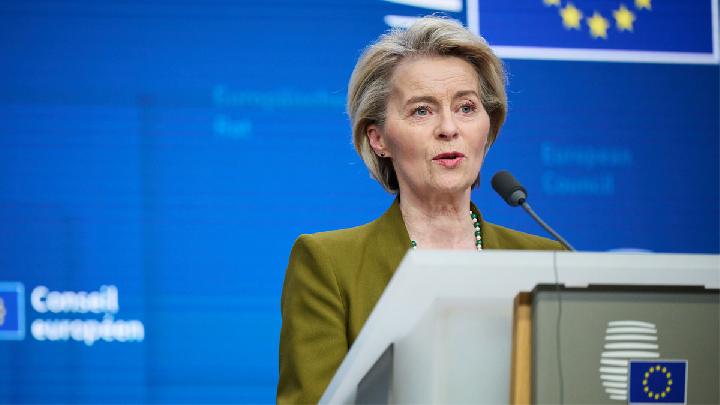
Tempatdonasi.com – The Arctic’s thawing ice shelves and newly navigable waterways have transformed a remote Danish territory into a flashpoint of great-power competition. Into that volatile landscape stepped European Commission President Ursula von der Leyen this week, landing in Nuuk with a €200 million ($232 million) investment commitment aimed at anchoring Greenland’s economic future to European interests. The pledge arrives at a moment when Washington has openly questioned whether Denmark can safeguard the island, and when NATO allies find themselves on opposite sides of a sovereignty dispute.
A Two-Day Diplomatic Mission in Nuuk
Von der Leyen spent two days in the Greenlandic capital, holding meetings with Danish Prime Minister Mette Frederiksen and Greenland’s own head of government, Jens-Frederik Nielsen. The itinerary was explicitly framed as a demonstration of solidarity: the European Commission chief arrived on Sunday to signal that Brussels stands with Copenhagen and Nuuk against external pressure. Nielsen characterized the encounter as a chance to reinforce what he called the territory’s “close friendship and good partnership” with the European bloc.
The timing is not accidental. Earlier this year, President Donald Trump publicly floated the idea that the United States should acquire Greenland outright, arguing that the island is indispensable to American national security. He has repeatedly asserted, without presenting verifiable evidence, that Chinese and Russian vessels operate freely across Greenland’s waters. His administration has also suggested that Copenhagen lacks the capacity to defend the island against those perceived threats. The rhetoric has rattled transatlantic relations and introduced friction inside NATO’s own councils, where both the Greenlandic government and Denmark have flatly rejected any suggestion of ceding sovereignty or granting “total access” to a foreign military power.
The Partnership Package: Three Pillars
At a joint press conference in Nuuk, von der Leyen unveiled what she termed the “EU-Greenland Partnership Package,” a bundle of new investments earmarked for the current fiscal year and the one following. The package is organized around three strategic priorities: connectivity infrastructure, clean energy deployment, and development of critical raw materials. In practical terms, the funding is expected to flow into satellite communications networks, renewable-energy projects, and exploration or extraction of critical minerals — sectors in which Greenland’s vast, largely untapped geology holds enormous potential.
“This is 200 million euros of new investments for Greenland for this year and the next,” von der Leyen stated.
She added that the package would open “more opportunities for the people of Greenland,” a phrase she repeated in a social-media post describing the visit as a broadening of cooperation across all three named sectors.
Sovereignty Language in a Charged Moment
Given the backdrop of American annexation talk, von der Leyen chose her words with care. Addressing the assembled press corps, she invoked the bedrock tenets of the post-1945 international order:
“Territorial integrity sovereignty, the inviolability of borders, these are fundamental principles of international law.”
She then made the point that had likely been the most anticipated line of the trip:
“Greenland’s future is for the people of Greenland and Denmark to decide, no one else.”
The statement was directed squarely at Washington while simultaneously affirming Greenland’s own self-determination rights — a delicate balancing act, since the territory exercises wide internal autonomy under the Danish crown and its roughly 57,000 residents hold EU citizenship through their Danish passports.
Greenland’s Complicated EU Ties
For readers unfamiliar with the island’s institutional history: Greenland formally withdrew from the European Economic Community in 1985 following a referendum in which a majority voted to leave. Yet the departure did not sever all legal links. Because Greenland remains part of the Kingdom of Denmark, its inhabitants retain Danish nationality and, with it, EU citizenship rights. That residual connection gives Brussels a legal and political channel into Greenlandic affairs that no other external actor possesses — a fact that makes the current investment push both symbolically potent and practically feasible.
Why the Arctic Suddenly Matters
The geopolitical stakes extend well beyond one island. Melting sea ice is opening shorter shipping corridors between Asia, Europe, and North America, compressing transit times and reducing dependence on traditional chokepoints. Simultaneously, easier access to previously frozen seabeds and coastal shelves is unlocking mineral deposits — rare earths, nickel, zinc, and other inputs essential to the global energy transition and defense-industrial base. The United States, Russia, China, and European states are all recalibrating their Arctic postures in response. Greenland, sitting astrid the North Atlantic–Arctic junction and hosting the Thule (Pituffik) Space Base, sits at the geographic center of that recalibration.
By committing fresh capital to connectivity, clean energy, and critical minerals, Brussels is attempting to lock in a productive economic relationship before the strategic window narrows. Whether €200 million is sufficient to counterbalance the scale of American military and intelligence infrastructure already present on the island remains an open question. What is clear is that the European Commission has decided the question of engagement is no longer optional, and that the answer must be delivered in Greenland’s own currency — both figuratively and, increasingly, literally.
Related Reading
Frequently Asked Questions
What is EU s von Der Leyen Pledges 232?
EU s von Der Leyen Pledges 232 is the main topic of this guide. The article explains the context, practical details, and next steps readers should understand.
Why does EU s von Der Leyen Pledges 232 matter?
EU s von Der Leyen Pledges 232 matters because readers are looking for a useful answer, not just a short summary. Good content should match search intent and help them decide what to do next.