Prabowo Eyes Merger of Geological Agency and BMKG
In the aftermath of a relentless stretch of seismic shocks, volcanic activity, and widespread fires that have battered communities from Flores to the Java Sea
Indonesia’s President Signals Institutional Overhaul After Cascade of Natural Disasters
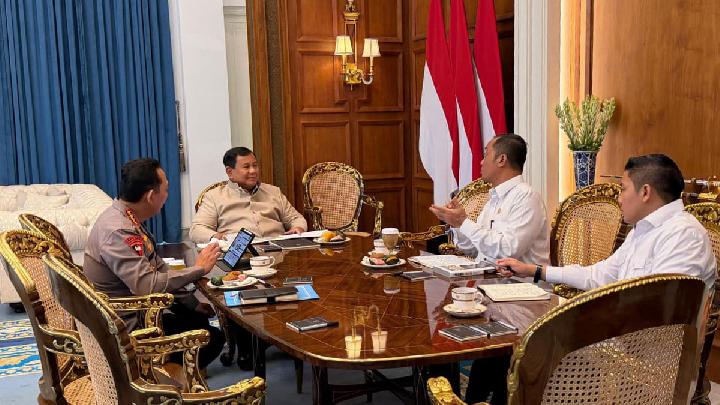
Tempatdonasi.com – In the aftermath of a relentless stretch of seismic shocks, volcanic activity, and widespread fires that have battered communities from Flores to the Java Sea coast, President Prabowo Subianto has put forward a structural reform that could reshape how Indonesia monitors and responds to natural hazards. Speaking from the Merdeka Palace in Jakarta on Monday, September 7, 2026, the president indicated that his administration is weighing the consolidation of two separate scientific bodies into a single entity: the Meteorology, Climatology, and Geophysics Agency (BMKG) and the Geological Agency, which today sits under the Ministry of Energy and Mineral Resources (ESDM).
A Merger Proposal Born of Crisis
The suggestion surfaced not in a policy white paper or a legislative hearing, but during a closed-door session devoted to the latest round of disaster-management updates. Prabowo convened the meeting after a particularly dense cluster of events — earthquakes rattling East Nusa Tenggara, the renewed eruption of Mount Anak Krakatau, and land-and-forest fires spreading across multiple provinces — made clear that existing institutional silos may be slowing the flow of critical information to decision-makers.
Addressing Lana Saria, head of the Geological Agency, the president pressed her to deepen coordination with other line ministries and state agencies in the interim. Then he turned to the longer-term question.
“Later on, we will consider whether the Geological Agency should be integrated with BMKG. But we will discuss this later,” Prabowo told attendees at the Merdeka Palace.
He offered no timeline, no legal mechanism, and no further detail on how such a merger would be structured. The remark, however, landed with weight: it was the first time a sitting president had publicly floated the idea of folding the geological survey function into the meteorological and geophysical agency that already tracks earthquakes, tsunamis, and volcanic tremors nationwide.
Why the Distinction Matters
Indonesia’s hazard-monitoring architecture has long been split across ministries. BMKG, housed under the Ministry of Communication and Digital Affairs, operates the country’s densest network of seismographs, tide gauges, and weather stations in Southeast Asia. The Geological Agency, by contrast, reports through ESDM and focuses on subsurface mapping, mineral resources, and tectonic-geology surveys. In practice, the two bodies share data, but their separate reporting lines, budget cycles, and operational mandates can create delays precisely when minutes count — for example, when a volcanic tremor sequence demands both atmospheric-ash forecasting and subsurface-venting assessment simultaneously.
Analysts of Indonesian disaster governance have long argued that a unified agency would streamline early-warning issuance, reduce duplicated field deployments, and give a single scientific voice to the president’s daily briefings. Critics, meanwhile, caution that merging a resource-exploration mandate with a public-safety mandate could dilute focus on either mission, and that the legal architecture of two ministries would need substantial amendment before any consolidation could proceed.
“Our Fate on the Ring of Fire”
Prabowo framed the merger discussion against what he described as an unbroken string of concurrent emergencies. He named the Flores earthquakes, the escalating activity at Anak Krakatau, ongoing land-and-forest fires, and the hazardous haze they generate as crises running in parallel rather than sequentially.
“This is our fate as a country located on the Ring of Fire,” he said.
The Ring of Fire — the roughly 40,000-kilometre arc of subduction zones, volcanic arcs, and fault systems encircling the Pacific basin — threads directly through the Indonesian archipelago. The nation sits atop more than 120 active volcanoes and experiences thousands of detectable seismic events each year. That geological reality makes institutional readiness not a luxury but a survival question, and it explains why the president chose to raise structural reform in the same breath as a disaster briefing.
Asked about the operational picture, Prabowo kept his remarks brief and procedural.
“I just want to monitor developments and hear about the current situation,” he told the limited session.
Budget Expansion for Disaster Mitigation
Beyond the institutional question, the president signalled a fiscal shift. He stated that the recurring disasters must be treated as a corrective lesson for his administration and that the budget line dedicated to disaster mitigation would be raised substantially in coming allocations.
“This is a lesson for us and the government I lead. The budget allocation for disaster mitigation must be significantly increased,” Prabowo concluded.
The statement arrives at a moment when Indonesia’s annual disaster-management budget has repeatedly been cited by local governments as insufficient to cover post-event reconstruction, early-warning infrastructure upgrades, and community preparedness programmes. A meaningful increase would need to flow through multiple ministries — Public Works, Health, Social Affairs, and the National Agency for Disaster Management (BNPB) — and would likely require parliamentary approval in the next budget cycle.
What Comes Next
No formal proposal, draft regulation, or inter-ministerial task force has been announced. Prabowo’s language — “we will discuss this later” — positions the merger as a deliberative option rather than an imminent decree. In the near term, the immediate directive is operational: tighter data-sharing between the Geological Agency and BMKG, closer liaison with line ministries, and continued presidential-level monitoring of the ongoing disaster cluster.
For the millions of Indonesians living within reach of an active volcano, a fault zone, or a fire-prone forest, the institutional question is ultimately secondary to the practical one: whether the next tremor, ash plume, or smoke column triggers a faster, more coherent national response than the one that followed the recent wave of events. The president’s September remarks suggest he believes the current architecture is too slow, and that the answer may lie in putting two agencies under one roof — once the political and legal groundwork is laid.
Related Reading
Frequently Asked Questions
What is Prabowo Eyes Merger of Geological Agency?
Prabowo Eyes Merger of Geological Agency is the main topic of this guide. The article explains the context, practical details, and next steps readers should understand.
Why does Prabowo Eyes Merger of Geological Agency matter?
Prabowo Eyes Merger of Geological Agency matters because readers are looking for a useful answer, not just a short summary. Good content should match search intent and help them decide what to do next.