Six Airports Reopen as Three Remain Closed After Anak Krakatau Eruption
The skies over western Java began clearing on the morning of Tuesday, September 8, 2026, as AirNav Indonesia confirmed that six airports previously grounded
Volcanic Disruption Eases as Most Jakarta-Area Airports Resume Service After Anak Krakatau Ash Cloud
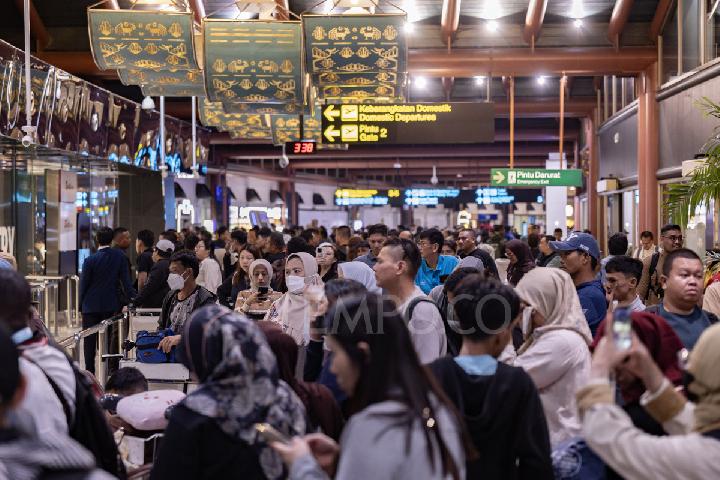
Tempatdonasi.com – The skies over western Java began clearing on the morning of Tuesday, September 8, 2026, as AirNav Indonesia confirmed that six airports previously grounded by volcanic ash from Mount Anak Krakatau had returned to normal operations. The decision, effective from midnight Western Indonesia Time, marked a significant step toward restoring air connectivity across the region after days of widespread flight cancellations and passenger disruptions.
Three airports, however, remained shut as of the early hours of September 8, with closures extending at least until 10:00 a.m. WIB. The continued shutdowns reflect the uneven nature of ash dispersion, which does not dissipate uniformly across all flight corridors simultaneously.
“Aeronautical information updates will continue to be made according to the developments and safety evaluation results in aviation,” said Hermana Soegijantoro, EVP of Corporate Secretary at AirNav Indonesia, addressing the ongoing monitoring situation on Tuesday.
Airports Back in Service
The six facilities cleared to reopen include the two primary gateways serving the Jakarta metropolitan area — Soekarno-Hatta International Airport (ICAO code WIII) and Halim Perdanakusuma Airport (WIHH) — along with Husein Sastranegara Airport (WICC) in Bandung, Budiarto Airport (WIRR) in Tangerang, Pondok Cabe Airport (WIHP) in South Tangerang, and Pagar Alam/Atung Bungsu Airport (WIPY) in Pagar Alam.
Each reopening was authorized through a specific NOTAM (Notice to Air Missions), the formal instrument by which air navigation services communicate changes to flight operations. Soekarno-Hatta resumed operations under NOTAM A3395/26, effective 00:30 WIB on September 8, with a reminder to pilots that residual ash remained within the Flight Information Region and that extra caution was warranted during arrival and departure phases. Halim Perdanakusuma reopened under NOTAM A3396/26 at 00:40 WIB. Husein Sastranegara followed at 00:42 WIB under NOTAM C1123/26, while Budiarto and Pondok Cabe cleared at 01:25 and 01:28 WIB respectively. Pagar Alam/Atung Bungsu had already resumed service the previous evening, at 08:12 WIB on September 7, under NOTAM C1107/26.
Three Airports Still Closed
As of the latest NOTAM updates, three airports remained closed until an estimated 10:00 a.m. WIB on September 8, 2026:
Radin Inten II Airport (WILL) in Lampung, Muhammad Taufiq Kiemas Airport (WILP), and Salakanagara Tanjung Lesung Airport (WIHI) in Pandeglang. These facilities sit closer to the direct ash trajectory and had not yet passed the safety thresholds required for reopening.
“The issuance of the NOTAM refers to changes in the ash dispersion that have affected flight operations. Based on the latest safety evaluations and aeronautical information, several airports can now resume operations,” Hermana explained, underscoring that each clearance was tied to specific meteorological and safety data rather than a blanket timeline.
What Pilots and Passengers Should Know
Volcanic ash poses a particular hazard to jet engines, which can ingest fine particulate matter and suffer catastrophic damage at altitude. Even after visible clouds appear to have thinned, residual ash at cruising levels can persist for hours or days, depending on wind patterns. AirNav Indonesia’s monitoring protocol includes periodic volcanic ash tests conducted at affected airport locations — the most recent round took place on September 7, 2026 — to confirm that surface and low-level conditions are within safe operating parameters before any facility is cleared.
The Anak Krakatau eruption, located in the Sunda Strait between Java and Sumatra, has periodically disrupted aviation across western Indonesia. The scale of this particular event was substantial: earlier reporting indicated that roughly 2,961 flights were affected and approximately 341,000 passengers were left stranded or delayed during the peak of the disruption. The phased reopening now underway represents the operational recovery from that peak.
Ongoing Coordination
AirNav Indonesia stated that it continues to track volcanic activity and ash dispersion in real time, coordinating with national aviation regulators and other stakeholders throughout the recovery period. Further NOTAMs will be issued as conditions evolve, meaning that the three still-closed airports could reopen earlier or later than the 10:00 a.m. estimate depending on fresh safety data.
Travelers with bookings at the affected facilities were advised to monitor airline notifications and airport announcements for updated departure and arrival times. The phased nature of the reopening means that some flights may still face delays even at airports that have technically resumed operations, as ground crews complete post-closure inspections and schedules are rebuilt.
Related Reading
Frequently Asked Questions
What is Six Airports Reopen as Three Remain?
Six Airports Reopen as Three Remain is the main topic of this guide. The article explains the context, practical details, and next steps readers should understand.
Why does Six Airports Reopen as Three Remain matter?
Six Airports Reopen as Three Remain matters because readers are looking for a useful answer, not just a short summary. Good content should match search intent and help them decide what to do next.