Soekarno-Hatta Airport Resumes Flights as Anak Krakatau Ash Clears
Soekarno-Hatta International Airport in Tangerang, Banten, reopened its full complement of runways and air corridors on Tuesday, September 8, 2026, after a
Indonesia’s Largest Airport Back in the Air After Volcanic Ash Disruption
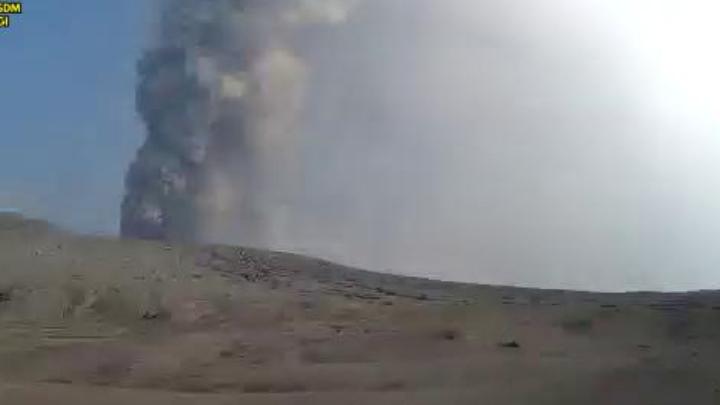
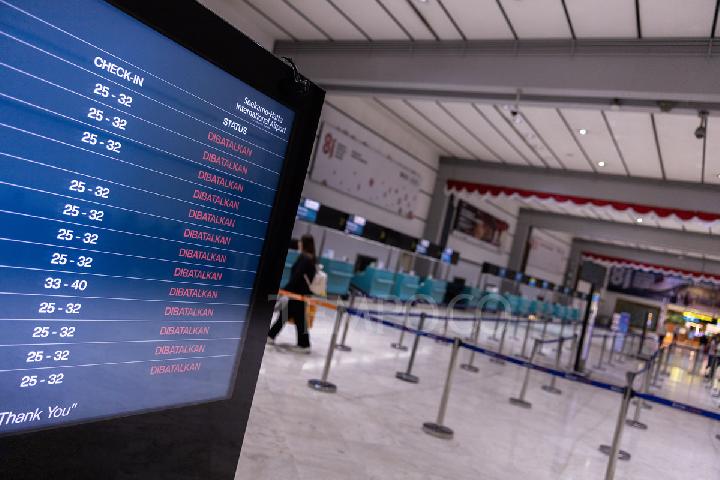
Tempatdonasi.com – Soekarno-Hatta International Airport in Tangerang, Banten, reopened its full complement of runways and air corridors on Tuesday, September 8, 2026, after a two-day shutdown triggered by drifting ash from Mount Anak Krakatau. The disruption began on Sunday, September 6, when a plume of fine volcanic particulate from the island volcano in the Sunda Strait crossed flight paths over western Java, forcing ground stops and cancellations across the country’s busiest aviation hub.
By Tuesday afternoon, the terminal complex had processed 324 flights — comprising 208 departures and 116 arrivals — as operations climbed back toward normal capacity. Airport officials confirmed that every air corridor previously closed had been reinstated, including routes serving Sumatra’s northern cities of Medan and Aceh.
“All air corridors have been reopened. Routes to various destinations—including Medan and Aceh—are safe,” stated Yudistiawan, the airport’s Assistant Deputy for Communication and Legal Affairs.
Gradual Normalization Under Updated Flight Notices
The return to scheduled service was not instantaneous. Aviation authorities issued revised Notices to Airmen (NOTAMs) that progressively cleared restricted sectors of the airspace above the Java Sea and western Java. Each NOTAM update unlocked additional flight paths, allowing carriers to reintroduce routes in stages rather than all at once.
“We recorded a significant spike in activity as flight schedules normalized,” Yudistiawan noted, describing the sharp uptick in traffic volume once the bulk of the ash cloud had dissipated and wind patterns shifted the residual particulate away from active corridors.
By the close of Tuesday, total aircraft movements at the hub were projected to reach 896 flights, moving an estimated 113,000 passengers through the day — figures approaching the airport’s typical daily throughput of roughly 900 to 1,000 movements on a standard weekday.
Why Volcanic Ash Is a Serious Aviation Hazard
Mount Anak Krakatau, which sits roughly 35 kilometers offshore from the Lampung coast of Sumatra, has a long history of explosive eruptions. Its most recent major event in December 2020 produced a tsunami that killed more than 400 people along the nearby coast. The volcano’s proximity to one of the world’s busiest air corridors means that even moderate ash emissions can contaminate flight paths over western Java within hours, depending on prevailing wind direction.
For jet engines, volcanic ash is far more dangerous than ordinary dust. Particles smaller than 30 micrometers can be ingested at altitude, melt inside the combustion chamber, and re-solidify as glassy deposits on turbine blades. This can cause flameouts, asymmetric thrust, and, in extreme cases, total engine failure. That is why international aviation guidance mandates immediate rerouting or descent whenever ash concentrations exceed defined thresholds, and why ground stops are imposed rather than allowing aircraft to fly through or near a plume.
Ground-Side Safety Measures Before Clearance
Airport management stressed that no takeoff or landing would be authorized until rigorous pre-flight safety checks were completed. Ground crews performed repeated sweeping and washing of runways, taxiways, and apron surfaces to remove residual ash deposits that could reduce braking friction or be sucked into engines during rotation.
Airlines operating out of the hub were additionally required to conduct thorough fleet inspections in line with directives issued by Indonesia’s Ministry of Transportation. These inspections included visual checks of engine intakes, pitot-static systems, and landing-gear components for ash contamination before any aircraft was cleared back into service.
Passenger Guidance and Terminal Operations
With thousands of travelers affected by the weekend’s cancellations and delays, airport authorities issued clear instructions to reduce congestion at check-in counters and boarding gates. Passengers whose flights had been disrupted were urged to verify their current flight status through airline channels before making the trip to the terminal.
“Passengers choosing to reschedule are advised to monitor their updated itineraries. Meanwhile, passengers with confirmed departures for today may proceed directly to Soekarno-Hatta Airport,” Yudistiawan said.
The airport’s two main terminals — Terminal 1 for domestic carriers and Terminal 3 for international and premium domestic services — resumed full check-in operations on Tuesday morning. Baggage handling, customs clearance, and immigration processing returned to standard throughput rates as staff worked extended shifts to clear the backlog accumulated over the two-day closure.
Broader Implications for Regional Connectivity
The shutdown, though brief, rippled through Indonesia’s domestic and international network. Carriers such as Garuda Indonesia, Citilink, Lion Air, and Sriwijaya Air suspended dozens of flights over the weekend, affecting connections between Jakarta and destinations across Sumatra, Kalimantan, Sulawesi, and the eastern archipelago. International partners including Singapore Airlines, Malaysia Airlines, and Thai Airways also adjusted schedules for their Jakarta slots.
For travelers planning trips through western Java in the coming weeks, aviation authorities have noted that Anak Krakatau remains monitored by the Indonesian Volcanology Center (PVMBG) in Bandung. Routine seismic and gas-emission readings will continue to inform NOTAM issuances, and any renewed ash activity could prompt temporary corridor restrictions again. Passengers with flexible tickets are encouraged to track airline advisories closely through the September–October period, when seasonal wind patterns can carry plumes directly over the airport’s approach corridors.
Related Reading
Frequently Asked Questions
What is Soekarno Hatta Airport Resumes Flights as Anak?
Soekarno Hatta Airport Resumes Flights as Anak is the main topic of this guide. The article explains the context, practical details, and next steps readers should understand.
Why does Soekarno Hatta Airport Resumes Flights as Anak matter?
Soekarno Hatta Airport Resumes Flights as Anak matters because readers are looking for a useful answer, not just a short summary. Good content should match search intent and help them decide what to do next.