When Will Giuseppe Garibaldi Arrive in Indonesia? Here’s Its Mission
The Italian Navy aircraft carrier Giuseppe Garibaldi is scheduled to dock in Indonesian waters on September 17, where it will be pressed into service as a
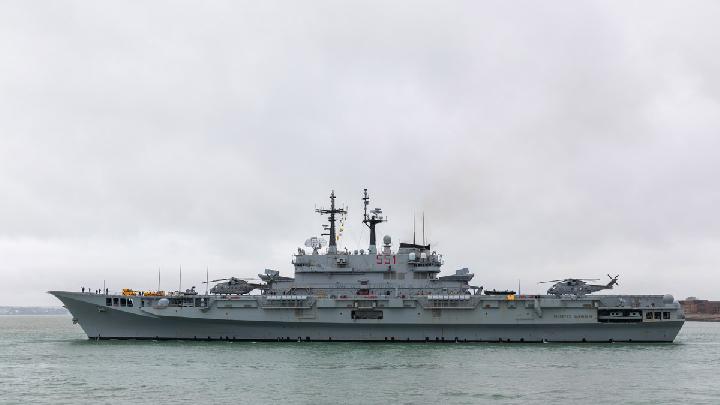
Italy’s Giuseppe Garibaldi Set to Land in Indonesia as a Floating Firefighting Platform
Tempatdonasi.com – The Italian Navy aircraft carrier Giuseppe Garibaldi is scheduled to dock in Indonesian waters on September 17, where it will be pressed into service as a mobile launchpad for helicopters and drones tasked with battling forest and land fires across the archipelago. The vessel, currently transiting the Arabian Sea, is expected to complete its journey without delay, according to statements released by the Indonesian Navy on Tuesday.
The deployment marks an unusual repurposing of a warship: rather than projecting naval power, the Garibaldi will function as an airborne firefighting hub, ferrying medium-lift helicopters to remote hotspots where ground crews cannot reach quickly enough. Rear Adm. Tunggul, head of the Navy Information Service, confirmed the operational concept in remarks made to ANTARA in Jakarta.
“Garibaldi is planned to arrive in Indonesia and serve as a carrier for helicopters and drones. It can accommodate medium-sized helicopters capable of carrying four to five tons of water, so the hope is they can quickly reach fire hotspots and help tackle forest and land fires.”
What the Ship Will Do Once Aboard
Once the carrier is positioned, medium-sized helicopters operating from its flight deck will be tasked with dropping four to five tons of water per sortie onto active fire zones. Tunggul declined to specify which exact models would be deployed or how many crew members would accompany the aircraft, noting only that the vessel would be activated for firefighting duties immediately upon arrival. The drones mentioned in the plan are expected to provide aerial reconnaissance and thermal imaging to identify emerging hotspots before they escalate.
The decision to task a carrier with fire suppression reflects the sheer scale of Indonesia’s annual fire season. Each year, peatland and forest fires in Sumatra, Kalimantan, and Sulawesi generate thick haze that blankets neighboring countries, disrupts aviation, and triggers public-health emergencies. Conventional firefighting assets — fixed-wing tankers, small helicopters, and ground pumps — often cannot cover the vast, roadless stretches of tropical forest where fires ignite. A ship-based rotary-wing platform, capable of repositioning rapidly along the coastline, offers a degree of flexibility that fixed infrastructure cannot match.
Prabowo’s Announcement and the Conversion Plan
The broader strategy behind the Garibaldi’s mission was laid out by President Prabowo Subianto on Monday, September 7, during a cabinet-level meeting focused on the government’s disaster-response posture. Prabowo revealed that the Italian vessel would formally join the Indonesian Navy and undergo refurbishment to convert its flight deck and hangar into a dedicated helicopter-and-drone carrier.
“Fortunately, an aircraft carrier from Italy will soon join our Navy. We will refurbish it and convert it into a carrier for helicopters and drones.”
Under the conversion blueprint, the ship’s deck will be configured to host up to ten medium-lift helicopters simultaneously. Prabowo specified that the aircraft in question would possess capabilities comparable to the Sikorsky UH-60 Black Hawk and the Mil Mi-17, both of which can sling external water tanks of roughly four to five tons. With ten such helicopters operating in rotation, the president argued, the response force could saturate multiple fire fronts at once rather than sending a single aircraft on repeated, time-consuming sorties.
“If we have 10 helicopters, they can quickly move to the areas with the most fire hotspots. This will greatly help our response.”
Preparedness Over Reaction
Prabowo framed the acquisition within a wider philosophy of pre-emptive disaster management. Rather than waiting for fires to erupt and then scrambling assets into place, the government intends to stage equipment and personnel ahead of peak burning season so that response times are measured in hours rather than days.
“We have to prepare for mitigation. We should not wait for an incident to happen. We have to prepare well in advance.”
The Garibaldi’s arrival thus serves a dual purpose: it provides an immediate, stopgap firefighting capability for the current fire season, while simultaneously anchoring a longer-term capability-building program that will see the converted carrier integrated into the Navy’s permanent fleet. For an archipelago of roughly 17,000 islands where many fire-prone regions are accessible only by air or sea, a floating helicopter base positioned offshore offers a logistical advantage that fixed airfields simply cannot replicate.
Navy officials have not yet disclosed the full operational timeline beyond the September 17 arrival date, nor have they confirmed whether the vessel will remain in Indonesian waters for the duration of the fire season or rotate back to Italy after an initial deployment window. What is clear, however, is that the Garibaldi’s mission in Indonesian waters will be defined not by combat but by water drops — a striking inversion of what an aircraft carrier is conventionally built to do.
Related Reading
Frequently Asked Questions
What is When Will Giuseppe Garibaldi Arrive in Indonesia?
When Will Giuseppe Garibaldi Arrive in Indonesia is the main topic of this guide. The article explains the context, practical details, and next steps readers should understand.
Why does When Will Giuseppe Garibaldi Arrive in Indonesia matter?
When Will Giuseppe Garibaldi Arrive in Indonesia matters because readers are looking for a useful answer, not just a short summary. Good content should match search intent and help them decide what to do next.