Indonesia: Will BMKG Merge with Geological Agency?
Jakarta — Indonesia's Meteorology, Climatology, and Geophysics Agency (BMKG) has formally signaled its willingness to fold into the Geological Agency, a move
Indonesia’s Weather and Geological Bodies Face a Potential Merger Under Prabowo’s Disaster Reform Push
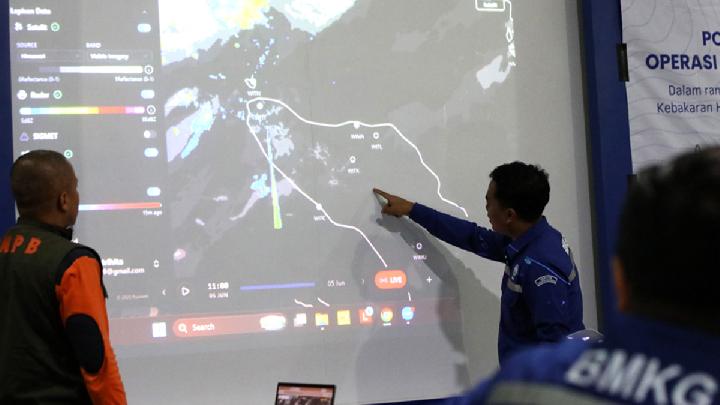
Tempatdonasi.com – Jakarta — Indonesia’s Meteorology, Climatology, and Geophysics Agency (BMKG) has formally signaled its willingness to fold into the Geological Agency, a move that would consolidate two of the nation’s most critical disaster-monitoring institutions under a single administrative roof. The announcement, delivered by BMKG Secretary-General Guswanto on Tuesday, follows a directive from President Prabowo Subianto who has framed the integration as a step toward sharper public-service delivery and more effective disaster-mitigation coordination.
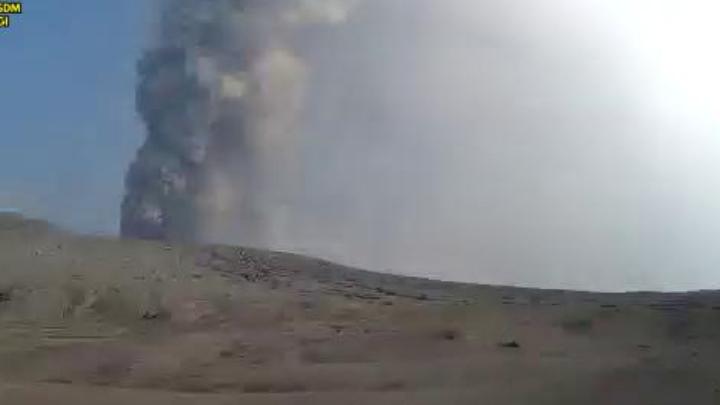
The proposal lands against a backdrop of escalating natural hazards across the archipelago. Indonesia sits astride the Pacific Ring of Fire, where tectonic plate boundaries generate frequent earthquakes, active volcanic systems, and tsunami-prone coastlines. A string of destructive events — from seismic shocks to volcanic eruptions — has recently rattled multiple provinces, prompting the executive branch to scrutinize how fragmented institutional responsibilities slow down early-warning timelines.
A Long-Shared Mission, Now Under One Roof?
Guswanto stressed that the two agencies have operated as strategic partners for years, their mandates overlapping in the domain of geophysical and terrestrial hazard surveillance. Earthquakes, volcanic activity, and tsunami generation all sit at the intersection of BMKG’s atmospheric and geophysical monitoring and the Geological Agency’s subsurface and land-based assessments. In practical terms, the two bodies already exchange data streams and coordinate public advisories; a formal merger would simply codify what has long been an informal operational partnership.
“To improve public services and support disaster mitigation efforts,” Guswanto said, echoing the language of the presidential directive. He added that BMKG’s core functions — monitoring seismic and volcanic signals, analyzing threat trajectories, and disseminating public warnings — would persist unchanged under any restructured arrangement.
“And it will continue to be strengthened by the President’s directives,” Guswanto added.
Prabowo’s Original Instruction
The merger idea originated directly with the president. During a closed-door session on disaster-management reform held at the Presidential Palace in Jakarta on Monday, September 7, 2026, Prabowo raised the prospect of integrating BMKG with the Geological Agency, which currently operates under the Ministry of Energy and Mineral Resources. The meeting was convened in the wake of a particularly intense run of natural disasters that had struck disparate regions of the country within a compressed timeframe.
In that session, Prabowo directed Lana Saria, head of the Geological Agency, to deepen inter-ministerial and inter-agency collaboration on hazard preparedness. He then floated the structural question without committing to a timeline.
“Later on, we will consider whether the Geological Agency should be integrated with BMKG. But we will discuss this later,” Prabowo told attendees.
He offered no further elaboration on the mechanics, legal basis, or expected schedule of such a consolidation. The limited-meeting format meant no public transcript was released, leaving much of the discussion’s texture to official summaries and subsequent press briefings.
What Remains Unclear
When journalists pressed Guswanto on whether BMKG had entertained a merger proposal before the president’s explicit instruction, the Secretary-General gave no definitive answer. The ambiguity matters because institutional restructuring of this scale typically requires legislative or regulatory action, budgetary realignment, and the reassignment of thousands of field stations, laboratory units, and data pipelines. Neither agency has published a transition roadmap, and no parliamentary committee has yet been tasked with reviewing the proposal.
Observers note that the Geological Agency’s current placement under the Ministry of Energy and Mineral Resources gives it a resource-sector orientation, whereas BMKG reports through a separate administrative channel. Merging the two would require deciding which ministry, if any, would house the combined entity, and how the distinct statutory mandates of each body would be reconciled in law.
Why the Timing Matters
Indonesia’s disaster-exposure profile makes the question of institutional coherence more than academic. The archipelago’s roughly 13,000 islands span multiple seismic zones, host over 120 active volcanoes, and present thousands of kilometers of coastline vulnerable to tsunami run-up. Early-warning lead times for tsunamis can be measured in minutes; for volcanic ash clouds, in hours. Fragmented data ownership between agencies can introduce delays at precisely the moments when decision-makers need unified, authoritative hazard assessments.
Proponents of consolidation argue that a single agency would eliminate duplicated sensor networks, streamline public-communication channels, and present one accountable voice to local governments and the general public. Critics, though not yet formally organized, point to the risk that merging distinct scientific cultures — atmospheric physics versus solid-earth geology — could dilute specialized expertise and create bureaucratic bottlenecks in a domain where speed is the currency of survival.
For now, the proposal sits at the stage of presidential intent. No implementing regulation has been drafted, no parliamentary hearing scheduled, and no public consultation announced. Guswanto’s Tuesday statement confirms BMKG’s institutional readiness but stops short of confirming a date, a structure, or a legal pathway. The next substantive step will likely come from the presidential office or the coordinating ministry responsible for disaster management, and until then the two agencies will continue operating side by side — partners in practice, separate in name.
Related Reading
Frequently Asked Questions
What is Indonesia?
Indonesia is the main topic of this guide. The article explains the context, practical details, and next steps readers should understand.
Why does Indonesia matter?
Indonesia matters because readers are looking for a useful answer, not just a short summary. Good content should match search intent and help them decide what to do next.