Timeline: Five Journalists Missing Near Mount Anak Krakatau
Coastal waters south of Java's western tip have become the focus of a large-scale joint search as authorities race to locate five journalists who vanished
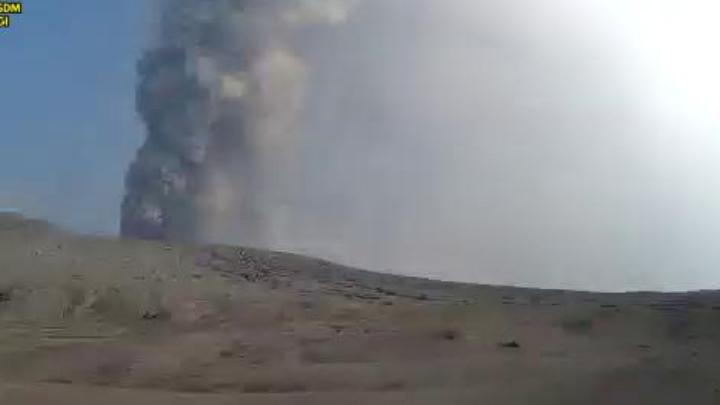
Search Operation Expands as Five Journalists Remain Unaccounted for Off Mount Anak Krakatau
Tempatdonasi.com – Coastal waters south of Java’s western tip have become the focus of a large-scale joint search as authorities race to locate five journalists who vanished while en route to document volcanic activity at Mount Anak Krakatau. The Sunda Strait, a narrow and often turbulent waterway separating Java from Sumatra, has swallowed the group’s trail, and as of the latest field reports, no trace of the speedboat or its occupants has surfaced.
The Banten Regional Police and the National Search and Rescue Agency (Basarnas) confirmed that the journalists lost all contact on Monday, September 7, 2026, roughly two hours after they put out from a small pier in Pandeglang Regency. By the following day, a coordinated multi-agency operation involving more than fifty personnel had been launched, yet the search had turned up nothing.
What Happened on Monday Afternoon
Grand Commissioner Maruli Ahiles Hutapea, who heads the Public Relations Division of the Banten Regional Police, laid out the sequence of events in a briefing delivered Tuesday evening, September 8, 2026. According to his account, the group set out from Pagedongan Pier in Carita around 14:00 WIB aboard a motor speedboat. The vessel was crewed by a captain named Warta, aged 55, a deckhand named Surakman, aged 60, and a local guide named Heriyanto, aged 49.
“The group of journalists departed from Pagedongan Pier, Carita, on Monday afternoon to cover the activities of Mount Anak Krakatau,” Maruli said.
The five passengers were all members of the press: M. Bagus Khoirunnas of Antara News Agency, Ari Basuki of Merdeka.com, Yudhis of Inews, Daus of the Anadolu Agency, and Donal, an independent freelancer. Their stated purpose was to observe and report on the ongoing eruptive behavior of the volcano, which sits on a small island in the middle of the Sunda Strait and has been producing ash plumes and tremors that periodically disrupt air traffic over western Indonesia.
The Final Minutes of Contact
Maruli explained that the last confirmed signal from the group arrived at approximately 14:42 WIB, when one member transmitted a position fix to a colleague still ashore. Within twenty-two minutes, at roughly 15:04 WIB, every attempt to reach the boat failed.
“The last communication was known to have occurred around 14:42 WIB, when one of the group members sent their last location to their colleague. Around 15:04 WIB, communication with the group of journalists could no longer be established,” Maruli stated.
The last plotted position placed the vessel approximately 9.98 nautical miles from a reference point designated RIB 02 BTN, a stretch of open strait where currents and wind can build quickly. At typical speedboat pace, the estimated transit time from the pier to that coordinate is around forty minutes, meaning the group had barely reached its intended observation zone when silence fell.
Search Timeline and Deployment
On Tuesday, September 8, the formal alert reached Basarnas at 13:55 WIB when Bayu, a journalist affiliated with Antara, relayed the missing-contact information to his colleagues, who then escalated the matter to authorities. By 14:15 WIB, the Pandeglang SAR Alert Unit had moved to the departure pier to gather vessel details and deployed a rigid inflatable boat (RIB) into the strait.
Al Amrad, head of the Basarnas Banten office, confirmed that his team and police units had worked to triangulate the area where the final signal was received. Later that afternoon, around 17:25 WIB, the agency’s vessel KN. The Tetuka was dispatched to reinforce the on-water search.
The combined operation fielded 54 personnel drawn from SAR units, police, military detachments, local fishermen, and residents familiar with the strait’s channels. As of 18:15 WIB, a sweep of the waters surrounding Rakata Island and Panjang Island—both within a 3.2-kilometer radius of the Anak Krakatau cone—had produced no visual or acoustic evidence of the missing boat or its occupants.
On Wednesday, September 9, KN. The Tetuka was scheduled to return to the last-known-contact coordinates for a second, more focused pass.
Conditions Complicating the Search
Maruli described the prevailing weather over the search zone as partly cloudy, with south-to-north winds gusting near 16.7 knots and wave heights between 0.4 and 1 meter. More critically, volcanic ash drifting from the active crater had degraded visibility to roughly one mile, a factor that can mask a small craft on the water and make aerial or surface spotting extremely difficult.
The Sunda Strait itself presents persistent hazards: strong tidal currents, limited charted depth in places, and frequent fog banks. A speedboat of modest size, carrying eight people, can be overwhelmed by a sudden swell or a mechanical failure within minutes, particularly when operating close to an active volcanic island where ash-laden winds reduce reaction time.
What Comes Next
Authorities have indicated that the search will continue through multiple shifts, with the Tetuka and additional RIBs rotating through the strait’s likely corridors. Maruli closed his briefing with a commitment to sustained effort:
“Together with Basarnas, we will continue to make maximum search efforts and provide information updates based on the results in the field.”
For the families of the five journalists and for the broader news community, each passing hour tightens the window in which survival becomes statistically less likely. The volcanic setting adds a layer of urgency: if the boat was damaged near the island, ashfall and rising sea temperatures could compound any injury. Until a positive identification—of the vessel, of a life jacket, of a signal—is made, the operation remains classified as an active search-and-rescue mission, and every agency involved has pledged to keep updating the public as field results allow.
Related Reading
Frequently Asked Questions
What is Timeline?
Timeline is the main topic of this guide. The article explains the context, practical details, and next steps readers should understand.
Why does Timeline matter?
Timeline matters because readers are looking for a useful answer, not just a short summary. Good content should match search intent and help them decide what to do next.