
Corals as Climate Archive: Are El Ninos Intensifying?
Evidence preserved inside coral skeletons from the Galapagos Islands suggests that powerful El Niño events in the eastern Pacific have become more intense
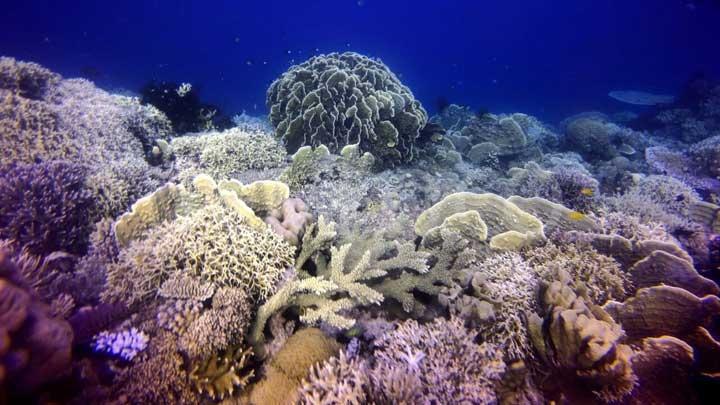
Coral Records Point to Stronger El Niño Extremes in a Warming Era
Tempatdonasi.com – Evidence preserved inside coral skeletons from the Galapagos Islands suggests that powerful El Niño events in the eastern Pacific have become more intense than they were before industrialization. The findings offer a rare long-term view of ocean conditions at a time when a major El Niño is developing across the Pacific.
El Niño is a naturally occurring climate pattern that generally returns every two to seven years, often becoming evident toward the end of a calendar year. Its effects vary widely because each event develops under different ocean and atmospheric conditions. Strong episodes are commonly identified when sea-surface temperatures off western South America rise more than 1.5 degrees Celsius above normal.
In July, the US National Oceanic and Atmospheric Administration observed warming exceeding three degrees Celsius in parts of the eastern and central Pacific. The German Meteorological Service said the developing event could potentially rank among the strongest recorded.
Yet a central scientific question remains unresolved: does climate change make the most severe El Niño events more likely or more powerful? The Max Planck Institute for Meteorology has noted that this remains an active area of research.
A climate record beyond satellite observations
Modern ocean-temperature measurements have an important limitation. Satellite monitoring, which provides the most reliable broad coverage of sea-surface temperatures, only became available from the 1980s. That leaves scientists with limited direct evidence of how El Niño behaved over the centuries before large-scale fossil-fuel use reshaped the climate system.
Corals can help fill part of that historical gap. Climate scientist and paleoclimatologist Julia Cole of the University of Michigan and her research team examined both living and fossil corals from around Ecuador’s Galapagos Islands in the eastern Pacific. Their work, published in Science, reconstructs temperature changes over roughly 1,000 years.
“We’ve known for a long time that the last 40 or 50 years has really strong El Nino events,” says Cole.
The challenge has been determining whether those recent extremes belong to normal natural variation or represent something unusual in a world that is warmer than it was in the past.
“It’s been hard to say whether the recent strong El Nino that we’ve had is part of a natural cycle, or if it’s something a little bit unusual related to being in a warmer than normal world.”
The coral evidence leans strongly toward the second explanation: the recent intensity does not appear typical when viewed against the much longer pre-industrial record.
How coral skeletons record ocean temperatures
Corals grow slowly, usually adding around one to two centimeters each year. As they build their hard external skeletons, they create layers comparable to the annual rings found in trees. Each layer is formed through calcification, when calcium carbonate from seawater becomes part of the coral structure.
The chemistry of those layers changes with the surrounding water temperature. This allows researchers to examine coral skeletons as natural archives of past ocean conditions rather than relying solely on instrumental measurements.
“We made use of the fact that corals record ocean temperatures as they grow, in the chemical composition of their skeleton,” Cole explains.
Strontium is among the elements incorporated into coral skeletons. Colder water leads to greater strontium uptake, while warmer conditions result in less. The proportion of strontium relative to calcium can therefore reveal shifts in sea temperature over time.
“In colder temperatures, it [the skeleton] absorbs more strontium, in warmer temperatures less,” says Cole.
Oxygen isotopes provide another temperature signal. Coral structures contain both the more common oxygen-16 and the rarer oxygen-18. Their relative abundance varies with water temperature, with cooler conditions associated with greater incorporation of oxygen-18.
“The rare oxygen-18 and the common oxygen-16 are also taken up in a ratio that reflects temperature,” says Cole.
Using these chemical indicators, the team reconstructed past warming and cooling in the eastern Pacific. Their conclusion was that El Niño episodes have strengthened substantially compared with conditions before the industrial era.
A warning sign, with important limits
The study supports expectations from leading climate models. Jens Zinke, a professor of paleobiology at the University of Leicester, said those models project a measurable increase in the likelihood of extreme eastern Pacific El Niño events during the 2030s.
“These developments correspond to the predictions of the best climate models. They predict a quantifiably higher likelihood of extreme eastern Pacific El Nino events in the 2030s,” says Zinke.
Still, coral-based reconstructions are not a final answer to every question about El Niño. They offer unusually detailed timing, capable of reflecting changes from monthly to seasonal scales, but their readings are shaped by local environmental conditions. This can make direct comparisons with modern temperature records difficult.
Andreas Fink, professor of meteorology at the Institute for Meteorology and Climate Research in Karlsruhe, cautioned that uncertainty remains when coral measurements are set alongside contemporary observations. He also noted that the research is geographically focused on the eastern Pacific, a limitation when interpreting a climate system that spans a vast ocean basin.
For readers, the importance of the research lies in its longer perspective. Instrument records may capture only a brief portion of Earth’s climate history, while coral reefs preserve chemical traces from far earlier periods. These records cannot remove all uncertainty, but they can help distinguish ordinary climate swings from changes that may be emerging in a warmer world.
As the Pacific enters another potentially intense El Niño phase, the coral archive adds weight to concerns that the strongest events may be shifting beyond the range experienced for much of the past millennium.
Related Reading
Frequently Asked Questions
What is Corals as Climate Archive?
Corals as Climate Archive is the main topic of this guide. The article explains the context, practical details, and next steps readers should understand.
Why does Corals as Climate Archive matter?
Corals as Climate Archive matters because readers are looking for a useful answer, not just a short summary. Good content should match search intent and help them decide what to do next.