Jakarta’s Pramono Responds to Prabowo’s Praise of His Performance
Jakarta Governor Pramono Anung Wibowo said residents should decide for themselves how well he has performed, responding to public praise from President
Pramono Leaves Performance Judgement to Jakarta Residents
Tempatdonasi.com – Jakarta Governor Pramono Anung Wibowo said residents should decide for themselves how well he has performed, responding to public praise from President Prabowo Subianto despite the two leaders coming from different political parties.
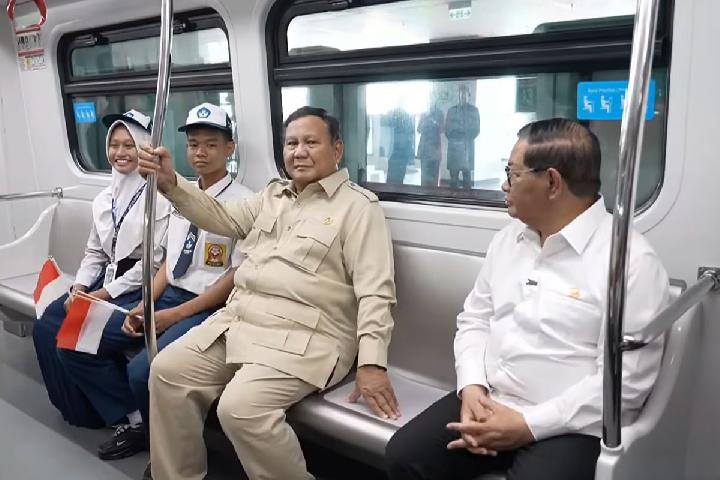
Speaking at the Jakarta Red Cross, or PMI, building on Thursday, Pramono took a measured approach to the president’s remarks. His response came one day after Prabowo highlighted the governor’s work during the opening of the Kelapa Gading–Manggarai Light Rail Transit, or LRT, route in Jakarta on Wednesday, September 16.
If I’m praised, let the public assess that.
The brief answer placed the focus on public accountability rather than political recognition. For a city government, performance is ultimately experienced in daily life: through access to transportation, the pace of development, public services, and the ability of institutions to address the needs of millions of residents.
Cooperation Beyond Party Lines
During the LRT inauguration, Prabowo said political differences should not become an obstacle to cooperation between the national administration and Jakarta’s regional government. The president emphasized that officials chosen through elections share a central obligation to serve the public.
Prabowo said he was prepared to recognize capable leadership regardless of party affiliation.
I have to admit, if there is a great governor, I will admit that he is great. Even though he is not from my party.
The statement carried a wider message about relations between central and regional authorities. Elections can create political competition, but governments must continue operating after voting ends. In Jakarta, coordination between different levels of government can be particularly important because the capital’s transport networks, investment climate, and urban development often involve both regional and national priorities.
Prabowo noted that the two sides had previously faced each other in an election contest. He said that circumstance did not prevent them from working together afterward, as long as leaders understood that their mandate came from the people.
We can respect each other because we realize, deep in our hearts, that we were elected by the people.
The inauguration of the Kelapa Gading–Manggarai LRT line provided a visible setting for that message. Rail links are more than ceremonial infrastructure projects: they are intended to connect parts of a crowded metropolitan area, give commuters another travel option, and support a broader effort to improve mobility in Jakarta.
For residents, the value of cooperation is likely to be judged less by political statements than by practical results. Questions surrounding transport include whether routes are accessible, integrated with other modes of travel, dependable for commuters, and useful for easing the pressures of moving through the city. Public assessment of a government’s work can also extend to whether investment and economic growth translate into tangible benefits.
Growth and Investment Take Center Stage
Prabowo referred to information presented by the governor that Jakarta’s economic growth had improved and that investment had been strong. He described those developments as evidence of what can happen when leaders coordinate effectively.
Earlier, the governor reported that Jakarta’s growth has increased and that investment has been extraordinary. So, this shows that when leaders can work together, this nation will rise to become an extraordinary nation. I am confident that soon Indonesia, with all its problems, will rise toward the ideals of our nation’s founders.
The president also encouraged regional leaders elsewhere in Indonesia to work effectively in developing their own areas. His remarks connected Jakarta’s experience with a broader national argument: regional progress can contribute to the country’s larger ambitions when officials focus on delivery and cooperation.
Pramono’s response, however, avoided turning the praise into a political claim. By saying that the public should make the assessment, he pointed back to the basic test facing an elected administration. Praise from another leader may signal a willingness to cooperate, but public confidence depends on whether citizens see progress in their own communities.
That distinction matters in Jakarta, where the demands placed on government are wide-ranging. The city’s leaders are expected to manage a major urban economy while responding to the everyday consequences of density, travel demand, development, and public service needs. Major projects such as the new LRT connection can become symbols of progress, but their longer-term significance will rest on how they function for the people who use them.
The exchange between Prabowo and Pramono also offered a reminder that political rivalry and governmental partnership are not necessarily incompatible. Elections determine who holds office, while governing requires institutions to work across formal boundaries. In the president’s view, leaders can set aside party differences when the task is serving citizens. In the governor’s view, the public retains the final say on whether that service has been delivered well.
Related Reading
Frequently Asked Questions
What is Jakarta s Pramono Responds to Prabowo?
Jakarta s Pramono Responds to Prabowo is the main topic of this guide. The article explains the context, practical details, and next steps readers should understand.
Why does Jakarta s Pramono Responds to Prabowo matter?
Jakarta s Pramono Responds to Prabowo matters because readers are looking for a useful answer, not just a short summary. Good content should match search intent and help them decide what to do next.