Strait of Hormuz Attacks Spill Oil into Persian Gulf
Satellite images are revealing signs of an expanding environmental emergency in the Strait of Hormuz, where attacks on oil tankers during the US-Iran war have
Oil Spills Raise Alarm Across the Strait of Hormuz
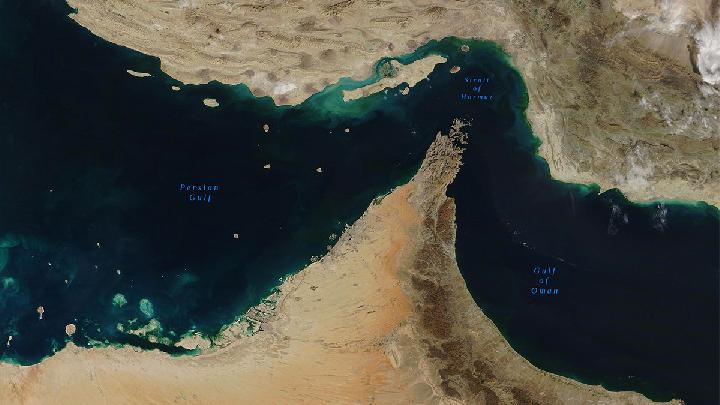
Tempatdonasi.com – Satellite images are revealing signs of an expanding environmental emergency in the Strait of Hormuz, where attacks on oil tankers during the US-Iran war have left fuel on the surface of the Persian Gulf. Darkened water, bright streaks and a metallic-looking sheen have appeared in imagery examined by environmental specialists, suggesting that oil is escaping from damaged, burning or sunken vessels.
The narrow waterway has become particularly dangerous for ships carrying crude oil. Tankers have been hit by missiles, caught fire or left stranded, creating repeated opportunities for oil to enter a marine environment that includes sensitive coasts, reefs and wetlands.
Tankers and spills in a high-risk waterway
In June, a Russian tanker carrying roughly 800,000 barrels of oil became stranded off Oman’s coast, causing a major spill. At an earlier point in the conflict, Greenpeace counted as many as 85 large, oil-filled tankers unable to leave the Strait of Hormuz. That figure has since fallen to 13, but every vessel still navigating or waiting in the area remains vulnerable to an attack and a subsequent release of oil.
Since the war began, Greenpeace has tracked more than 100 spills through satellite observations. The true number may be higher because widespread GPS spoofing has made vessel tracking less reliable. Ships can transmit misleading locations, complicating efforts to establish where incidents occurred and how far contamination has traveled.
A Greenpeace assessment released this week described the situation as an “ecological catastrophe,” identifying slicks moving toward protected and environmentally fragile areas.
“People should be concerned,” Nina Noelle, a Greenpeace specialist in environmental disaster relief, said. The war has taken “a very, very heavy toll on the environment,” she said, with the damage now reaching new scales.
Slicks near protected ecosystems
Earlier this week, Greenpeace identified five large slicks in the Strait of Hormuz covering a combined visible surface of 240 square kilometers, or about 90 square miles. That is roughly four times Manhattan’s area.
More recent satellite images showed the visible patches shrinking to around 80 square kilometers. Weather and sea conditions may have dispersed the oil, but a smaller surface footprint does not necessarily mean the danger has passed. Oil can break apart, move beneath the surface or settle into seabed sediments, where its effects may continue for many years.
“Oil can also sink into the sediment and impact the ecosystems for years and years,” Noelle said.
The location of the contamination is central to the concern. One slick was spotted close to Musandam National Park in Oman, an area containing coral reefs, marine species and important seabird breeding habitat. Another appeared near Iran’s Minab River Delta, close to protected mudflats and mangrove forests. Damage in such settings can take decades to reverse, especially when oil reaches shorelines or becomes trapped in sediment.
Why the full scale remains uncertain
Satellite monitoring offers an important view of the crisis, but it cannot answer every question about the extent of the pollution. Greenpeace and other groups have used publicly available imagery from Copernicus Sentinel-1 and Sentinel-2, part of the European Union’s Earth-observation program.
Private companies, including Planet Labs, can provide higher-resolution imagery. During the war, however, access to such images has been restricted to reduce the possibility that the data could be used for military targeting. Reporting from coastlines is also limited.
“What we have put out is the conservative estimate,” Noelle said. “It might be worse. It’s definitely not better.”
Wim Zwijnenburg, an environmental researcher at the Dutch peace organization Pax, said restrictions on images from affected countries have reduced the information available from the ground.
“We don’t have a lot of information coming from the country itself, both in Iran as well as the Gulf states,” Zwijnenburg said. “There is quite restrictive policies of people posting imagery from what’s happening on the shore.”
Threats to wildlife and coastal communities
Oil contamination can cause immediate harm to birds, fish, coastal plants and the people who depend on marine resources. Seabirds are especially vulnerable because oil sticks to feathers, weakening waterproofing and buoyancy. Affected birds may struggle to float, fly or search for food. Even limited exposure can harm eggs, reducing hatching success or causing deformities.
Mangroves face another form of danger. These coastal forests shelter young fish and other species, while their roots help support productive shoreline ecosystems. Their aerial roots need to exchange gases with the air; an oil coating can block that process and leave trees effectively unable to breathe.
“Mangroves have aerial roots, and the oil is covering these roots like a film and actually hindering the mangroves in exchanging gases,” Noelle said. “They’re kind of suffocated by the oil. Most of the time, it leads to the trees dying.”
The human consequences can extend beyond the immediate spill zone. Communities along the Gulf rely on fisheries and coastal waters for food and livelihoods. When oil exposure kills fish or contaminates habitats, the impact can reach local fishing activity and the wider marine food chain.
As conflict continues to endanger shipping in one of the world’s most strategically important waterways, the environmental damage may prove difficult to measure fully in real time. What is visible from space already points to a serious threat: pollution moving through waters where protected reefs, mangroves, birds and coastal communities have little protection from the consequences of war.
Related Reading
Frequently Asked Questions
What is Strait of Hormuz Attacks Spill Oil into?
Strait of Hormuz Attacks Spill Oil into is the main topic of this guide. The article explains the context, practical details, and next steps readers should understand.
Why does Strait of Hormuz Attacks Spill Oil into matter?
Strait of Hormuz Attacks Spill Oil into matters because readers are looking for a useful answer, not just a short summary. Good content should match search intent and help them decide what to do next.