Sicily: Mount Etna Ash Disrupts Catania Flights Again
Sicily - Air travel at Catania Airport in Sicily remained heavily restricted on Monday as ash from Mount Etna continued to affect operations at the island’s
Mount Etna Ash Forces Extended Flight Suspension at Catania Airport
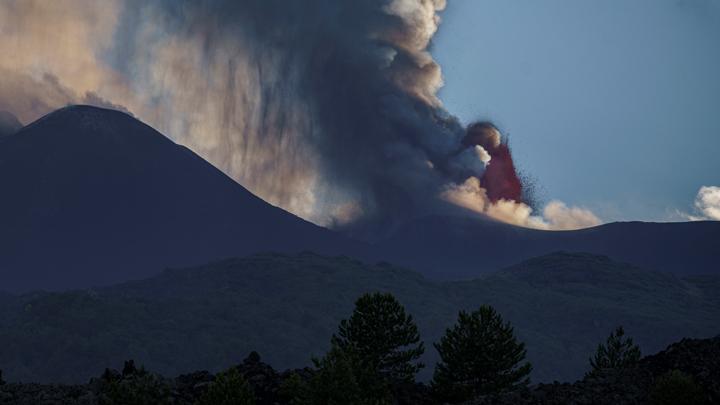
Tempatdonasi.com – Sicily – Air travel at Catania Airport in Sicily remained heavily restricted on Monday as ash from Mount Etna continued to affect operations at the island’s largest aviation hub. The disruption followed a difficult weekend for passengers after a dense volcanic ash plume drifted over the area from the nearby volcano.
Airport operator SAC suspended all flights at Catania until at least midnight local time on Monday, equivalent to 2200 GMT/UTC. Travelers were urged to confirm the status of their flights before leaving for the airport, as schedules and airport arrangements could change while authorities assess volcanic conditions.
Where feasible, arriving and departing services were being redirected to other Sicilian airports, including Palermo and Comiso. The diversions offered some alternatives for airlines and passengers, but they also meant travelers could face longer ground transfers, revised departure times, or changes to their planned routes.
A Major Sicilian Travel Hub Affected
Catania Airport is Italy’s fifth-busiest airport and the principal airport serving Sicily. Its closure has consequences beyond the city itself, particularly during the busy holiday season when visitors use Catania as a gateway to eastern Sicily, coastal resorts, historic towns, and Mount Etna.
The airport’s location makes it especially vulnerable when volcanic ash is carried south by the wind. In this case, material from Etna’s northeast crater was moving in that direction, creating conditions that made normal flight activity unsafe.
Volcanic ash can pose a serious risk to aviation. Fine particles may reduce visibility, affect airport surfaces and aircraft systems, and create hazards for jet engines. For that reason, airport restrictions can remain in place even when an eruption does not appear dramatic from the ground. Airlines, airport operators, and aviation authorities must take account of the plume’s movement and concentration before restoring services.
Passengers with flights scheduled through Catania were advised to check directly with their airline and the airport before traveling. Those whose flights are moved to Palermo or Comiso may need to allow additional time for transport and should review any updated booking information provided by their carrier.
Etna’s Continuing Activity
Mount Etna is among Europe’s most active volcanoes and is frequently in a state of low-level activity. More intense eruptions also occur regularly, and ash emissions have repeatedly interrupted operations at Catania Airport this year as well as in previous years.
The Italian Institute of Geophysics and Volcanology, known as INGV, indicated that the ash activity did not seem to signal an imminent explosive phase. Even so, the presence of ash in the air was sufficient to disrupt flights, underlining the difference between volcanic monitoring assessments and the practical safety requirements of aviation.
For residents and visitors, Etna’s activity is a familiar part of life in eastern Sicily. The volcano is a prominent feature of the landscape and an important draw for tourists, yet periods of ashfall can quickly affect transport plans. Weather conditions, especially wind direction, play a central role in determining which communities and travel routes are most exposed at a given time.
One of Europe’s Defining Volcanoes
Etna stands at roughly 3,400 meters, or about 11,100 feet, on Sicily’s eastern coast. Its exact elevation is not fixed. During active periods, eruptions and collapses can alter the summit area, sometimes changing the mountain’s height by several meters.
The volcano rises close to Catania, which lies to its south. It is Italy’s highest mountain south of the Alps and one of the tallest active volcanoes in Europe. Its long record of eruptions has shaped both the physical landscape and the history of the region.
Volcanic activity at Etna began around half a million years ago. The mountain is also recognized as a UNESCO World Heritage Site, reflecting its exceptional geological importance and its long-standing relationship with Sicilian culture and settlement.
Ancient traditions gave Etna an equally powerful place in mythology. Roman stories linked the volcano to Vulcan, the god of blacksmithing, while Greek mythology associated it with Hephaestus. Both traditions placed the divine forge beneath the mountain, an image inspired by Etna’s fire, smoke, and recurring eruptions.
What Travelers Should Keep in Mind
Flight disruptions linked to Etna can develop rapidly, particularly when ash is blown toward Catania. A reopening of airport operations may depend not only on the volcano’s immediate behavior but also on changing wind conditions and the need to inspect facilities and aircraft movement areas.
Travelers should monitor flight information closely, keep airline contact details available, and remain prepared for departures or arrivals to be shifted to Palermo or Comiso. Anyone meeting passengers or arranging onward transport should also verify the airport being used before setting out.
While Mount Etna remains one of Sicily’s best-known natural landmarks, its latest ash cloud has again demonstrated how closely the volcano’s activity can be tied to everyday travel across the island.
Related Reading
Frequently Asked Questions
What is Sicily?
Sicily is the main topic of this guide. The article explains the context, practical details, and next steps readers should understand.
Why does Sicily matter?
Sicily matters because readers are looking for a useful answer, not just a short summary. Good content should match search intent and help them decide what to do next.