
DPR Raid Leads to Demolition at Cibinong Prison
A surprise visit by lawmakers to the Class IIA Cibinong Correctional Facility in Bogor Regency has led to the demolition of a cluster of unregistered
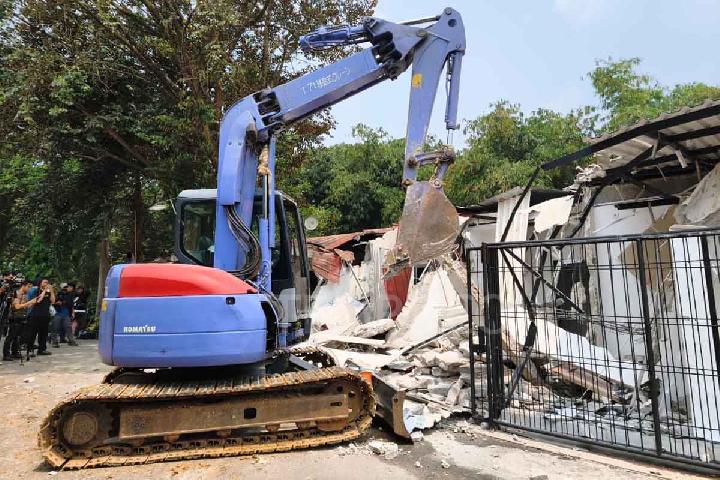
Unauthorized Housing at Cibinong Prison Is Demolished After Parliamentary Inspection
Tempatdonasi.com – A surprise visit by lawmakers to the Class IIA Cibinong Correctional Facility in Bogor Regency has led to the demolition of a cluster of unregistered buildings inside the prison complex. The structures, which had been used as residences, were removed after Commission XIII of the House of Representatives found that they were not recorded as state assets and had been erected in a restricted riverside area.
The demolition took place on Wednesday, September 30, 2026, while questions continued over who occupied the homes, how they were built, and whether their removal could affect a separate Ombudsman inquiry.
Buildings Were Not Registered as State Assets
Sugiat Santoso, deputy chair of Commission XIII, said the structures could not be allowed to remain because their construction lacked a legal basis. He stressed that their placement beside a river created an additional regulatory concern.
“And most critically, they were built on a riverbank, which violates regulations,” Sugiat said at Cibinong Prison on Wednesday, September 30, 2026.
The issue had already been raised during a parliamentary hearing on Monday, September 28, 2026. At that meeting, Director General of Corrections Mashudi said 13 buildings within Cibinong Prison had never been entered into the state-asset registry. He then directed prison officials to dismantle them promptly.
Before the excavator began work, officers shut off electricity to the residences and moved furniture and other belongings outside. The machine, which had already been positioned in the prison area, then demolished the buildings individually.
The case has drawn attention because correctional facilities are expected to maintain strict control over all areas within their compounds. Unregistered residences can complicate oversight, asset management, and accountability, particularly when questions arise about who has access to the site and under what authority.
Lawmakers Question Timing of the Demolition
Not every member of Commission XIII supported the immediate teardown. Rieke Diah Pitaloka said the buildings should have been preserved until the investigation into their existence and use had progressed further. She warned that demolition without adequate records and documentation could interfere with efforts to establish the full sequence of events.
“A premature demolition without proper documentation could be categorized as the destruction of evidence, particularly regarding the inquiry by the Ombudsman,” Rieke said at the venue.
Sugiat responded that the Inspectorate General of the Ministry of Immigration and Corrections had already documented the buildings and their contents. In his view, retaining structures that had been built unlawfully would make them harder to supervise.
The difference of opinion highlights two competing priorities in the case: removing an unauthorized facility quickly and preserving material that may help investigators determine whether misconduct occurred. Documentation of the site, its contents, and the people connected to it will therefore be central to the continuing inquiry.
Items Found During the Inspection
Before ordering the demolition, House members entered several of the residences. The doors bore new labels reading “official residence,” each with a sequential number. That detail differed from the setting seen during the Ombudsman’s earlier inspection.
Lawmakers also found items that had appeared in video from the Ombudsman visit, including alcoholic beverages in one of the homes. Prison officials said family photographs displayed inside belonged to staff members who occupied the residences.
Furniture, air-conditioning equipment, and children’s toys were also seen in a number of the buildings. These items indicated that the units had been used as living spaces rather than merely as offices or storage rooms.
One image that had previously attracted public attention was no longer there: a photograph of Jimmy Masrin, who was convicted in the LPEI credit fraud case. Mashudi had earlier said the photograph was seized by officers during a raid.
Commission XIII member Yanuar Arif raised another question after seeing the remains of a CCTV camera that appeared to have been removed from one residence. He called for clarity over whether the camera had been functioning and, if not, who had turned it off.
“What is the story here? Was this CCTV active or not? If it wasn’t active, who deactivated it? Everything must be brought to light,” Yanuar said.
Preliminary Finding Points to Abuse of Authority
Rudi Setiawan, inspector general at the Ministry of Immigration and Corrections, said the ministry’s internal inquiry had reached an initial conclusion. The investigation has examined differences between the Ombudsman’s findings and those made by the Directorate General of Corrections.
Investigators determined at the preliminary stage that the construction of the 13 unregistered buildings did not use state-budget funds. The structures also lacked building permits. Rudi, a former West Java police chief, said investigators had identified the people who had occupied the residences, but he did not disclose their identities.
Full findings are scheduled to be presented to the House on Monday, October 5, 2026. That presentation is expected to clarify the responsibilities of the individuals involved and the administrative measures available to the ministry.
“The preliminary conclusion indicates an abuse of authority under Article 5, with penalties stipulated in Article 8 of the Government Regulation,” Rudi said at Cibinong Prison on Wednesday.
Possible sanctions include demotion, suspension, or dishonorable discharge. Rudi emphasized that these potential consequences are administrative measures and do not amount to criminal charges.
The demolition removes the physical structures from the prison grounds, but it does not end the larger investigation. The outstanding questions include how the buildings were authorized despite having no asset registration or permits, who lived in them, and whether supervision within the prison failed. The parliamentary review and the ministry’s internal investigation will determine whether further action follows.
Related Reading
Frequently Asked Questions
What is DPR Raid Leads to Demolition at Cibinong?
DPR Raid Leads to Demolition at Cibinong is the main topic of this guide. The article explains the context, practical details, and next steps readers should understand.
Why does DPR Raid Leads to Demolition at Cibinong matter?
DPR Raid Leads to Demolition at Cibinong matters because readers are looking for a useful answer, not just a short summary. Good content should match search intent and help them decide what to do next.