Gibran Volunteers Report Constitutional Judges to MKMK
Two Constitutional Court judges, Saldi Isra and Arsul Sani, are facing ethics complaints submitted to the Constitutional Court Ethics Council, or MKMK, by
Ethics Complaints Filed Against Two Constitutional Court Judges in Gibran Credential Dispute
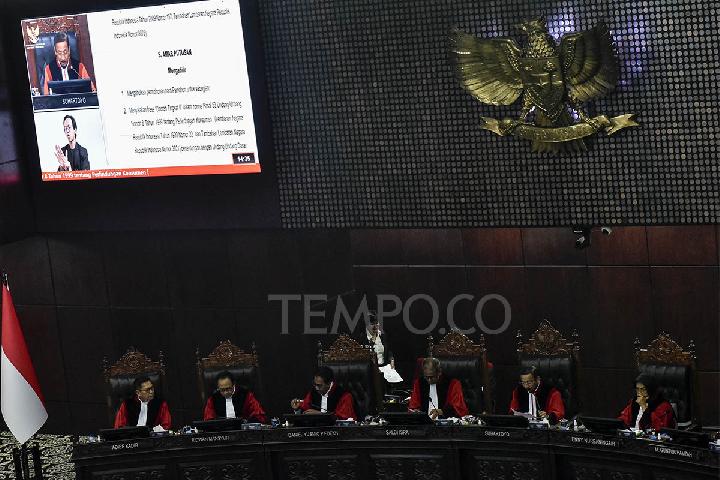
Tempatdonasi.com – Two Constitutional Court judges, Saldi Isra and Arsul Sani, are facing ethics complaints submitted to the Constitutional Court Ethics Council, or MKMK, by members of the Gibran 08 Nusantara Militant Volunteer group. The complaints are tied to the ongoing legal dispute over the education documents used by Gibran Rakabuming Raka in his 2024 vice-presidential candidacy.
Muhammad Rullyandi, a member of the volunteer group and a lecturer at Jayabaya University, filed the complaint after appearing as an expert witness in the presidential election dispute case. His participation in the court hearing ended when he was removed from the courtroom and the panel decided that his testimony would be considered only in written form.
“I submitted the report [to the MKMK] and it was accepted by the MKMK Secretariat on Friday, October 2, 2026, at 2:50 p.m. WIB,” Rullyandi said on Saturday, October 3, 2026.
Claims of Ethics and Fair-Hearing Violations
Rullyandi’s complaint against Saldi Isra alleges a breach of judicial ethics connected to the principle that every party should receive a fair opportunity to be heard. He also raised concerns about academic freedom, arguing that Saldi pressured him to withdraw an earlier statement in which he had described the hearing over Gibran’s credentials as unlawful.
The complaint involving Arsul Sani centers on Rullyandi’s claim that the judge showed bias while examining his arguments during the hearing. Rullyandi characterized the matter as one with consequences beyond his own appearance before the court.
“This is an act that undermines constitutional norms,” Rullyandi said.
The MKMK serves as the Constitutional Court’s ethics body. Complaints brought before it concern alleged violations of judicial conduct rather than the merits of the underlying election dispute itself. The filing therefore introduces a separate track from the court case challenging Gibran’s educational qualifications.
Witness Removed From Courtroom
The ethics report was lodged one day after the October 1, 2026 evidentiary session, when Rullyandi was removed while appearing for the relevant parties. The incident followed discussion of remarks he had made during a talk show, where he called the hearing concerning Gibran’s educational records illegal.
Saldi Isra objected to those comments and asked Rullyandi to take them back. Rullyandi complied with the request. Even so, the court decided he would not be allowed to deliver his expert opinion orally before the panel. His written testimony was accepted instead.
“You cannot present oral testimony. Thank you, you cannot convey anything else,” Saldi told him.
The distinction matters in a court proceeding because oral testimony allows judges and parties to directly question an expert and clarify the basis for an opinion. Written evidence remains part of the case file, but it does not provide the same immediate exchange that occurs during a live hearing.
Separate Complaint Names Chief Justice
Rullyandi also said a separate ethics complaint had been submitted against Constitutional Court Chief Justice Suhartoyo. That filing concerns Suhartoyo’s decision to continue the hearing in the presidential election dispute, which Rullyandi considers unlawful.
He additionally questioned Suhartoyo’s legal standing because the chief justice had previously been sued in the State Administrative Court. Rullyandi said the complaint involving Suhartoyo was filed on October 1, 2026, at 10:01 a.m. WIB.
The complaints against the three judges are distinct from the petition currently being heard by the Constitutional Court. They seek ethical scrutiny of the judges’ actions and conduct, while the election case focuses on whether the documentation used in Gibran’s candidacy satisfied the legal requirements.
The Underlying Presidential Election Case
The dispute is registered as Case No. 01/PHPU.PRES-XXIV/2026. Former Deputy Minister of Law and Human Rights Denny Indrayana filed the petition with 11 other petitioners. Their case challenges the validity of the educational credentials Gibran submitted when qualifying as a vice-presidential candidate in the 2024 election.
Gibran, the son of former president Joko Widodo, has remained a central figure in public discussion surrounding the legal challenge. The proceedings have drawn particular attention because they address documentation connected to a national election and because the court’s handling of witnesses has become part of the controversy.
At this stage, the complaints to the MKMK do not by themselves determine the outcome of the presidential election case. The ethics council would need to assess whether the allegations meet the standards for further examination and whether any judicial code of conduct was violated. The Constitutional Court, meanwhile, continues to handle the dispute over the documents at issue.
Pan Mohamad Faiz Kusuma Wijaya, head of the Constitutional Court’s Public Relations and Protocol Bureau, had not responded to a request for comment on the ethics reports when the matter became public.
The developments place renewed focus on both the substance of the challenge to Gibran’s credentials and the procedures followed during the hearing. For the petitioners and their supporters, the treatment of expert witnesses has become an important part of their objections. For the court, the case combines a sensitive electoral dispute with questions about courtroom authority, judicial impartiality, and the boundaries of professional conduct.
Related Reading
Frequently Asked Questions
What is Gibran Volunteers Report Constitutional Judges to MKMK?
Gibran Volunteers Report Constitutional Judges to MKMK is the main topic of this guide. The article explains the context, practical details, and next steps readers should understand.
Why does Gibran Volunteers Report Constitutional Judges to MKMK matter?
Gibran Volunteers Report Constitutional Judges to MKMK matters because readers are looking for a useful answer, not just a short summary. Good content should match search intent and help them decide what to do next.