Trump Names AI Czar to Head White House Task Force
US President Donald Trump has announced a new White House task force intended to coordinate the federal government’s approach to artificial intelligence
Trump Creates White House “Super Intelligence Force” to Coordinate AI Policy
Tempatdonasi.com – US President Donald Trump has announced a new White House task force intended to coordinate the federal government’s approach to artificial intelligence, placing several senior administration officials at the center of an increasingly consequential policy debate.
The new body will be called the “Super Intelligence Force,” or SI, reflecting Trump’s preference for the term “super intelligence” rather than AI. Its stated role is to bring together government engagement with groups affected by the rapid development and deployment of advanced technologies.
Trump said the initiative will be led by Director of National Intelligence Jay Clayton, Federal Trade Commission Chair Andrew Ferguson, Pentagon Chief Technology Officer Emil Michael, and Office of Personnel Management Director Scott Kupor. The selection places intelligence, consumer protection, defense technology, and federal workforce policy within the same coordinating structure.
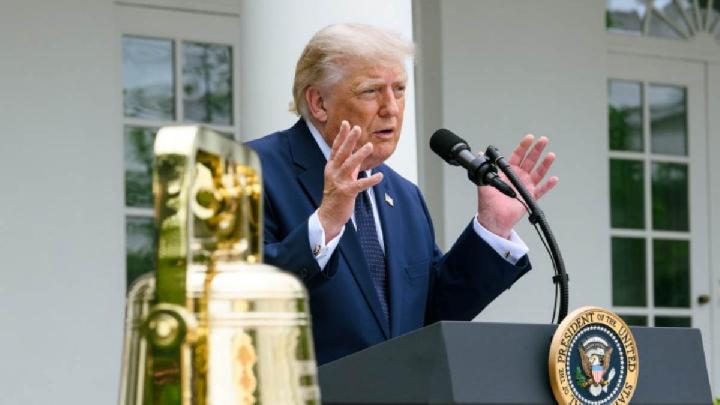
“The Super Intelligence Force will coordinate the federal government’s engagement with consumers, public interest groups, religious organizations, critical infrastructure providers, and super intelligence companies,” Trump said in a Truth Social post on Sunday.
A Broad Government Role
The task force’s remit suggests that the administration sees artificial intelligence as an issue extending well beyond the technology sector. Consumers may face questions about privacy, automated decision-making, and the reliability of AI-generated information. Public-interest and religious organizations may focus on social consequences, ethics, and the ways automated systems influence everyday life.
Critical infrastructure providers are also likely to be central to the conversation. Energy networks, communications systems, transport, healthcare, financial services, and other essential operations increasingly depend on digital systems, making the resilience and security of advanced software a national concern.
By including the intelligence community and the Pentagon’s technology office, the initiative also connects domestic AI policy with national-security priorities. At the same time, the involvement of the Federal Trade Commission gives consumer and competition issues a place in the group’s leadership.
Pressure Builds Over AI Risks
Trump said in September that he planned to establish a new force to oversee the fast-moving field and appoint an AI czar. Even so, he has resisted strict rules that would write core AI-safety principles directly into law.
“We will not in any way hinder or stifle the growth of this incredible industry. Rather, we will cherish it, help it, and watch over it, as it grows!” Trump said in the September post announcing his intention to select an AI czar.
That balance between encouraging innovation and addressing risks has become a central political challenge. With midterm elections scheduled for November, Trump has faced growing pressure to respond to public concern over the possible dangers associated with increasingly capable AI systems.
Researchers and technology executives have warned that the technology could create serious long-term risks if development outpaces safeguards. These concerns range from misuse and security threats to broader fears that powerful systems could become difficult for people and institutions to control.
Anthropic chief executive Dario Amodei recently published an essay urging a worldwide slowdown in the race to develop AI. His position drew support from OpenAI chief executive Sam Altman and SpaceX chief executive Elon Musk, highlighting rare agreement among prominent figures who are often associated with competing interests in the technology industry.
Voluntary Safety Commitments
The new task force follows a White House gathering at the end of September, when Trump hosted nearly 20 leading technology executives for lunch. During that meeting, he said those present shared the view that technology companies should exercise substantial self-regulation.
“Tremendous self-regulation”
Following the gathering, participating technology leaders signed a one-page document centered on voluntary commitments to safety. The agreement signals public recognition that companies developing advanced systems carry responsibility for managing potential harms.
However, the document is largely symbolic because it does not carry the force of an official order. Its effectiveness will depend on whether companies follow through on the commitments they have made and whether the federal government develops additional measures through the new task force.
The distinction matters for readers watching how Washington responds to AI. Voluntary pledges can establish shared expectations and encourage companies to disclose safety practices, but they do not create the same legal obligations as formal regulation. A task force may improve coordination across agencies, yet its practical impact will depend on its authority, priorities, and the policies that emerge from its work.
What the New Force Could Mean
The establishment of the Super Intelligence Force indicates that the White House is seeking a more organized response to a technology that affects national security, business competition, employment, consumer protection, and public trust. The initiative may also offer a channel for companies and civic groups to raise concerns directly with federal officials.
For businesses, the task force could become an important signal of how the administration intends to approach AI growth. For consumers, it may shape future discussions about transparency, safety commitments, and accountability when automated tools affect access to information, services, and opportunities.
The administration’s approach remains rooted in promoting industry expansion while monitoring its consequences. The central question will be whether voluntary company action and federal coordination can keep pace with the speed of technological change—or whether pressure for stronger, legally enforceable safeguards continues to grow.
Related Reading
Frequently Asked Questions
What is Trump Names AI Czar to Head?
Trump Names AI Czar to Head is the main topic of this guide. The article explains the context, practical details, and next steps readers should understand.
Why does Trump Names AI Czar to Head matter?
Trump Names AI Czar to Head matters because readers are looking for a useful answer, not just a short summary. Good content should match search intent and help them decide what to do next.