Mount Anak Krakatau Eruptions Intensify, Alert Level Raised to ‘Watch’
Authorities have raised the alert status for Mount Anak Krakatau to Level III, or Watch, after renewed signs of stronger volcanic activity in the Sunda
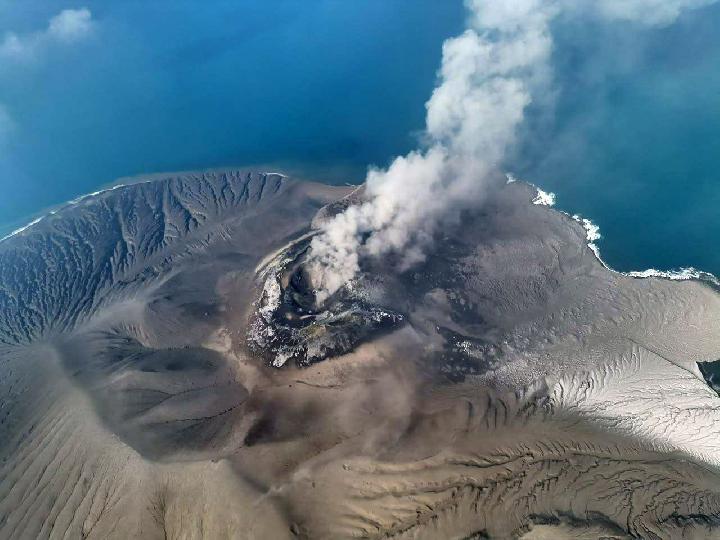
Mount Anak Krakatau Returns to Level III as Volcanic Activity Rises
Tempatdonasi.com – Authorities have raised the alert status for Mount Anak Krakatau to Level III, or Watch, after renewed signs of stronger volcanic activity in the Sunda Strait. The change took effect at 21:00 Western Indonesian Time on Friday, October 9, 2026.
The decision reverses a downgrade made less than three weeks earlier. On September 21, the volcano’s status had been lowered to Level II, known as Caution. Increased seismic activity and multiple eruptions during the following weeks prompted officials to restore the higher warning level.
Earthquake Activity Recorded Over Several Weeks
Monitoring between September 21 and October 8 detected a broad range of volcanic earthquakes around Anak Krakatau. The records included five eruption-related earthquakes and eight explosion earthquakes, along with 11 low-frequency events.
Observers also registered 45 many-phase earthquakes, 17 continuous tremors, 31 shallow volcanic earthquakes, and nine deep volcanic earthquakes. Such activity reflects movement and pressure within the volcanic system, which is closely watched for signs that eruptions may become more frequent or hazardous.
On Friday alone, nine eruptions were observed by 19:20. The strongest recorded amplitude reached 55 millimeters, while one eruption lasted up to 32 seconds. The height of the eruption column could not be observed during those events.
“Throughout Friday, October 9, 2026, until 19:20, there were nine eruptions with a maximum amplitude of 55 millimeters and an eruption duration of 32 seconds with the height of the eruption column unobserved,” said the Head of the Geological Agency, Lana Saria, in a written statement.
Five-Kilometer Exclusion Zone Reinstated
With Anak Krakatau again at Level III, access restrictions have been tightened around the active crater. People are prohibited from approaching within five kilometers of the main eruption crater.
Visitors and residents are also not permitted to enter or carry out activities within one kilometer of the new island, including the northwestern and southeastern sectors. The restrictions are intended to reduce exposure to sudden eruptive hazards in an area where conditions can shift rapidly.
Officials have urged people near the volcano to remain alert to lava bombs, heavy ashfall, lava flows, and possible secondary eruptions. Secondary eruptions can occur when hot lava comes into contact with seawater or rainwater, creating additional risks near the eruption center.
The five-kilometer radius is therefore not simply a routine precaution. It covers the area most vulnerable to projectiles and other immediate impacts from an eruption. People traveling through the Sunda Strait or planning visits near the volcano should pay close attention to directions from local authorities and disaster management agencies.
Coastal Communities Asked to Remain Calm
Residents in coastal parts of Banten and Lampung provinces have been asked to stay calm while continuing normal activities. Authorities stressed the importance of relying on official guidance rather than unverified reports, particularly claims that an Anak Krakatau eruption will automatically trigger a tsunami.
“The community in the coastal areas of Banten and Lampung provinces is urged to remain calm and not to trust rumors about an eruption of Mount Anak Krakatau that could lead to a tsunami, and they can carry out normal activities while always following the guidance of local disaster management agencies,” said Lana in a further statement.
The warning highlights the need to distinguish between volcanic activity and immediate tsunami danger. While Anak Krakatau’s activity requires close monitoring and adherence to safety zones, residents have been told to follow instructions issued by local disaster authorities rather than act on rumors.
For communities along the coast, preparedness remains important even when daily routines continue. Residents can stay informed through local disaster-management channels, observe restrictions in force around the volcano, and avoid spreading unconfirmed information that may cause unnecessary concern.
Recent Eruptive Period and Ashfall
Before the latest status increase, Anak Krakatau had remained at Level III from July 2 until September 21. During that period, eruptions continued from September 4 through September 6.
Volcanic ash from those eruptions reached Greater Jakarta and West Sumatra. The activity also added to the land area of Mount Anak Krakatau and resulted in the formation of two new land areas.
Anak Krakatau remains an active volcano in the Sunda Strait, and changes in its alert status reflect ongoing observations of seismic and eruptive conditions. The return to Level III means the public should take the renewed exclusion zones seriously, particularly as officials continue monitoring the volcano for further developments.
For now, the central safety message is clear: avoid the restricted area surrounding the crater and new island, remain alert to official warnings, and continue normal activities only in line with directions issued for local communities.
Related Reading
Frequently Asked Questions
What is Mount Anak Krakatau Eruptions Intensify Alert?
Mount Anak Krakatau Eruptions Intensify Alert is the main topic of this guide. The article explains the context, practical details, and next steps readers should understand.
Why does Mount Anak Krakatau Eruptions Intensify Alert matter?
Mount Anak Krakatau Eruptions Intensify Alert matters because readers are looking for a useful answer, not just a short summary. Good content should match search intent and help them decide what to do next.