DPR Passes Satu Data Indonesia Bill into Law
Indonesia has taken a major step toward strengthening how government information is collected, managed, and shared after the House of Representatives, or DPR
Indonesia’s Parliament Enacts One Data Indonesia Law
Tempatdonasi.com – Indonesia has taken a major step toward strengthening how government information is collected, managed, and shared after the House of Representatives, or DPR, approved the Satu Data Indonesia Bill as law.
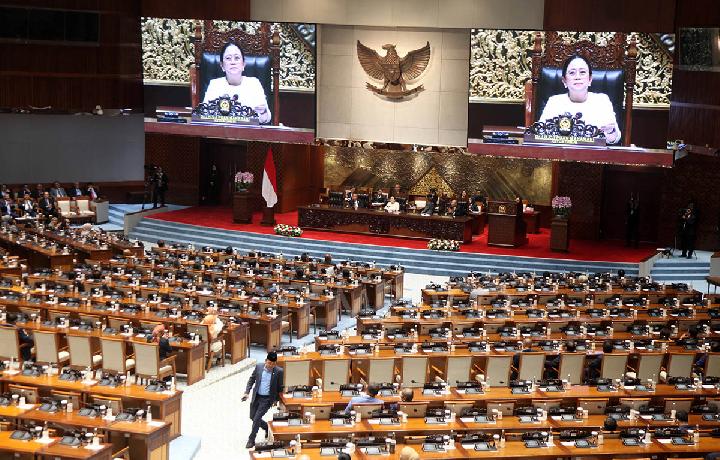
The decision was made during the ninth plenary meeting of the first session of the 2026–2027 legislative year at the DPR’s Nusantara II Building in Jakarta on Tuesday, October 6, 2026. All eight parliamentary factions gave their approval after reviewing the first-level discussion report prepared by the DPR Legislative Body, known as Baleg, together with the government.
DPR Speaker Puan Maharani led the final vote and invited lawmakers to formally endorse the measure following the presentation of the deliberation results.
“Thank you to the leadership of the Legislative Body of the DPR for presenting the report on the discussion results of this bill. Now we ask each faction whether the Satu Data Indonesia Bill can be approved to be enacted into law. Agreed?”
The chamber responded unanimously in support of the bill.
A Framework for More Reliable Public Data
The new Satu Data Indonesia Law is intended to improve national data governance by ensuring that public data is integrated, current, accurate, and protected by national sovereignty principles. Its central purpose is to help institutions use compatible information standards, allowing data from different levels of government to be connected and understood consistently.
Sturman Panjaitan, who chaired the bill’s Working Committee, said the legislative process involved intensive discussions between September 23 and October 5, 2026. The review included 1,338 problem inventory lists from Baleg as well as 829 explanatory lists submitted by the government.
Sturman, a politician from the Indonesian Democratic Party of Struggle, emphasized that dependable data has direct consequences for public services. Errors in official records can affect policy decisions and cause social assistance to reach the wrong recipients.
“When data is incorrect, it’s not just the numbers that are wrong, but justice is harmed, and assistance is misdirected,” Sturman said.
The law is not designed to place every government database physically under one institution. Instead, it establishes common rules for governance across agencies, beginning with central ministries and extending through regional administrations to villages. Existing institutions can retain control over their physical databases while using shared standards that make information exchange more consistent.
This distinction matters because national data systems often involve many agencies, each responsible for different public functions. A common governance model can support coordination without requiring every institution to surrender the databases it maintains.
Standards From Ministries to Villages
Under the new framework, One Data Indonesia is expected to rely on unified standards, metadata, reference codes, and master data. The goal is for information originating from separate sources to communicate with one another while producing a consistent version of the facts used for government decisions.
“Satu Data reflects the spirit of unity in diversity within data governance across various agencies, from ministries to village governments. However, the standards are singular, the metadata is singular, the reference codes are singular, the master data is singular so that data can communicate with each other from different sources but hold one truth,” Sturman stated.
The inclusion of village-level administration is a key feature of the law. Villages are often where initial public information is recorded, making their role important for the quality of broader regional and national datasets. Sturman argued that a national data system will only be meaningful if it functions beyond central government institutions.
“Indonesia will not shine because of a large torch in Jakarta. But Indonesia will only shine because of the candles in the villages. One data Indonesia will not be meaningful if it only shines in the center; it must ignite in every village,” he said.
For residents, the practical importance of this approach lies in the potential for public programs to rely on better-organized records. When agencies use compatible data standards, identifying needs, coordinating services, and reducing mismatches in government information can become more manageable. The law’s philosophy, Sturman said, should remain focused on the public rather than treating citizens merely as sources of data.
“Data is for the people, not the people for the data,” Sturman said.
Institutional and Security Provisions
The Satu Data Indonesia Law consists of 20 chapters and 141 articles. Among its principal provisions are the establishment of National Basic Data, or DDN, a One Data operating body that reports directly to the President, and a national data catalog system. It also sets out interoperability principles while maintaining ownership of physical databases with their original entities.
The legislation also addresses risks involving manipulation, cyberattacks, sabotage, and unauthorized control of national data centers or technical infrastructure. Articles 129 through 135 contain criminal provisions related to data manipulation and cybercrime.
Martin Manurung, Deputy Chair of DPR Baleg, said severe sanctions apply to attacks or interference involving national data infrastructure. Offenders may face imprisonment of up to 15 years or a maximum fine under Category 8.
“Offenders face up to 15 years in prison or a maximum fine under Category 8,” Martin said.
Article 134 increases penalties by one-third when an offense is committed by a state official or public administrator. Article 135 addresses criminal responsibility for corporations and their executives, setting out how liability can apply when violations involve corporate entities.
With the law now enacted, the next challenge will be translating its principles into working standards across government institutions. Its success will depend on consistent implementation, reliable local data collection, and cooperation between agencies that hold different forms of public information. The legislation establishes the legal foundation for that effort, with the stated aim of making national data more useful, connected, and accountable to the public.
Related Reading
Frequently Asked Questions
What is DPR Passes Satu Data Indonesia Bill?
DPR Passes Satu Data Indonesia Bill is the main topic of this guide. The article explains the context, practical details, and next steps readers should understand.
Why does DPR Passes Satu Data Indonesia Bill matter?
DPR Passes Satu Data Indonesia Bill matters because readers are looking for a useful answer, not just a short summary. Good content should match search intent and help them decide what to do next.