
US-Iran Talks: Hope and Skepticism in the Swiss Alps
US Iran Talks – The Swiss resort of Bürgenstock, nestled in the Alps, has long been a stage for momentous diplomatic encounters. Over decades, this serene location has hosted rock legends, heads of state, and even witnessed the ink drying on significant peace accords. Now, it stands as the backdrop for a high-stakes meeting between U.S. and Iranian delegations, marking the culmination of a whirlwind week of tense negotiations. The summit, scheduled to take place in the picturesque setting, has sparked a mix of optimism and doubt among observers, as the world watches for the next chapter in U.S.-Iran relations.
A Framework Agreement in Motion
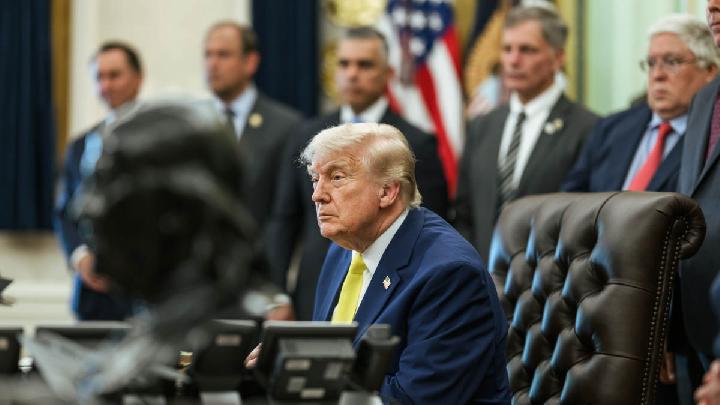
On Friday, the anticipated signing of an interim agreement is set to occur, following a dramatic turn of events that began with a late-night social media post from former President Donald Trump. The tweet, which claimed a “peace agreement” had been reached, ignited immediate speculation about the U.S.-Iran conflict’s trajectory. Despite the grandiose language, no official details were released at the time, leaving analysts to piece together the implications of the deal. Iranian state media, however, began circulating fragments of a memorandum of understanding (MoU), suggesting a deal had already been electronically inked. Trump declared that the final signing would happen in Switzerland, with the Swiss Alps becoming a symbol of the breakthrough.
The agreement’s framework, according to preliminary reports, aims to halt hostilities and reopen the Strait of Hormuz, a critical waterway for global oil trade. This move comes after months of escalating tensions, including a February strike by the U.S. and Israel that destabilized Iran’s regional influence. The conflict has claimed thousands of lives, with over 13 American service members lost in the crossfire. Meanwhile, Iran’s closure of the strait disrupted international markets, amplifying fears of economic fallout. The MoU, however, focuses on addressing immediate concerns rather than restructuring the broader nuclear deal.
G7 Support and Ticking Political Clocks
As the negotiations reached their peak, the G7 leaders’ summit in France provided a platform for reassessing the U.S. approach. Trump’s surprise announcement, made during a press conference on Wednesday, drew both applause and skepticism. French President Emmanuel Macron, a key mediator in the talks, endorsed the agreement as “wise,” but emphasized its limitations. “Does it solve everything? No. Are there risks? Yes,” he said, hinting at lingering uncertainties.
Trump, meanwhile, framed the deal as a victory, boasting of “regime change” and averting a “nuclear holocaust.” During the press event, he reiterated threats of military action, stating that Iran would face “bombing the hell” out of the country if a comprehensive agreement wasn’t achieved. When pressed on the assurance that Iran would not impose tolls on the Strait of Hormuz, Trump responded with a mix of confidence and simplicity: “Common sense. They don’t want to get bombed.” This pragmatic approach contrasted with Macron’s more cautious tone, underscoring the differing priorities of the two leaders.
Academic perspectives on the agreement have also been divided. Rowena Binti Abdul Razak, a lecturer at the School of Oriental and African Studies in London, called the announcement a “good step,” though she noted it was only the beginning. “It will definitely calm a lot of tensions that have been growing in the region and beyond,” she said, acknowledging the broader implications for Middle Eastern stability. Yet, the interim nature of the deal raises questions about its durability. “There’s no final agreement yet,” said Miad Maleki, a senior fellow at the Foundation for the Defense of Democracies in Washington. “This is a temporary fix to end the immediate crisis, not a long-term solution.”
The Nuances of Diplomatic Language
While the MoU is hailed as a progress, its terminology has fueled debates about its significance. The distinction between a formal treaty and a memorandum, or between a statement and a non-paper, is often lost on the public but crucial for policymakers. Some argue the document lacks binding commitments, while others see it as a critical first step toward reconciliation. The agreement, as it stands, addresses the consequences of the war rather than the pre-war status quo, leaving room for further negotiations.
The interim accord, which includes provisions for easing sanctions and restoring oil flows, has been met with cautious optimism. However, critics point out that it does not resolve the core issues of Iran’s nuclear program or the broader geopolitical rivalry. The U.S. delegation, under pressure from domestic political cycles, may have prioritized swift results over comprehensive outcomes. With midterm elections looming, Trump’s team faces a challenge: balancing immediate relief with long-term strategic goals. “The administration could have gotten a much better deal, but they needed a quick win to signal progress,” Maleki explained. “The political clock is ticking, and every delay risks further escalation.”
Meanwhile, Iran’s President Masoud Pezeshkian signed the agreement in Tehran, signaling his government’s willingness to engage. However, the absence of a detailed framework has left room for interpretation. “The agreement is a positive sign, but its success depends on how it’s implemented,” said Binti Abdul Razak. “If both sides can commit to the terms, this could be the start of a new era.” Yet, the risks remain high. The war’s toll has been severe, with thousands of lives lost and economies strained. For the Swiss Alps to become a symbol of peace, the deal must hold up under scrutiny.
The Road Ahead
The 60-day negotiation period, initiated by the MoU, offers a window for deeper discussions. However, the time frame is tight, with both parties under pressure to deliver tangible results. The role of mediators Pakistan and Qatar has also been pivotal, as they work to bridge the gap between U.S. and Iranian interests. Their involvement adds a layer of complexity, but also a chance for regional actors to play a constructive role.
As the talks proceed, the global community remains on edge. The interim agreement, while a diplomatic win, does not guarantee lasting peace. Analysts warn that the real test will be how Iran’s leadership responds to the deal’s terms, particularly regarding its nuclear ambitions. “The deal is a ceasefire, not a peace treaty,” said one diplomat. “It’s a pause in the conflict, but the underlying tensions are still there.”
The Swiss Alps, with their tranquil setting, provide a stark contrast to the high-stakes environment of the negotiations. The agreement’s success will hinge on mutual trust and the ability to convert short-term concessions into long-term stability. For now, the world watches, hoping that the document’s inked lines will mark the beginning of a new chapter in U.S.-Iran relations — one that avoids the specter of war and paves the way for cooperation.