
Thousands of Yogyakarta Protesters Occupy Gejayan Intersection
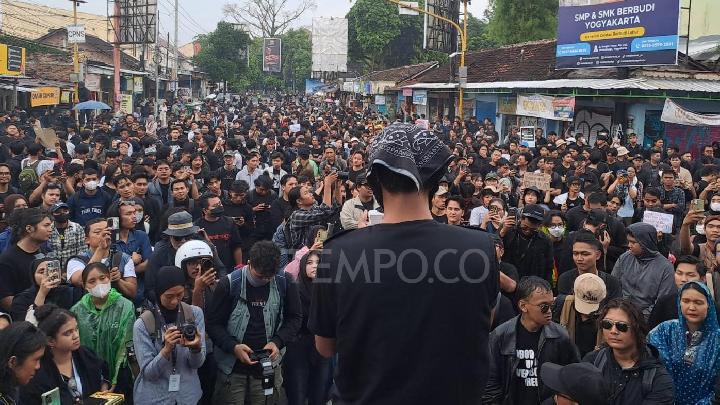
Thousands of Yogyakarta Protesters Occupy Gejayan – On Saturday, June 13, a significant gathering of demonstrators convened at the Gejayan intersection in Yogyakarta, Indonesia, under the leadership of the People’s Call Alliance. The protest, marked by its scale and intensity, aimed to express discontent with the administration of President Prabowo Subianto and Vice President Gibran Rakabuming Raka. With thousands of participants, the demonstration highlighted a spectrum of grievances against government initiatives, reflecting a growing movement of civil society groups, university students, academics, labor activists, and online motorcycle taxi drivers.
Protest Setup and Climate
The demonstration began to take shape around 2:30 p.m. local time, as the crowd gradually occupied the bustling intersection. This location, a key point of convergence for several prominent institutions, including Gadjah Mada University (UGM), Yogyakarta State University (UNY), Atma Jaya University Yogyakarta, and Sanata Dharma University, became the central stage for the protest. Activists set up a makeshift platform and a command vehicle equipped with loudspeakers, allowing for organized speeches and coordination throughout the event.
Despite the downpour that dampened the city, the demonstrators persisted in their efforts. The rain, while creating logistical challenges, did not deter the arrival of new participants, who brought banners and signs emphasizing concerns about Indonesia’s economic stability, political landscape, and social welfare. The protest site, dotted with visual symbols of dissatisfaction, became a powerful statement of public sentiment.
Core Demands and Concerns
Organizers of the People’s Call Alliance framed the demonstration as a call for greater accountability from the current leadership. Their ten-point agenda encompassed a range of issues, from economic mismanagement to erosion of democratic norms. Among the most pressing concerns were the Free Nutritious Meals (MBG) program, which protesters argued was susceptible to corruption and lacked transparency, and the government’s Red and White Village Cooperative initiative, which they viewed as a flawed policy.
Additional demands focused on legal reforms that, according to the alliance, threatened civil liberties. These included the withdrawal of amendments to laws governing the military, police, prosecutors, and military justice systems. The changes, they claimed, diminished the space for open criticism and increased the risk of political repression. The alliance also called for stronger protections of freedom of expression, assembly, and association, emphasizing the need for security forces to be held accountable for their actions during the protests.
Meanwhile, economic issues dominated the discourse. Protesters highlighted the weakening rupiah, rising fuel prices, and the growing burden on micro, small, and medium-sized enterprises (MSMEs). They argued that these factors were exacerbating the financial strain on ordinary citizens and undermining the government’s ability to deliver on its promises. The demonstration also underscored demands for universal access to affordable education and healthcare, as well as policies aimed at reducing income inequality.
Voices from the Frontlines
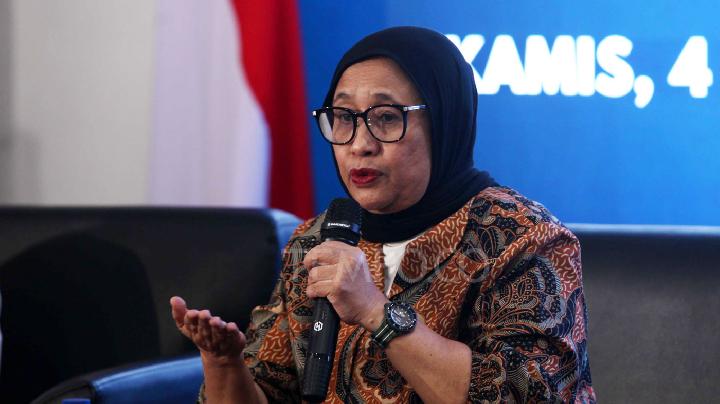
Speaking at the rally, Masduki, a professor of media and journalism at the Islamic University of Indonesia (UII), urged the leaders of the nation to reassess policies that failed to serve the public interest. “We urge President Prabowo and Vice President Gibran to review policies that are not in the public interest,” Masduki stated. This sentiment was echoed by Marsinah, the People’s Call Alliance spokesperson, who emphasized the increasing pressure on civil society and democratic freedoms.
“Criticism, which should be a healthy part of democracy, is often treated as a threat,” Marsinah said. “Yet democracy grows not from forced praise, but from the courage to hold power accountable.”
Marsinah’s words encapsulated the broader narrative of the protest. The alliance accused the government of stifling dissent and criminalizing activists who challenged its decisions. They also demanded the release of political prisoners and the end of legal actions targeting government critics. In a final push, the group called for guarantees of land, housing, and living-space rights, urging the government to halt forced evictions linked to development projects and investigate alleged corruption in the Mandala Krida Stadium project.
Focus on Labor and Social Equity
The protest extended its critique to labor policies, with participants advocating for improved conditions for workers across various sectors. This included domestic workers, teachers, farmers, miners, factory workers, digital platform employees, and informal-sector laborers. The alliance emphasized the need for stronger protections against exploitation and the enforcement of fair wages and working conditions.
One of the key demands centered on the livelihoods of online motorcycle taxi drivers, a vital part of Yogyakarta’s transportation ecosystem. Protesters called for stricter regulations of ride-hailing companies and greater involvement of driver groups in shaping future transportation legislation. This highlighted the intersection of economic and social issues, as the movement sought to address both systemic challenges and the everyday struggles of Indonesians.
Broader Context of Protests
The Gejayan demonstration was part of a larger wave of protests that swept through multiple Indonesian cities on Friday and Saturday. These gatherings, often student-led or organized by civil society networks, reflected a collective pushback against policies perceived as unfavorable to the general population. The alignment of protests across regions suggested a unified front against the current administration, with participants using the opportunity to voice widespread concerns.
While the specific focus in Yogyakarta was on the MBG program and related economic issues, the broader movement highlighted the tension between the government and the public. Critics argued that the policies under Prabowo and Gibran were not only failing to address key challenges but also widening the gap between the ruling elite and the grassroots. The alliance’s demands, though specific, resonated with a national sentiment that economic hardship and political suppression were fueling public unrest.
As the protest unfolded, the complete closure of traffic around the intersection underscored the scale of the event. The area, usually a hub of activity, became a symbol of resistance. The alliance’s use of the intersection as a staging ground for their demands also served as a strategic move to maximize visibility and impact. Demonstrators, despite the rain, maintained a steady presence, their voices echoing through the city as a call for change.
These protests, while localized in Yogyakarta, were part of a national dialogue. They prompted discussions about the future of governance, the role of civil society, and the importance of addressing economic and political concerns. The People’s Call Alliance, through its organized efforts, sought to galvanize public support and pressure the government into action. As the rally progressed, the demands remained a focal point, with participants using the platform to highlight their vision for a more equitable and transparent Indonesia.
With the intersection now a testament to collective action, the protest highlighted the power of public demonstrations in shaping political discourse. The alliance’s message, carried by diverse voices, resonated with Indonesians across the country, reinforcing the idea that grassroots movements can drive significant change. As the demonstration concluded, its impact lingered, setting the stage for continued advocacy and dialogue in the months ahead.