
Jakarta Police Challenge Student Claims of Advance Notice for Protest
Police Dispute Students Claim of Prior –
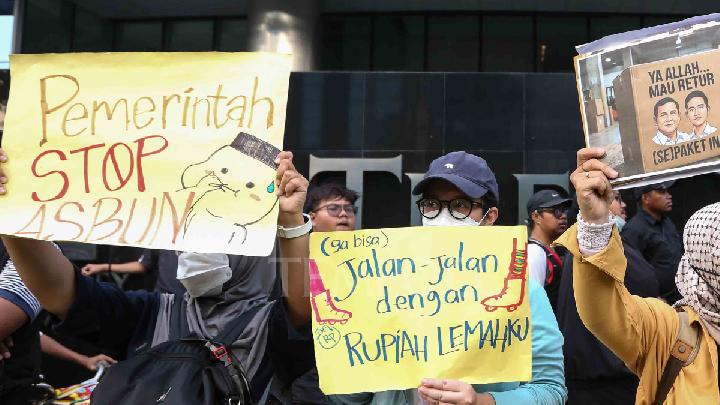
On Friday, June 12, the Jakarta Metropolitan Police denied claims by student organizers that they had provided prior notification for a protest in the capital city. The demonstration, organized under the banner “Toward Indonesia Bankruptcy,” took place in the Sudirman area and drew hundreds of participants, including members of civil society. According to Commissioner Budi Hermanto, the police spokesperson, authorities had cross-checked details with relevant parties and found no evidence of a notification being submitted. “As of now, there is no such letter,” he stated, emphasizing that the required formal paperwork was not on file.
Students Argue Against Police Statement
Representatives of the University of Indonesia Student Executive Board (BEM UI) contested the police’s assertion, insisting that the organizers had indeed submitted the notification well before the event. Anandaku Dimas Rumi, chair of the Faculty of Law’s Student Executive Board (BEM FH UI), highlighted the proactive steps taken by the group, including publicizing rally points through social media platforms. “We also shared the details of the protest on social media,” Rumi said, underscoring the transparency of the organizers’ efforts.
“The police did not provide any reason at all,” Rumi added, accusing authorities of trying to divert the demonstration from its intended location at the Hotel Indonesia (HI) Roundabout to a different site near the House of Representatives (DPR/MPR) complex. This shift, he argued, was an attempt to control the narrative or impose stricter oversight on the protest.
Legal Requirements for Public Demonstrations
Commissioner Budi Hermanto reiterated that a notification letter is a legal prerequisite for holding public demonstrations in Indonesia, citing Law No. 9 of 1998 on Freedom of Expression. He emphasized that the process involves submitting the document to the local police, which then verifies its accuracy and ensures compliance with regulations. “We have checked the matter,” he told reporters, stressing that no record of the submission was found.
The police’s stance contradicted the students’ assertion that they had adhered to the legal process. Yatalathof Ma’shum Imawan, who led the BEM UI delegation, clarified that the protest was planned with the necessary precautions. “We submitted the notice before the event,” he said, adding that the organizers had also communicated the protest’s schedule and location to the public.
Despite the police’s claim of no prior notice, the demonstration proceeded without significant disruption. Security forces monitored the event and prevented protesters from reaching the HI Roundabout, where the rally was initially intended to take place. The protest, however, continued until approximately 10 p.m. local time, drawing attention to the students’ demands and the tension between organizers and authorities.
Five Demands Highlighted by Protesters
The demonstrators presented five key demands during the rally, focusing on issues of economic governance and political accountability. These included calls for the government to reduce excessive state spending, which they argued had contributed to Indonesia’s financial challenges. Additionally, the group sought lower prices for essential goods and fuel, aiming to alleviate the economic burden on citizens.
Another demand targeted the Free Nutritious Meals (MBG) program and the Red and White Village Cooperative initiative, both of which the students accused of inefficient resource allocation. They also urged an end to the militarization of civilian affairs, a critique they linked to the increasing role of security forces in public governance. Finally, the protesters called for greater accountability from the administration of President Prabowo Subianto, emphasizing the need for leadership to acknowledge errors and take corrective action.
“Stop militarism in civilian affairs, and President Prabowo must stop avoiding responsibility and admit the government’s mistakes,” Yatalathof said, reflecting the group’s frustration with perceived inaction from the administration.
The protest’s timing and location became a focal point of the dispute. While the students insisted that they had followed all procedures, the police claimed that the lack of a formal notification letter made the event unauthorized. This disagreement raised questions about the clarity of Indonesia’s protest regulations and the enforcement of compliance.
Some critics argue that the requirement for prior notice can sometimes be used to suppress dissent, particularly when authorities delay or reject submissions. However, the police defended the process, stating it ensures that public events are organized responsibly and that safety measures are in place.
The event also drew attention to the broader context of student activism in Indonesia, where young leaders frequently engage in mass demonstrations to voice concerns about economic policies, corruption, and governance. While the protest at Sudirman was relatively contained, it underscored the growing influence of student groups in shaping national discourse.
Yatalathof and other organizers maintained that their actions were aimed at sparking meaningful dialogue with the government. “We brought these demands to light to pressure leaders into addressing the issues we believe are critical to the country’s future,” he explained.
The dispute between the police and student representatives highlights the challenges of balancing free expression with regulatory oversight. As the protest concluded, both sides remained firm in their positions, with the police reiterating their adherence to legal protocols and the students advocating for greater transparency and responsiveness from authorities.
Read more about the protest’s aftermath and other related news on Tempo’s platform. For the latest updates, click here to follow Tempo’s coverage on Google News.