Afghan Women Facing Arrest for Dress Code Violations: UN
Women and girls in Afghanistan continue to face arrest, intimidation, and tight controls over their presence in public, with the United Nations expressing
UN Raises Alarm Over Detentions of Afghan Women for Alleged Dress Code Breaches
Tempatdonasi.com – Women and girls in Afghanistan continue to face arrest, intimidation, and tight controls over their presence in public, with the United Nations expressing grave concern over a series of detentions in Kabul and Herat.
At least 52 women and one girl were arrested or detained in the two cities between July and September 2026, the UN Assistance Mission in Afghanistan said in a statement released on Thursday. The reported cases involved women accused of failing to meet rules imposed on dress and public conduct.
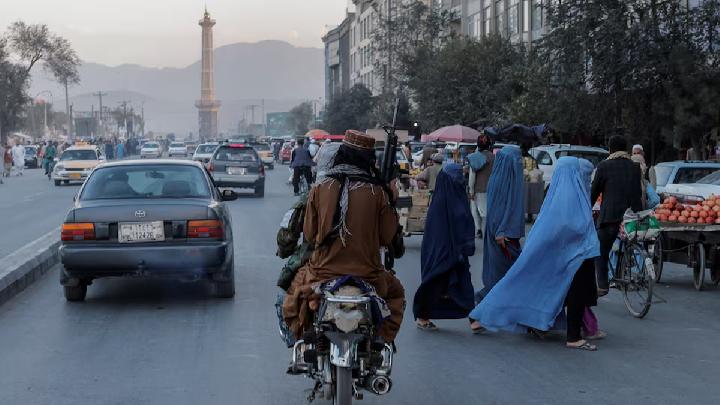
“Women were detained for not wearing a chador [an all-enveloping, cloak-like garment], having visible hair, wearing colourful scarves or makeup, or being in public without a mahram [male chaperone],” UNAMA said.
The women were freed after being held for several hours, but the UN mission warned that the documented incidents may represent only part of the total. Fear, social pressure, and the sensitive nature of such cases can make it difficult for affected women and families to report what happened.
Restrictions Reach Beyond Clothing
The detentions underscore how regulations affecting Afghan women extend beyond the garments they wear. The rules can also determine whether women may travel, appear in public, or move through their communities without a male relative accompanying them.
UNAMA said the arrests, detentions, and threats of detention raised serious concerns. It described the measures as violations of the rights of women and girls to move freely, express themselves, and make decisions about their own lives.
In Afghanistan’s deeply traditional social environment, detention can have consequences that remain long after a woman leaves custody. Women who are publicly accused of breaking dress requirements may face stigma within their neighborhoods, families, or wider communities. UNAMA highlighted this risk in its warning over the recent cases.
The enforcement of these restrictions is overseen by the Ministry for the Propagation of Virtue and the Prevention of Vice. Its role has become central to the Taliban administration’s rules governing women’s clothing, mobility, education, and public participation.
A Broader Pattern Since 2021
The Taliban returned to power in Afghanistan in 2021 as forces led by the United States withdrew from the country. Since then, the authorities have introduced sweeping limits on women and girls in many areas of daily life.
Girls have been barred from education beyond the primary level, while women have faced restrictions on where they can go, what they can wear, and the conditions under which they may appear outside the home. In public, women are required to wear a full hijab, including a head covering, a long robe covering the body, and a face covering.
These restrictions have drawn sustained international criticism because they affect access to education, work, healthcare, travel, and ordinary community life. For many Afghan women, rules on dress are not isolated requirements; they are part of a wider framework that limits independence and makes routine activities more difficult.
The latest detentions also follow unrest in Herat earlier this year. In June, Afghan authorities opened fire during an unusual protest over the arrests and detention of women accused of violating dress rules. Witnesses and the UN mission said at least one person was killed and several others were injured.
The protest was notable because public demonstrations in Afghanistan carry significant risks, particularly when they challenge policies connected to the treatment of women. The violence in Herat illustrated the tension surrounding enforcement measures and the dangers faced by people who object to them openly.
International Legal Pressure
International scrutiny intensified earlier this week when the International Criminal Court issued four arrest warrants for senior Taliban officials. The court accused them of crimes against humanity through the systematic deprivation of the rights of women and girls in Afghanistan.
The Taliban rejected the ICC decision, describing it as politically motivated and as an infringement on Afghanistan’s sovereignty. The dispute highlights the distance between the Taliban authorities and international institutions seeking accountability over the treatment of women and girls.
For Afghan women, the immediate reality remains the practical enforcement of restrictions in streets, markets, public offices, schools, and other everyday spaces. A visible strand of hair, a colorful scarf, makeup, or travelling without a male guardian can expose women to questioning, detention, or the threat of arrest.
UNAMA’s statement places renewed attention on those day-to-day consequences. While the women named in the reported cases were released within hours, the mission’s concern points to a broader issue: the uncertainty created when personal appearance and movement can lead to intervention by authorities.
The reported arrests in Kabul and Herat reinforce the continuing pressure on women and girls whose rights have been increasingly restricted since 2021. They also add urgency to calls for protections that allow Afghan women to study, travel, work, and participate in public life without fear of punishment for their clothing or personal choices.
Related Reading
Frequently Asked Questions
What is Afghan Women Facing Arrest for Dress?
Afghan Women Facing Arrest for Dress is the main topic of this guide. The article explains the context, practical details, and next steps readers should understand.
Why does Afghan Women Facing Arrest for Dress matter?
Afghan Women Facing Arrest for Dress matters because readers are looking for a useful answer, not just a short summary. Good content should match search intent and help them decide what to do next.