Anak Krakatau Eruption Expands Airport Closures to Eight
Volcanic ash drifting across western Java and northern Sumatra has pushed Indonesia's aviation network into its most extensive temporary shutdown in recent
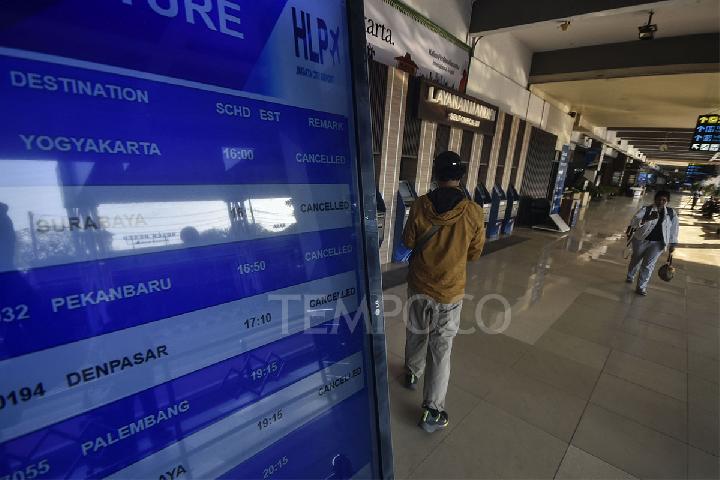
Volcanic Ash from Anak Krakatau Forces Closure of Eight Indonesian Airports
Tempatdonasi.com – Volcanic ash drifting across western Java and northern Sumatra has pushed Indonesia’s aviation network into its most extensive temporary shutdown in recent memory. Transportation Minister Dudy Purwagandhi confirmed on Sunday that eight airports have been grounded to protect aircraft and passengers from ash contamination, a significant escalation from the six-airport closure announced earlier that same afternoon.
The eruption of Mount Anak Krakatau, a young volcanic island sitting in the Sunda Strait between Java and Sumatra, has sent plumes of fine particulate matter into flight corridors used by both domestic and international carriers. Because volcanic ash can damage jet engines, obscure cockpit visibility, and degrade runway surfaces, regulators treat even moderate ash concentrations as an absolute no-fly condition until measurements confirm safe thresholds.
The Full List of Grounded Airports
The eight facilities now suspended from operations span three provinces and include both major international hubs and smaller regional fields:
Soekarno-Hatta International Airport in Tangerang, Banten; Halim Perdanakusuma Airport in central Jakarta; Radin Inten II Airport in Lampung; Husein Sastranegara Airport in Bandung; Budiarto Airport in Curug, Tangerang; Pondok Cabe Airport in South Tangerang; Taufik Kiemas Airport in Pesisir Barat, Lampung; and Atung Bungsu Airport in Pagar Alam, South Sumatra.
The closure list grew incrementally through Sunday. At approximately 1:00 p.m. WIB, the minister held a virtual press conference in Jakarta and announced that six airports were already shut. Shortly before that briefing, at 12:00 p.m. WIB, further atmospheric monitoring confirmed that Husein Sastranegara Airport in Bandung had come within the ash-affected zone, triggering an immediate halt to its flight operations. The two additional fields—Taufik Kiemas and Atung Bungsu—were added as ash tracking models projected their corridors would be compromised within hours.
Ministerial Directives on Passenger Protection
In the same briefing, Dudy Purwagandhi laid out a set of operational expectations for every airline operating out of the affected region. Carriers were instructed to communicate schedule changes, cancellations, and diversions to passengers quickly, accurately, and transparently, and to ensure that all passenger rights under applicable aviation regulations are honored without delay.
“Most importantly, airlines must guarantee passenger rights to ticket refunds so people are not left waiting, as many travelers still hope they can fly,” Dudy emphasized.
The minister also flagged the possibility of rerouting flights to alternative airports outside the ash corridor, naming Kertajati in West Java, Semarang in Central Java, Surabaya in East Java, and Yogyakarta as candidate diversion points. Airlines were told to notify affected passengers of any such changes immediately, since prolonged terminal waits compound anxiety and create logistical bottlenecks at ground-handling facilities.
“However, given the current situation, we likely will not be able to reopen these airports anytime soon. We will resume operations once we can guarantee that safety conditions are clear,” he added.
Operational and Humanitarian Considerations
Beyond the immediate flight cancellations, the minister stressed that passenger service quality must remain a primary concern even amid natural-disaster disruptions. Operators were directed to deploy additional ground staff at affected terminals and to keep active information channels—hotlines, digital notifications, and on-site signage—running continuously so that travelers can receive real-time updates on their itineraries.
Travelers using the eight suspended facilities were specifically advised to avoid traveling to terminals during the closure window. Instead, passengers were urged to monitor flight-status updates directly from their airlines through official apps, websites, or customer-service lines, reducing unnecessary congestion at airports where no departures or arrivals are possible.
Background: Anak Krakatau and Regional Aviation Risk
Anak Krakatau, meaning “child of Krakatau,” is the youngest member of the Krakatau volcanic group, born from the 1883 cataclysmic eruption of its parent island. Located roughly 32 kilometers northwest of the island of Java, it sits atop a submarine volcanic complex that has produced repeated eruptions since its formation in 1927–1928. Because the Sunda Strait is one of the world’s busiest maritime and aviation corridors—linking Jakarta, Lampung, and the ports of northern Sumatra—any significant ash emission from the vent has immediate consequences for regional air traffic.
The Indonesian Directorate General of Civil Aviation typically issues ash advisories in coordination with the Volcanological Observatory in Bandung and with regional meteorological agencies. When ash concentrations exceed defined thresholds at cruising altitude or near runway elevations, airports within the projected drift path are closed until repeated measurements confirm that particulate levels have fallen below safe limits. The unpredictable duration of such closures—ranging from a single day to several weeks depending on wind patterns and eruption intensity—makes advance planning difficult for both carriers and passengers.
As of Sunday evening, no firm timeline for reopening the eight airports had been published. Regulators indicated that each facility would be reassessed individually, with clearance contingent on continuous atmospheric monitoring rather than a fixed schedule. Airlines and ground handlers were expected to maintain coordinated communication so that any phased resumption of service could proceed in an orderly manner once conditions permitted.
Related Reading
Frequently Asked Questions
What is Anak Krakatau Eruption Expands Airport Closures?
Anak Krakatau Eruption Expands Airport Closures is the main topic of this guide. The article explains the context, practical details, and next steps readers should understand.
Why does Anak Krakatau Eruption Expands Airport Closures matter?
Anak Krakatau Eruption Expands Airport Closures matters because readers are looking for a useful answer, not just a short summary. Good content should match search intent and help them decide what to do next.