China, US Agree to Set Up Channel for AI Safety Incidents
China and the United States have pledged to create a dedicated communication channel for artificial intelligence safety incidents, placing a rapidly
China and United States Plan Direct Channel for AI Safety Incidents
Tempatdonasi.com – China and the United States have pledged to create a dedicated communication channel for artificial intelligence safety incidents, placing a rapidly developing technology at the center of a wider effort to stabilize relations between the two major powers.
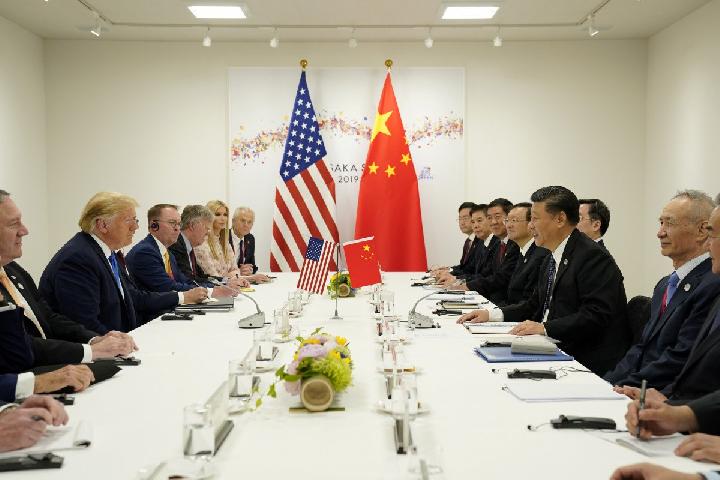
The commitment emerged from a three-day meeting in the United States involving President Donald Trump and Chinese President Xi Jinping. Alongside the AI initiative, the two governments outlined plans for more military dialogue, reduced tariffs on selected goods, and an extension of their existing trade truce.
The proposed AI channel is intended to give Beijing and Washington a way to communicate when safety concerns arise around artificial intelligence systems. Both countries are investing heavily in the technology, which is becoming increasingly important in commercial industries, scientific research, cybersecurity, and military planning.
AI dialogue set to continue in November
China’s Foreign Ministry said a further round of talks focused on AI is scheduled for November. It framed the new contact mechanism as part of a broader need for governments to exchange views as the technology changes quickly.
“Artificial intelligence technologies are continuously developing, all parties can strengthen exchanges, discuss in-depth and seek consensus in light of the latest situation,” the Chinese Foreign Ministry said.
The agreement does not provide public details on how the channel would operate, what types of incidents would trigger contact, or which agencies would take part. Still, its creation signals that both sides see value in maintaining direct communication over a field where misunderstandings could carry significant consequences.
AI safety has become an international issue because advanced systems can affect critical infrastructure, information flows, national security, and economic competition. A direct line between the two countries could help officials raise concerns more quickly when a serious problem develops, even as the two governments remain competitors in technology and trade.
Military crisis communication also on the agenda
Beijing said the two sides will speed up work related to military crisis communications. No additional information was given on the scope of that effort, but the announcement places military-to-military contact alongside the new AI discussions.
Such communication is especially relevant when diplomatic tensions, military activity, and emerging technologies overlap. Clearer contact between armed forces can reduce the risk that an incident is misread or that a developing crisis escalates without an opportunity for clarification.
Trump described the summit in an online post as “one of Friendship, Strength, and Success” for both countries. Xi used more restrained language, saying the two sides had reached agreement on “strategic stability on the basis of respect, fairness, and reciprocity.”
Tariff reductions cover selected goods
After Xi returned to Beijing, China said both governments had agreed to reduce tariffs on roughly $30 billion, or €26.3 billion, in goods characterized as non-essential or non-sensitive. The affected exports include products such as agricultural goods and holiday decorations.
The tariff move accompanies an extension of the trade truce reached by Trump and Xi in Busan last October. That earlier arrangement involved China pausing controls on rare earths while the United States rolled back some tariffs. It had been due to end on November 10.
US Treasury Secretary Scott Bessent said the truce will now remain in force until January. The White House also said the discussions addressed US concerns over rare earth supplies, with the aim of restoring shipment volumes to appropriate levels.
Rare earths are a strategically important part of the economic relationship because they are used in a range of modern products and industrial applications. Their place in the negotiations underlines how trade, supply chains, and technology policy have become closely connected in relations between Washington and Beijing.
China also agreed to purchase at least 10 million metric tons of coal from the United States during 2027 and 2028, the Trump administration said. The commitment adds another element to the trade package and illustrates the range of sectors involved in the talks.
Iran and future meetings
The war involving Iran was also discussed during the meeting. Trump confirmed that the issue was raised, though no major breakthrough was announced. China’s Foreign Ministry said both governments agreed that Iran should not possess nuclear weapons and that no country should impose transit tolls on international waterways, a reference to the Strait of Hormuz.
The Strait of Hormuz is a vital maritime route, making freedom of passage there an issue with implications beyond the countries directly involved in regional tensions. The shared language on transit tolls suggests that the United States and China identified at least limited common ground despite broader differences over international affairs.
Trump and Xi are expected to meet twice more before the end of the year. Trump is due to attend the Asia-Pacific Economic Cooperation summit in China in November. Xi is then expected to return to the United States in December for a G20 summit planned at Trump’s National Doral Miami golf club.
The latest commitments do not erase the strategic rivalry between the two countries. They do, however, create new areas for direct engagement at a time when AI development, military security, trade barriers, rare earth supplies, and regional conflicts all carry international consequences.
Related Reading
Frequently Asked Questions
What is China US Agree to Set Up Channel?
China US Agree to Set Up Channel is the main topic of this guide. The article explains the context, practical details, and next steps readers should understand.
Why does China US Agree to Set Up Channel matter?
China US Agree to Set Up Channel matters because readers are looking for a useful answer, not just a short summary. Good content should match search intent and help them decide what to do next.