
Did China Censor Nepal Flash Floods Footages? Gov’t Responds
Six days after a catastrophic debris flow tore through the Nepal-Tibet border corridor, the Chinese Foreign Ministry moved swiftly to dismiss allegations that
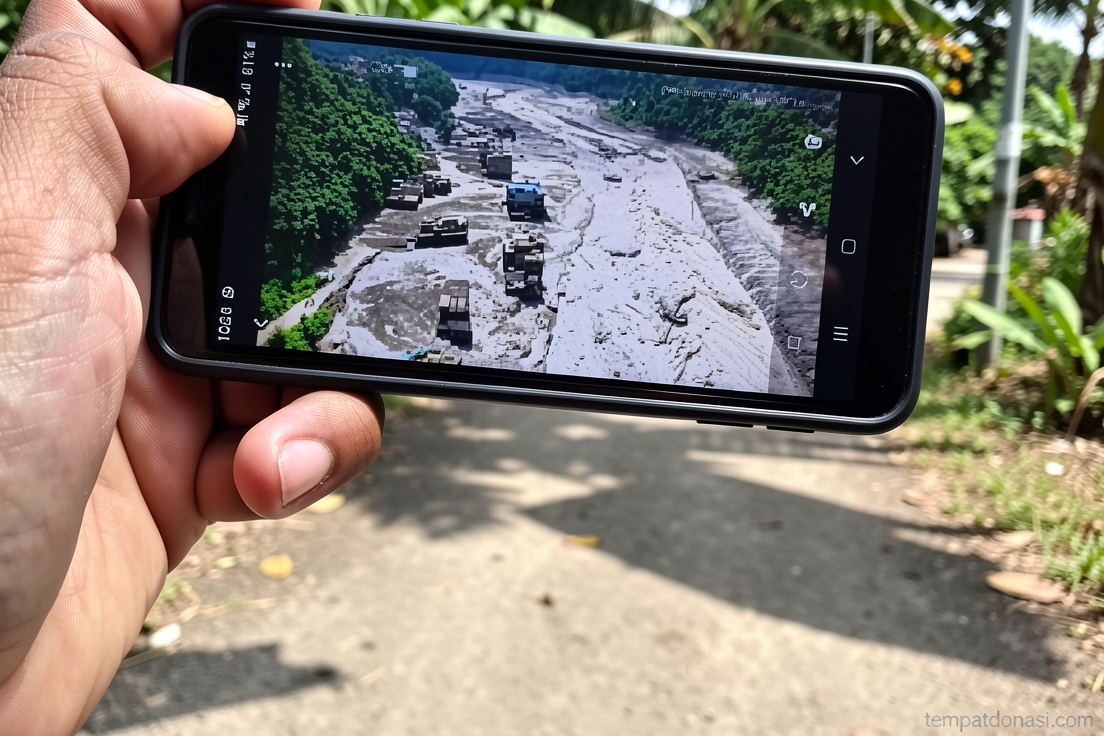
Beijing Pushes Back on Censorship Claims as Nepal Flood Toll Tops 950
Tempatdonasi.com – Six days after a catastrophic debris flow tore through the Nepal-Tibet border corridor, the Chinese Foreign Ministry moved swiftly to dismiss allegations that footage of the devastation at Gyirong Port had been suppressed or edited. The denial came amid a death toll that has already surpassed 950, with roughly 4,800 individuals still unaccounted for as of Monday, August 31.
The question of whether Beijing had restricted public access to video showing the scale of the mudslides and flash floods at the Gyirong crossing — a key trade and transit point in Xizang (Tibet) Autonomous Region adjacent to Nepal — had circulated widely on social media. Spokesperson Guo Jiakun addressed the issue directly at a Monday press briefing in the capital.
“Intensive search, rescue and relief operations are still underway in an orderly manner in the disaster-hit areas. China has been open, transparent and timely in information release. Smear and disinformation is most unwelcome at a time of disaster response.”
Diplomatic Coordination and Emergency Aid
Beyond the censorship question, Guo outlined the bilateral steps taken since the disaster struck. On Saturday, Foreign Minister Wang Yi held a telephone conversation with Nepalese Foreign Minister Shisir Khanal, framing the catastrophe as a shared challenge requiring joint resolve.
“In the face of this disaster, the two countries must stand firm together, join hands to overcome difficulties, and demonstrate their traditional friendship through concrete actions.”
Material support has already crossed the border. Guo confirmed that an initial shipment of 50 tonnes of relief supplies reached Kathmandu, alongside emergency cash assistance and humanitarian goods. Two specialist teams of Chinese tunnel-rescue experts were dispatched to multiple affected zones within Nepal.
Intelligence sharing formed another pillar of the response. Beijing transmitted satellite imagery, hydrological readings, and early-warning data on an upstream barrier lake to Nepali authorities — information critical for anticipating secondary flooding from dammed glacial meltwater.
“We have also shared with the Nepali side important information such as images, satellite, and hydrological data of the disaster-affected areas, including early-warning information on an upstream barrier lake.”
Rescuing Stranded Citizens
Guo stated that China was working to repatriate Nepalese nationals stranded in the affected zone as rapidly as conditions allowed. On the Chinese side, every citizen in the disaster area with whom contact had been re-established had been relocated to safety by noon the previous day. Efforts continued to locate those still unaccounted for, both domestically and abroad.
“At present, China is making every effort to search for and rescue those unaccounted for both within the country and abroad.”
Close liaison with foreign embassies was maintained to identify missing nationals of other countries and coordinate follow-up protocols.
Pinpointing the Cause: A High-Altitude Glacier Collapse
Guo took explicit aim at speculation linking the catastrophe to China’s extensive hydropower and infrastructure development in the region. He cited assessments by experts and official bodies from both nations, concluding that the triggering mechanism was a collapse of a high-altitude glacier on the Nepali side.
“We noted that experts and official institutions of China and Nepal have made some assessment on the cause of the disaster. According to their analysis, the mudslide was triggered by a collapse of a high-altitude glacier in Nepal. In the face of tragic disasters, we reject malicious speculation that has no factual basis.”
The sequence began on Wednesday when a section of glacier on Mount Langtang Lirung, at roughly 5,200 metres elevation, fractured. The resulting avalanche of ice and rock accelerated downslope, merging with seasonal meltwater to form a massive debris flow that swept through border valleys on both sides of the international line.
Human Cost on Both Sides of the Border
Nepal’s National Disaster Risk Reduction and Mitigation Agency confirmed 903 fatalities within its territory, with 4,247 people still missing — including 590 foreign nationals hailing from 39 countries. Among the unaccounted-for on the Nepali side are 25 police officers, 45 army personnel, 13 Armed Police Force members, 14 customs officials, three immigration officers, and 933 workers assigned to various hydropower installations. An additional 127 Nepalese tourists remain unlocated.
On the Chinese side of the border, 16 deaths have been confirmed and 546 individuals are still missing, of whom 261 are foreign nationals in Gyirong County, southwest Xizang.
More than 10,000 people, including 323 foreign nationals, have been pulled to safety since the event. Over 2,100 rescue personnel, hundreds of vehicles, and thousands of pieces of specialized equipment have been committed to ongoing operations.
Ongoing Cooperation and Secondary-Disaster Watch
Guo emphasized that bilateral communication on search-and-rescue coordination, data exchange, and prevention of follow-on hazards — particularly the risk of glacial lake outburst floods from newly formed barrier lakes — has proceeded smoothly. Meteorological and hydrological datasets continue to flow between the two governments, and expert consultations are ongoing.
“China will continue giving strong support to Nepal in its relief efforts and strengthen cooperation with Nepal on disaster prevention and control for the shared benefit of both peoples.”
The Langtang Lirung event underscores a broader regional vulnerability: as glacial retreat accelerates across the Himalaya, the probability of sudden ice- and rock-avalanche events along high-altitude corridors increases. For border communities and transit economies dependent on crossings like Gyirong, the interplay between climate-driven glacier instability and monsoon-season rainfall represents a compounding hazard that neither nation can manage alone.
Related Reading
Frequently Asked Questions
What is Did China Censor Nepal Flash Floods?
Did China Censor Nepal Flash Floods is the main topic of this guide. The article explains the context, practical details, and next steps readers should understand.
Why does Did China Censor Nepal Flash Floods matter?
Did China Censor Nepal Flash Floods matters because readers are looking for a useful answer, not just a short summary. Good content should match search intent and help them decide what to do next.