Does BRICS Have a Clear Purpose?
Does BRICS Have a Clear Purpose? That question hangs over the 18th BRICS summit in Delhi, where India will host an expanded bloc still seeking a sharper
Does BRICS Have a Clear Purpose? India’s Summit Faces a Test of Unity
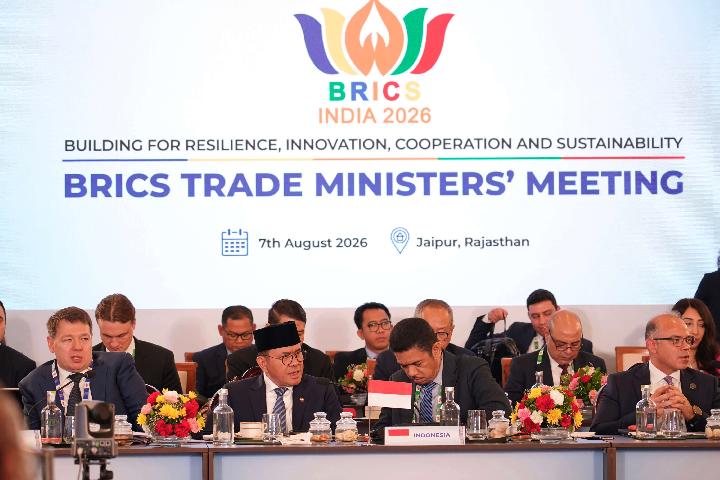
Tempatdonasi.com – Does BRICS Have a Clear Purpose? That question hangs over the 18th BRICS summit in Delhi, where India will host an expanded bloc still seeking a sharper shared identity. The summit’s theme, “Building for Resilience, Innovation, Cooperation and Sustainability,” reflects an effort to define BRICS through common priorities rather than simply its membership.
Originally, BRICS referred to Brazil, Russia, India, China and South Africa. The grouping now includes Egypt, Ethiopia, Indonesia, Iran and the United Arab Emirates, making consensus more consequential but also more difficult. India’s chosen theme gives the acronym a broader meaning centered on resilience, innovation, cooperation and sustainability.
“It’s an elegant way to reinterpret BRICS so that the acronym represents a joint mission rather than country names,” Mihaela Papa, director of the BRICS Lab at the Massachusetts Institute of Technology, told DW.
India’s Careful Diplomatic Approach
Does BRICS Have a Clear Purpose for India? New Delhi appears determined to keep the answer practical and measured. Sushant Singh, a lecturer in South Asian Studies at Yale University, said the broad summit theme reflects India’s desire to preserve strategic flexibility while avoiding tension with Russia and China.
“India doesn’t want to offend Russia or China, but the fact is that Indians are looking more towards the United States these days. The desire to build up BRICS is not there.”
India’s growing geopolitical influence could make the Delhi meeting more prominent than the previous summit in Rio de Janeiro, where six of the bloc’s 11 heads of state were absent. Chinese President Xi Jinping and Russian President Vladimir Putin were among those who did not attend that gathering.
Putin is expected to take part in the Delhi summit. Xi is also widely expected to attend, though Beijing has not formally confirmed his presence. Papa said the involvement of China’s top leadership will be an important indication of the meeting’s importance.
“The participation of China’s top leadership is crucial,” says Papa.
The summit also offers India a chance for bilateral diplomacy. Narendra Modi and Putin are scheduled to meet on Friday, while a face-to-face discussion between Modi and Xi could be possible. Given the continuing strain in relations between India and China, any direct engagement would draw close attention.
Regional Rivals in One Forum
The enlarged membership raises a further question: Does BRICS Have a Clear Purpose when countries with competing regional interests sit at the same table? Iranian President Masoud Pezeshkian is due to attend, while the United Arab Emirates is expected to send representatives rather than President Sheikh Mohamed bin Zayed Al Nahyan. Saudi Arabia is also expected to participate.
Saudi Arabia’s formal standing in BRICS remains uncertain, although current official BRICS materials generally list it as a member. Its presence alongside Iran and the UAE illustrates both the potential and the limitations of the expanded format.
Papa believes BRICS could still offer a useful platform for dialogue. Cooperation between Iran and the UAE in a multilateral setting would not resolve their wider differences, but it could demonstrate that the organization can sustain engagement across political divides.
Modest Prospects for Major Decisions
Despite the diplomatic significance of the summit, expectations for major policy achievements remain restrained. Singh said the gathering is unlikely to produce many substantial results.
“In terms of concrete outcomes and what is achievable, I think it’s going to be very, very limited,” says Singh.
Modi has presented BRICS as a forum for the Global South to express shared interests. He has promoted a people-focused approach and the principle of “humanity first,” emphasizing cooperation on development, trade and reform of international institutions.
This approach differs from the increasingly anti-Western identity that some observers associate with BRICS. India appears less comfortable with a confrontational direction, particularly as it maintains important ties with the United States and other Western partners.
FAQ: What Does the BRICS Summit Mean?
What is the main aim of the Delhi summit? India is using the meeting to promote resilience, innovation, cooperation and sustainability as areas where BRICS members may find common ground.
Why is agreement difficult within BRICS? The bloc includes countries with different foreign-policy priorities, regional rivalries and varying relationships with Western powers, making concrete joint action harder to achieve.
Will the summit resolve regional disputes? No. BRICS can provide a setting for dialogue among rivals, but it is not expected to eliminate underlying political or strategic disagreements.