El Nino 2026 Could Be Strongest in 1,000 Years
Unusually warm waters in the eastern Pacific are fueling concern that the El Niño developing in 2026 may rank among the most intense climate events seen in
Pacific Warming Raises Fears of an Exceptionally Powerful El Niño in 2026
Tempatdonasi.com – Unusually warm waters in the eastern Pacific are fueling concern that the El Niño developing in 2026 may rank among the most intense climate events seen in roughly a millennium. Sea-surface temperatures have already climbed to levels associated with the strongest recent episodes, while scientists warn that continued warming could push conditions even further.
Across parts of the eastern tropical Pacific, ocean temperatures are now close to 3 degrees Celsius above the seasonal average. That matches the level reached during the powerful 2015 super El Niño. If the current pattern continues, localized temperature departures could approach 4 degrees Celsius above normal.
A stronger El Niño in a warmer world
El Niño is part of a naturally occurring climate cycle in the tropical Pacific. It begins when waters that are usually relatively cool in the eastern portion of the ocean become warmer than usual. The shift can alter atmospheric circulation, affecting rainfall, temperatures, drought risk, and storm patterns in many regions far from the Pacific itself.
The phenomenon generally returns every two to seven years and often lasts from nine to 12 months. The 2026 event has not yet reached its maximum strength, and the World Meteorological Organization has indicated that further development remains possible. NOAA expects the pattern to strengthen through the end of 2026.
Climate researchers say the present event is unfolding against a much warmer global background than El Niño episodes experienced before the industrial era. A study published in Science, using temperature evidence preserved in Galápagos coral records, found that El Niño events during the past four decades were more than one-third stronger than those reconstructed from preindustrial conditions.
That research links the growing intensity to human-driven global warming. Coral archives provide an important long-term view because modern instrumental observations cover only a limited period. Their records allow scientists to compare recent Pacific warming with conditions that occurred centuries ago.
Professor Mat Collins, a climate scientist at the University of Exeter, has said the current El Niño has already reached record territory and could ultimately become the most powerful event in 1,000 years. Such an outcome would not mean El Niño alone is responsible for every heat record or weather disaster, but it would add another major influence to an already warmer climate system.
Why separating the signals is difficult
El Niño and global warming are not the same process. El Niño is a recurring ocean-atmosphere pattern, while climate change is the longer-term rise in global temperatures caused largely by greenhouse gas emissions. Yet their effects can overlap, making individual weather extremes more severe or more difficult to interpret.
Higher background temperatures have raised the Pacific’s baseline warmth. As a result, scientists face a complex question: how much of the exceptional heat is being generated by El Niño itself, and how much reflects the broader warming of the planet? The answer may vary by location and season, but the combined impact can be substantial.
For people living in vulnerable regions, the distinction may matter less than the practical consequences. A warmer ocean can reshape rainfall patterns, reduce water availability, damage crops, increase wildfire danger, and intensify heat stress. Communities dependent on predictable wet and dry seasons can be especially exposed when those patterns shift abruptly.
Dry conditions and food risks
Early impacts linked to El Niño have already emerged in several parts of the world. Guatemala, Honduras, and El Salvador have faced severe drought conditions and crop losses. In South Asia, India’s monsoon has shown signs of weakening, a development that can affect agriculture, water supplies, and daily life for large populations.
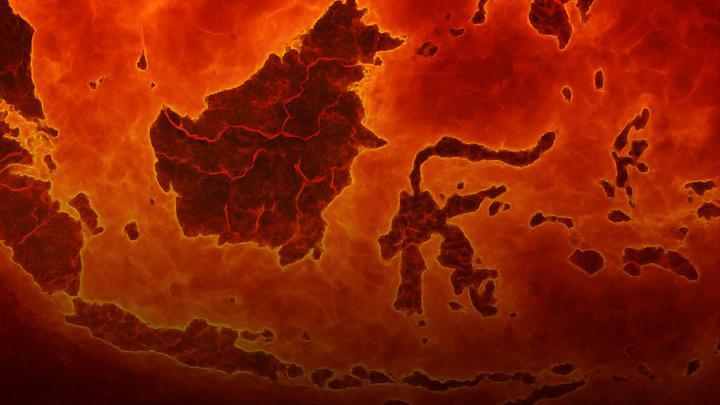
Indonesia is among the countries facing elevated concern over forest and land fires when El Niño brings drier weather. Extended dry spells can make vegetation more combustible and complicate efforts to prevent fires from spreading. The Amazon rainforest may also face harsher dry conditions if rainfall patterns continue to deteriorate.
These risks illustrate why El Niño is watched so closely by governments, farmers, emergency agencies, and health authorities. Its effects differ from place to place: one region may receive damaging drought while another experiences heavier rain or flooding. Local preparation, water management, fire prevention, and crop planning can become increasingly important as forecasts become clearer.
Forecasts point to a major event
NOAA’s Climate Prediction Center has projected more than a 90 percent chance of a major El Niño during the Northern Hemisphere autumn and winter of 2026–2027. It has also put the likelihood at 69 percent that the event will exceed the strength of every El Niño observed since modern monitoring began in 1950.
Forecasts can still change as the season develops, particularly because ocean and atmospheric conditions interact in complicated ways. Even so, the scale of the current Pacific warming has placed the event under intense scrutiny. The months ahead will help determine whether 2026 becomes a historic benchmark for El Niño intensity.
The larger message is that natural climate patterns are now operating in an environment transformed by sustained global warming. El Niño has always had the capacity to disrupt weather worldwide. When it coincides with record-high ocean and air temperatures, the consequences can become broader, more costly, and harder for communities to manage.
Related Reading
Frequently Asked Questions
What is El Nino 2026 Could Be Strongest?
El Nino 2026 Could Be Strongest is the main topic of this guide. The article explains the context, practical details, and next steps readers should understand.
Why does El Nino 2026 Could Be Strongest matter?
El Nino 2026 Could Be Strongest matters because readers are looking for a useful answer, not just a short summary. Good content should match search intent and help them decide what to do next.