
Emma Navarro Advances at US Open as Father’s Tennis Ties Draw Scrutiny
The 2026 US Open has produced one of its most talked-about storylines in recent memory, and it has nothing to do with a single match result. Emma Navarro, the
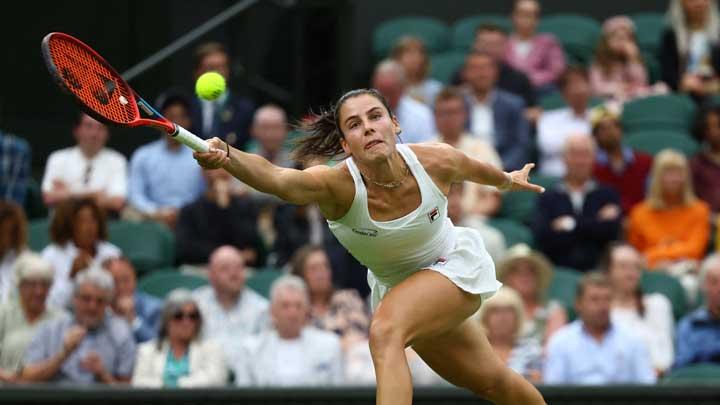
Navarro’s Quarterfinal Run Puts a Billionaire’s Tennis Empire Under the Microscope
Tempatdonasi.com – The 2026 US Open has produced one of its most talked-about storylines in recent memory, and it has nothing to do with a single match result. Emma Navarro, the 26th seed in the women’s singles draw, has carved her way into the quarterfinals at Flushing Meadows while simultaneously becoming the focal point of a heated debate about money, influence, and fairness in professional tennis. Her next opponent is fellow American Jessica Pegula, and the pairing has already earned a nickname among fans: the “Palmetto Open,” a nod to the deep roots both players share in South Carolina’s tennis community. Whoever emerges victorious will advance to the semifinals to take on world No. 1 Aryna Sabalenka.
The Father Behind the Seed
What separates this quarterfinal from a routine all-American clash is the identity of Navarro’s parent. Ben Navarro, the founder and chief executive of Beemok Capital and Sherman Financial Group, carries a personal fortune that Forbes places above the three-billion-dollar mark. That wealth has been deployed aggressively into the sport his daughter plays. He owns the Cincinnati Open and the Charleston Open, two events on the WTA calendar that carry considerable prestige. In Charleston itself, he has reportedly poured more than $350 million into real estate, acquiring what is described as the city’s largest hotel along with a stadium complex.
Those investments are not merely financial. They place a single family at the intersection of tournament ownership, player development, and the commercial machinery of professional tennis. For fans watching from the stands or at home, the question becomes uncomfortable: does a player whose father controls significant infrastructure in the sport receive a different kind of treatment when she steps onto a Grand Slam court?
A Scheduling Decision That Lit a Fuse
The controversy crystallized during the fourth round. Navarro, ranked 26th in the world, was assigned to Arthur Ashe Stadium, the tournament’s center court and its most visible stage, for her match against Anna Kalinskaya. At the same time, Pegula, who holds the world No. 3 ranking and reached the US Open final in a previous edition, was placed on Louis Armstrong Stadium for her fourth-round contest.
The contrast struck many observers as jarring. A player ranked outside the top ten, with a Grand Slam final appearance on her résumé, was routed to the secondary court while a lower-ranked opponent received the marquee assignment. Social media reaction was swift and pointed. Some fans called the decision disrespectful to Pegula’s standing in the sport. Others went further, suggesting that Navarro’s placement reflected preferential treatment flowing from her father’s considerable footprint in tennis administration and ownership.
Tournament organizers have not publicly confirmed any favoritism in the scheduling decision. The US Open’s match-ordering process typically factors in player ranking, match length projections, and broadcast considerations, and officials have not issued a statement specifically addressing the Navarro-Pegula court assignment. The absence of an official explanation has, paradoxically, done little to quiet the speculation.
A Family Built Around the Game
Ben Navarro has spoken openly about the role tennis plays in his household. In a 2020 interview, he described the sport as woven into the fabric of his family’s daily life and credited junior tennis with shaping his children’s character in ways he valued deeply.
“Junior tennis had helped his children develop a strong work ethic, friendships and the ability to deal with disappointment and defeat.”
That framing positions the family’s involvement as organic rather than transactional. Yet the scale of his commercial investments in tournament ownership and coastal real estate makes it difficult for outside observers to separate the paternal narrative from the business one. The two narratives now collide in the glare of a Grand Slam quarterfinal.
What the Quarterfinal Actually Means
Strip away the ownership questions and the scheduling debate, and what remains is a straightforward tennis contest between two American players with genuine South Carolina ties. Pegula brings the experience of a major final and the current confidence of a top-three ranking. Navarro brings the momentum of a deep run and the motivation of a player who has already exceeded most expectations set at the start of the tournament.
The winner will face Sabalenka, the top seed, in a semifinal that will carry enormous weight in the race toward the year-end rankings and the title itself. For Navarro, the quarterfinal represents the moment when court performance can either validate her run or leave the controversy as the lasting footnote. The scoreboard, for now, is the only metric that matters.
Why the Debate Matters Beyond One Match
The broader implication extends past Flushing Meadows. Professional tennis has long operated in a space where tournament ownership, player representation, and commercial sponsorship overlap in ways that other major sports rarely replicate. When a single family controls events on the tour, invests heavily in the infrastructure surrounding those events, and fields a competitive player on the same circuit, questions about competitive integrity become harder to dismiss as mere fan anxiety.
Whether or not any specific scheduling decision was influenced by external pressure, the episode has forced a public conversation about transparency in Grand Slam match-ordering. Fans deserve clarity about how center-court assignments are made, particularly when the players involved carry asymmetric commercial relationships to the sport’s governing bodies. Until that clarity arrives, every high-profile match involving a player with a wealthy, tennis-entrenched family will carry an extra layer of scrutiny.
For Navarro, the path forward is simple and singular: win the next match, earn the semifinal, and let the quality of her tennis answer questions that no press conference can fully settle. The court, after all, remains the one arena where no billionaire’s balance sheet can substitute for a well-timed backhand.
Related Reading
Frequently Asked Questions
What is Emma Navarro Advances at US Open?
Emma Navarro Advances at US Open is the main topic of this guide. The article explains the context, practical details, and next steps readers should understand.
Why does Emma Navarro Advances at US Open matter?
Emma Navarro Advances at US Open matters because readers are looking for a useful answer, not just a short summary. Good content should match search intent and help them decide what to do next.