
How Much Investment Does Indonesia Need to Achieve 8% Growth?
How Much Investment Does Indonesia Need – As part of its long-term economic strategy, Indonesia has set a bold target of achieving an annual growth rate of 8% during the 2025-2029 National Medium-Term Development Plan (NTMFP). To make this ambitious goal a reality, the country’s Minister of Investment and Head of the Investment Coordinating Board (BKPM), Rosan Roeslani, revealed that a total investment of Rp13,032.8 trillion is required over the next five years. This projection was shared during a working session with the House Commission XII on June 15, 2026, underscoring the government’s commitment to driving sustainable development through strategic capital inflows.
Annual Breakdown of Investment Goals
The investment target for 2024 was set at Rp1,714.2 trillion, a figure that exceeded the initial plan by Rp64.2 billion. This achievement contributed to a 5.03% economic growth rate during the year, demonstrating the impact of proactive investment policies. In 2025, the government raised the target to Rp1,905.6 trillion, with actual investments reaching Rp1,931.2 trillion. The result was a growth rate of 5.11%, slightly higher than the previous year’s performance.
For 2026, the projected investment target stands at Rp2,041.3 trillion, aiming to support a growth range of 5.4-5.6%. This year’s target reflects a continued upward trajectory, aligning with the government’s broader vision of maintaining momentum toward the 8% goal. By 2027, the investment figure is expected to increase further to Rp2,322 trillion, paired with a growth target of 5.8-6.5%. These incremental increases highlight the need for sustained capital mobilization to meet the ambitious economic aspirations outlined in the NTMFP.
Rosan Roeslani’s Perspective on Investment Needs
“Bapak President, maybe I’m repeating this, to achieve the 8 percent economic growth target will require Rp13,032.8 trillion from 2025-2029,” stated Rosan Roeslani during the meeting. His remarks emphasize the critical role of investment in fueling Indonesia’s economic expansion, particularly in sectors that can generate long-term value.
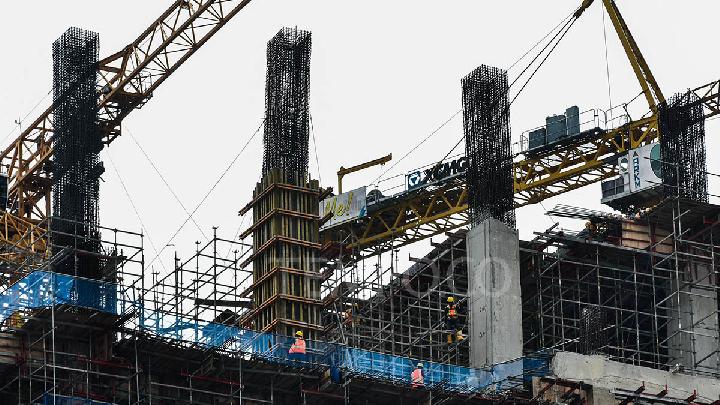
Rosan highlighted that the investment requirement has grown significantly, surging by 143% compared to the total investments realized between 2014 and 2024. While this increase signals the need for more capital, the government is shifting its focus from merely increasing the volume of investments to prioritizing their quality. This approach aims to ensure that funds are allocated to projects with high economic impact, such as infrastructure development, technological innovation, and industries that enhance productivity and competitiveness.
The minister’s emphasis on quality investments aligns with the government’s strategy to address structural challenges in the economy. By targeting high-impact projects, Indonesia can optimize its growth trajectory, reducing reliance on short-term stimulus while building a resilient foundation for future prosperity. This prioritization is particularly important as the country seeks to balance rapid economic expansion with environmental sustainability and social equity.
Historical Context and Future Outlook
The cumulative investment requirement of Rp13,032.8 trillion represents a substantial increase from the Rp9,117.4 trillion realized during the 2014-2024 period. This figure is approximately 43% higher, reflecting the growing complexity of Indonesia’s economy and the need for more substantial capital inflows to maintain momentum. The government’s strategy to raise the target is designed to meet the demands of a rapidly evolving market, where both domestic and foreign investors are increasingly looking for opportunities that align with global trends and local priorities.
Rosan noted that the current growth rate, while positive, still lags behind the 8% target. To bridge this gap, the government must not only attract more investment but also ensure that it is directed toward sectors with high potential for growth. For example, investments in renewable energy, digital infrastructure, and manufacturing are seen as key drivers for achieving the 8% benchmark. These areas are critical for reducing dependence on fossil fuels, improving technological capabilities, and creating jobs in high-value industries.
The 2025-2029 plan is also expected to leverage private sector participation, which has become a cornerstone of Indonesia’s economic strategy. Rosan acknowledged the importance of private investment in complementing public funds, particularly in sectors such as agriculture, tourism, and education. By fostering a business-friendly environment and streamlining regulatory processes, the government aims to encourage more private capital to flow into these areas, thereby enhancing overall economic performance.
Challenges and Opportunities
Despite the optimistic outlook, achieving the 8% growth target will not be without its challenges. The minister acknowledged the need for greater coordination between different government agencies to ensure that investment projects are implemented efficiently. Additionally, the country must address issues such as bureaucratic delays, which can deter both domestic and foreign investors. To counter this, the BKPM has proposed a series of reforms aimed at improving transparency and reducing administrative hurdles.
Another key challenge is ensuring that the investments are distributed equitably across regions. While major cities like Jakarta and Surabaya have historically received the lion’s share of capital, rural areas and less-developed regions require targeted support to foster balanced growth. Rosan emphasized the importance of regional development programs, which will help integrate underdeveloped areas into the national economy and create a more inclusive growth model.
Looking ahead, the government is optimistic about its ability to meet the 8% growth target, provided that the necessary investments are secured and managed effectively. The cumulative figure of Rp13,032.8 trillion is a clear indication of the scale of effort required, but it also presents an opportunity to transform Indonesia into a more dynamic and globally competitive economy. With the right policies and collaboration between public and private sectors, the country can achieve its growth aspirations and set the stage for long-term stability and prosperity.
The World Bank has recently forecasted slower economic growth for Indonesia, citing factors such as global market volatility and domestic challenges. However, the government remains confident that its investment strategy will mitigate these risks and position the economy for sustained growth. As the 2025-2029 plan progresses, continuous monitoring and adjustments will be essential to ensure that the target remains achievable and that the benefits of investment are maximized.
For real-time updates on Indonesia’s economic developments and investment strategies, readers can follow Tempo on Google News. The publication continues to provide insights into the nation’s progress toward its growth goals, highlighting key milestones and challenges along the way.