
Indonesia Confirms Death of Rescued Orangutan Amid Haze Crisis
An orangutan pulled from smoke-choked forests in West Kalimantan succumbed to respiratory failure within hours of being extracted from the haze, a tragedy
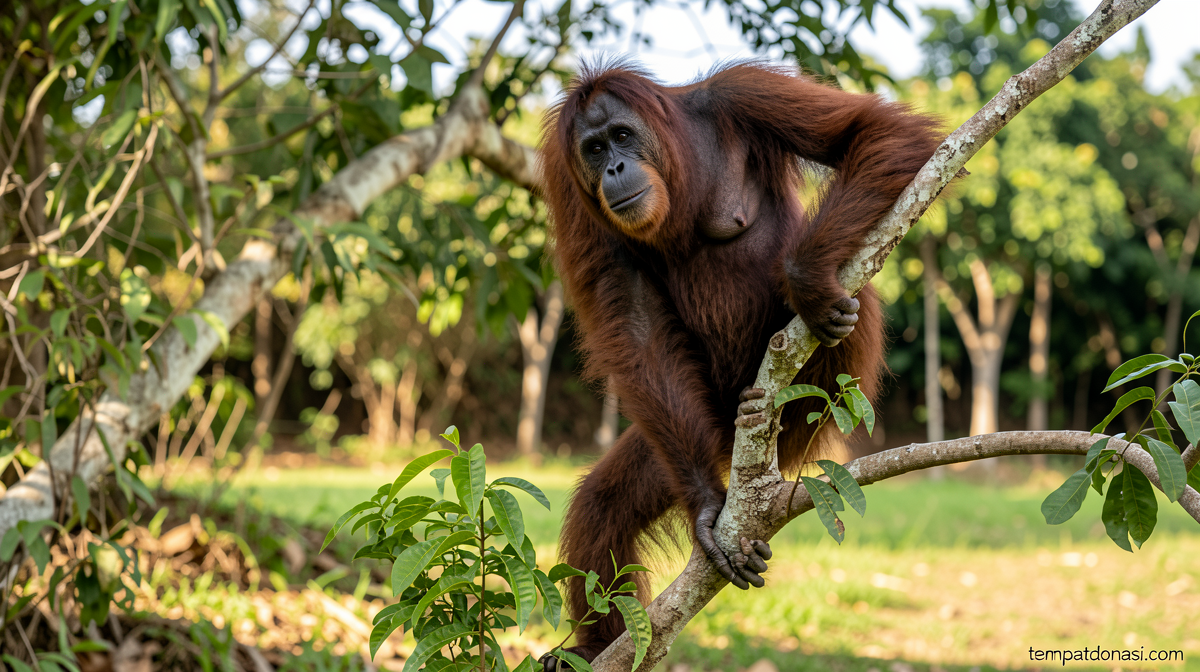
Orangutan Sempurna Dies Hours After Rescue from Kalimantan Smoke
Tempatdonasi.com – An orangutan pulled from smoke-choked forests in West Kalimantan succumbed to respiratory failure within hours of being extracted from the haze, a tragedy that underscores how swiftly wildfire smoke can overwhelm even the most aggressive veterinary intervention. The animal, named Sempurna and identified as a Borneo orangutan (Pongo pygmaeus), was found in critical condition in a remote hamlet in Ketapang Regency before being transported to a rehabilitation facility where she was pronounced dead by mid-afternoon.
The incident unfolded against the backdrop of recurring haze episodes that periodically blanket parts of Kalimantan, Indonesia’s largest island, when land-clearing fires and peatland combustion send thick plumes of particulate matter across the region. For the roughly 100,000 orangutans remaining in the wild on Borneo, such episodes represent an acute survival threat: their dense fur traps smoke particles close to the skin and airways, while their relatively slow metabolic rate means oxygen deprivation sets in faster than in many other primates. Conservation agencies have long warned that smoke events can kill animals within days, sometimes within hours, particularly when the affected individual is already weakened by habitat fragmentation or prior illness.
The Rescue Timeline
Residents of Sempurna Hamlet, located in Kuala Satong Village within North Matan Hilir District, spotted the weakened orangutan at approximately 7:00 a.m. Western Indonesian Time on August 30. Local officials at the West Kalimantan Natural Resources Conservation Agency (BKSDA) were alerted almost immediately and coordinated with the nonprofit Inisiasi Alam Rehabilitasi Indonesia Foundation (YIARI) to launch a rescue operation.
Field teams reached the animal and administered emergency first aid on site, including supplemental oxygen therapy and intravenous fluid replacement to counter dehydration and stabilize circulation. By roughly 11:30 a.m., Sempurna had been loaded into a transport vehicle and moved to the YIARI rehabilitation center for advanced medical care.
The hours that followed proved fatal. Around 2:00 p.m., veterinary staff observed a marked deterioration: breathing grew shallow and irregular, and pulse-oximetry readings dropped to undetectable levels. Signs consistent with respiratory arrest prompted the team to initiate cardiopulmonary resuscitation. Despite sustained resuscitative efforts, Sempurna was declared dead at 3:20 p.m. Jakarta time — barely six hours after the initial public sighting.
Necropsy Findings Point to Smoke-Induced Organ Damage
A post-mortem examination conducted on September 1, 2026, revealed pathological alterations across multiple organ systems, with the most pronounced changes localized in the lungs, heart, and kidneys. Interpreting the clinical history alongside the gross and histological findings, the veterinary team concluded that smoke inhalation was the most probable precipitating factor. Inhaled particulate matter and toxic gases from biomass burning can impair alveolar gas exchange, producing acute hypoxia — a dangerous shortfall of oxygen delivery to tissues. Sustained hypoxia, in turn, strains the cardiovascular system and can trigger cascading organ failure.
The convergence of respiratory compromise and cardiovascular collapse, the investigators noted, is consistent with a terminal event in which the lungs’ inability to oxygenate blood overwhelmed compensatory mechanisms faster than medical intervention could intervene.
Official Response and Calls for Faster Public Reporting
Murlan Dameria Pane, who heads the West Kalimantan BKSDA office, issued a formal statement from Jakarta on Thursday expressing condolences over Sempurna’s death and thanking the community members who flagged the animal’s presence before the rescue window closed.
“We deeply regret that Sempurna could not be saved. Upon receiving the report, we immediately moved to rescue the animal and provided medical treatment. Further examinations were also conducted to determine its health condition and any factors suspected to have contributed to its death.”
Pane stressed that the speed of public reporting remains the single most variable factor in wildlife emergency outcomes. In situations where an animal is found sick, injured, or exposed to wildfire smoke, every hour between discovery and professional intervention narrows the margin for successful treatment.
“We urge residents to swiftly report any wildlife in need of assistance to allow officers to take immediate action.”
Broader Implications for Haze-Season Conservation
Sempurna’s death is not an isolated incident. Each year, when the dry season ignites peat fires across Kalimantan and Sumatra, conservation teams scramble to locate and shelter orangutans, elephants, and other forest species caught in smoke corridors. Rehabilitation centers such as YIARI’s facility in Ketapang operate at capacity during haze peaks, and veterinary staff routinely work around-the-clock shifts. Yet the physiological damage that smoke inflicts on a large primate’s respiratory and cardiovascular systems can progress faster than transport logistics allow, particularly when the animal is found deep in forested terrain far from a road.
The case also highlights the compounding vulnerability of orangutans whose home ranges have already been reduced by decades of logging and plantation conversion. An animal confined to a shrinking patch of forest has fewer options for escaping a smoke plume than one with access to larger, more varied habitat. As climate variability lengthens dry seasons and intensifies fire seasons across tropical Southeast Asia, conservation planners face the prospect of more frequent, more severe haze events — and with them, more rescues that arrive too late.
For now, Sempurna’s brief window of intervention — from first aid in a remote hamlet to a final examination table — serves as a stark reminder of how little time separates a smoke-exposed great ape from irreversible organ failure, and how dependent the outcome is on the speed with which a community member picks up a phone and makes a call.
Related Reading
Frequently Asked Questions
What is Indonesia Confirms Death of Rescued Orangutan?
Indonesia Confirms Death of Rescued Orangutan is the main topic of this guide. The article explains the context, practical details, and next steps readers should understand.
Why does Indonesia Confirms Death of Rescued Orangutan matter?
Indonesia Confirms Death of Rescued Orangutan matters because readers are looking for a useful answer, not just a short summary. Good content should match search intent and help them decide what to do next.