
Indonesia Speeds Up Repairs at Earthquake-Damaged Airports in NTT
East Nusa Tenggara's scattered islands depend heavily on short-haul flights to move people, goods, and emergency services between communities separated by
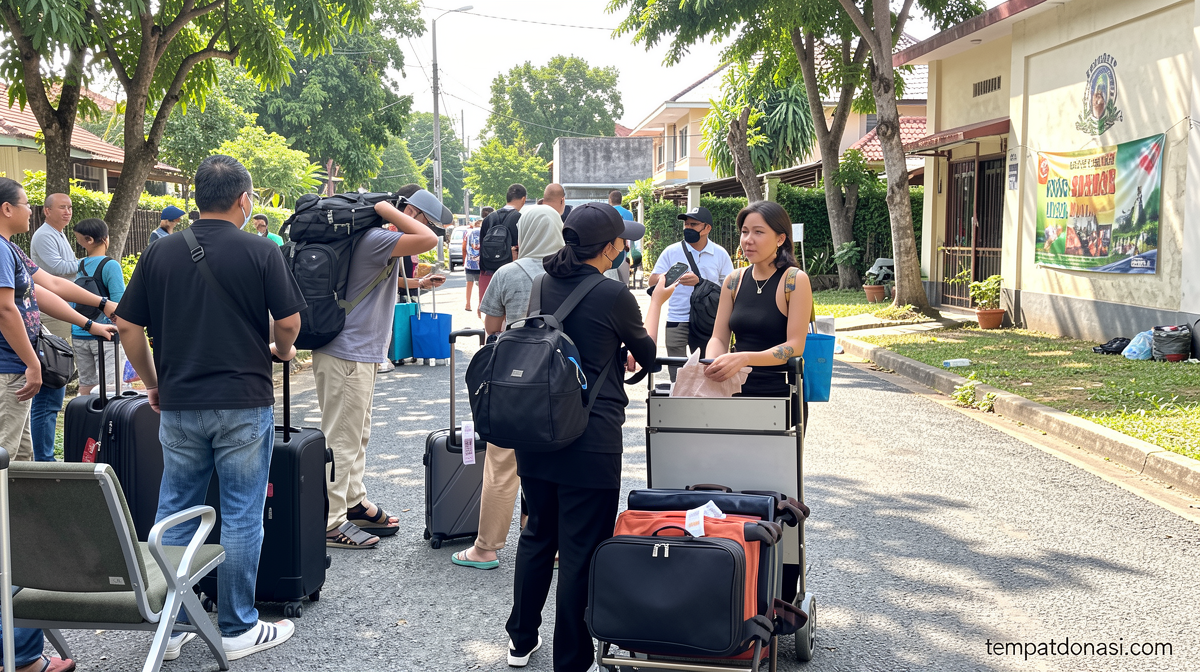
NTT Airports Enter Fast-Track Rehabilitation After Magnitude 7.7 Quake Shakes Province
Tempatdonasi.com – East Nusa Tenggara’s scattered islands depend heavily on short-haul flights to move people, goods, and emergency services between communities separated by open water. When a powerful earthquake struck the region on August 15, 2026, that lifeline was severed almost overnight. Now, more than two weeks later, Jakarta has moved to restore the province’s aviation infrastructure on an accelerated timeline, with officials confirming that repair crews are already on the ground at multiple damaged airfields.
The Ministry of Transportation announced on Tuesday, September 1, 2026, that the Directorate General of Civil Aviation has completed a round of field inspections across five regional facilities hit by the magnitude 7.7 tremor. The sites under assessment include Komodo International Airport, Fransiskus Xaverius Seda Airport, H. Hasan Aroeboesman Airport, Soa Airport, and Frans Sales Lega Airport. Each facility sustained varying degrees of structural harm, from cracked terminal walls to compromised runway drainage and damaged flight-operations buildings.
Why Air Connectivity Matters in NTT
Unlike Java or Sumatra, where dense road and rail networks link towns and cities, East Nusa Tenggara’s geography makes scheduled air service the backbone of inter-island mobility. Farmers in Ngada, traders in Manggarai, and students in Kupang all rely on small regional airports to reach markets, hospitals, and schools. A prolonged shutdown does not merely inconvenience travelers; it isolates communities, delays medical evacuations, and stalls the flow of construction materials needed for broader post-disaster rebuilding. Restoring these airports is therefore treated as both an aviation-safety imperative and a humanitarian priority.
Inspection Mandate and Repair Sequencing
The field teams dispatched after the quake were tasked with three objectives: cataloguing the extent of structural damage at each site, identifying which operational functions could resume immediately versus those requiring full reconstruction, and formulating a phased rehabilitation plan tailored to each airport’s condition. Rather than applying a uniform repair schedule, officials stated that work will be sequenced according to the severity of damage at individual locations, allowing the most critical functions to return to service sooner.
Soa Airport, located in Bajawa, the capital of Ngada District, has been singled out as the highest-priority restoration target. Its strategic position serving the central Flores corridor and its role in connecting remote highland communities to provincial services make its rapid reopening a focal point of the recovery effort.
“We are prioritizing the repair of building structures and supporting facilities, including passenger terminals and flight operations facilities,” said Lukman F. Laisa, Director General of Civil Aviation.
Laisa emphasized that the inspection findings will serve as the evidentiary basis for the ministry’s formal recovery strategy. He stressed that no repair decision will be made until the full scope of damage at each site has been documented and verified by engineering teams.
“We want to ensure that all needs on the ground are properly identified,” Lukman added.
Coordinated Relief and Staff Support
Beyond structural rehabilitation, the ministry is maintaining ongoing coordination with provincial authorities, airport operators, and local stakeholders to guarantee that aviation safety and security standards are upheld throughout the restoration process. This includes recalibrating navigation aids, re-inspecting runway surfaces before the first return-to-service flight, and retraining ground crews where staffing gaps have emerged.
During his inspection visits, Laisa also delivered material aid to airport personnel whose homes and livelihoods were disrupted by the earthquake. Many staff members at smaller regional fields live within walking distance of their workplaces; the quake’s shaking left several of them without shelter or basic supplies in the days immediately following the event.
Broader Recovery Context
The August 15 earthquake was the strongest recorded in the NTT region in recent years, triggering aftershocks that continued for days and prompting mass evacuations from coastal and fault-adjacent areas. As aftershock activity has since declined, evacuee numbers have fallen, and attention is shifting toward infrastructure restoration. Airport rehabilitation sits at the intersection of that transition: reopening airfields safely while still accounting for residual seismic risk to structures that have already been stressed.
The ministry indicated that its recovery strategy will be published once all inspection reports are consolidated, and that subsequent phases of repair will proceed in parallel across multiple sites where conditions allow. The stated goal is to return every affected airport to full operational capacity as quickly as engineering safety permits, restoring the air connectivity on which NTT’s economy, healthcare access, and daily life depend.
Related Reading
Frequently Asked Questions
What is Indonesia Speeds Up Repairs at Earthquake?
Indonesia Speeds Up Repairs at Earthquake is the main topic of this guide. The article explains the context, practical details, and next steps readers should understand.
Why does Indonesia Speeds Up Repairs at Earthquake matter?
Indonesia Speeds Up Repairs at Earthquake matters because readers are looking for a useful answer, not just a short summary. Good content should match search intent and help them decide what to do next.