
Indonesia Tightens Airport Surveillance After Smuggled Gold
Indonesia’s Customs and Excise Directorate General has increased scrutiny of baggage carried by international passengers after authorities uncovered two
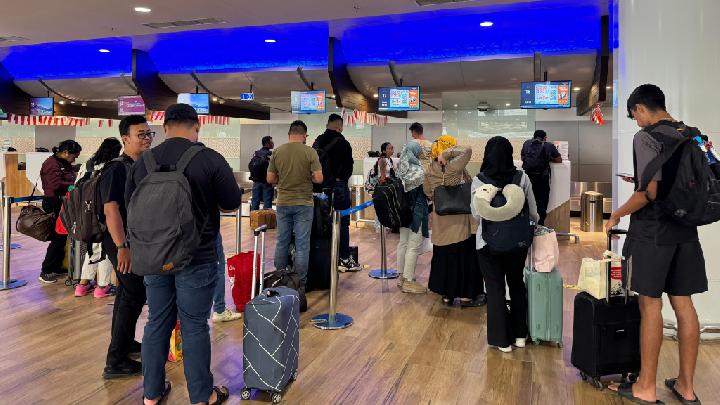
Indonesia Steps Up Airport Checks After Gold Smuggling Cases in Lombok
Tempatdonasi.com – Indonesia’s Customs and Excise Directorate General has increased scrutiny of baggage carried by international passengers after authorities uncovered two alleged gold-smuggling cases at Zainuddin Abdul Madjid Airport in Central Lombok, West Nusa Tenggara. The seized gold weighed a combined 5.29 kilograms and had an estimated total value of Rp13.1 billion.
The strengthened controls focus on international arrival and departure routes, where officers are expected to watch more closely for commodities being moved outside official trade procedures. Customs officials say the effort is intended to safeguard national interests while ensuring that cross-border commerce follows applicable rules.
“We hope to strengthen the synergy to protect the people and realize lawful cross-border trade,” Sunaryo said during a Tuesday press conference at Lombok Airport.
Sunaryo leads the Customs and Excise regional office covering Bali, West Nusa Tenggara, and East Nusa Tenggara. He said tighter supervision is needed to deter the illegal movement of goods through international gateways.
Why Gold Exports Are Under Closer Attention
Gold is a high-value commodity that can be transported in compact forms, including bars and jewelry. Customs officials view unreported exports as a risk not only to state revenue, but also to the domestic gold market and wider government programs linked to downstream industries.
Sunaryo said illicit gold shipments can affect supply and price stability. He stressed that export monitoring must be reinforced so the precious metal is traded in line with regulations and contributes to the national economy.
The cases disclosed by the Mataram Customs and Excise Office on October 3, 2026, illustrate the scale of the challenge. One case involved several large gold bars; the other concerned jewelry found during an international-departure inspection. Together, the incidents prompted authorities to place greater emphasis on passenger baggage checks.
Five Kilograms of Gold Bars Seized
The larger case involved four gold bars with a combined weight of 5,003.6 grams. Their estimated value was Rp12.4 billion, while potential state losses were placed at Rp1.2 billion.
Zaeni Rokhman, head of Mataram Customs and Excise, said officers became suspicious of a passenger identified by the initials CGS. The traveler was scheduled to fly from Lombok to Singapore on Scoot Air flight TR259, transit there, and then continue to Hong Kong on Singapore Airlines flight SQ-874.
Following the inspection, officers located the four bars, weighing roughly five kilograms in total. Authorities have named the passenger as a suspect in the case.
“The passenger has been designated as a suspect and is currently being detained at the Class 2A West Lombok Prison,” Zaeni Rokhman said.
The case underscores the importance of checks before passengers enter the departure process. Items such as gold bars can carry substantial value despite requiring limited physical space, making inspection procedures, behavioral observation, and baggage screening central to enforcement efforts.
Gold Bracelets Found in Backpack
In the second case, officers seized gold bracelets weighing 294.2 grams from a Chinese passenger identified by the initials ZY. The jewelry was estimated to be worth about Rp732 million, and potential state losses were estimated at Rp73 million.
The bracelets were found inside a backpack as the passenger passed through the international-departure checkpoint at Lombok Airport. Although considerably smaller than the bar shipment, the case still involved a significant amount of high-value gold moving through an international aviation route.
The two seizures brought the total gold weight involved to 5,297.8 grams. Their combined estimated value reached approximately Rp13.132 billion, reflecting the sizeable financial stakes associated with attempts to take precious metals abroad outside permitted procedures.
Focus on Lawful Cross-Border Trade
Customs officials are framing the tighter airport surveillance as part of a broader effort to maintain orderly international trade. For passengers, the message is that valuable commodities require careful compliance with export rules and customs obligations before travel.
International airports serve as important points of connection for tourism, business travel, and trade. They are also locations where enforcement agencies must balance smooth passenger movement with inspections designed to detect prohibited or improperly declared goods.
At Lombok Airport, the recent cases have placed attention on the role of frontline officers in identifying irregular travel behavior and conducting targeted examinations. The additional oversight is intended to prevent further smuggling attempts while supporting legitimate cross-border activity.
Authorities have not presented the two cases merely as isolated baggage discoveries. They have linked them to the wider need to protect the availability of gold, preserve market stability, prevent possible losses to the state, and ensure that exports of valuable national commodities are handled through lawful channels.
Related Reading
Frequently Asked Questions
What is Indonesia Tightens Airport Surveillance After Smuggled?
Indonesia Tightens Airport Surveillance After Smuggled is the main topic of this guide. The article explains the context, practical details, and next steps readers should understand.
Why does Indonesia Tightens Airport Surveillance After Smuggled matter?
Indonesia Tightens Airport Surveillance After Smuggled matters because readers are looking for a useful answer, not just a short summary. Good content should match search intent and help them decide what to do next.