Indonesian UGM Team Selected for UN Microgravity Research Program
A research team from Universitas Gadjah Mada will bring an Indonesian-led experiment into a simulated microgravity environment in Germany after being selected
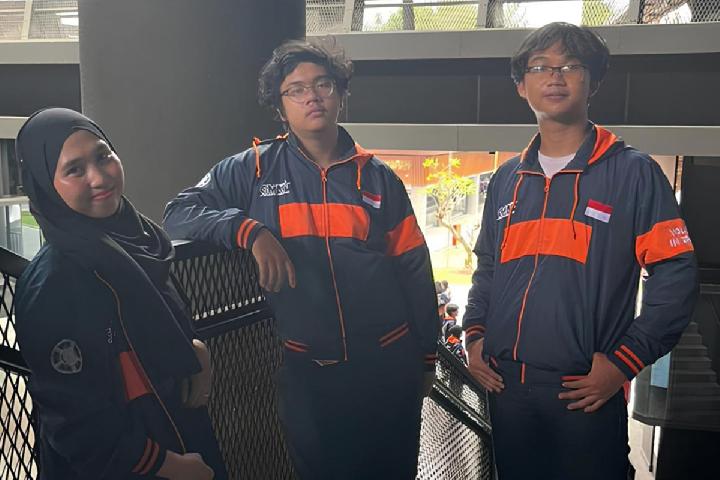
UGM Students Chosen for UN-Supported Microgravity Experiment in Germany
Tempatdonasi.com – A research team from Universitas Gadjah Mada will bring an Indonesian-led experiment into a simulated microgravity environment in Germany after being selected for the 10th Fellowship Programme for Drop Tower Experiment Series, known as DropTES.
The project will examine the movement and redistribution of partially wet silica sand when it is subjected to controlled shaking in microgravity. By studying how damp, soil-like grains behave when gravity is drastically reduced, the team hopes to produce insights relevant to future work on the Moon, Mars, and other destinations beyond Earth.
The fellowship gives the UGM participants access to major research facilities in Bremen: the Bremen Drop Tower and GraviTower Bremen Pro. These installations allow experiments to experience brief, ground-based microgravity conditions, enabling researchers to test concepts that would otherwise require access to spaceflight opportunities.
Studying Materials That Matter for Exploration
Granular materials may seem simple, but their behavior can become difficult to predict when gravity changes. On Earth, moisture, friction, weight, and vibration all influence how sand and soil settle, clump, shift, or flow. In low-gravity settings, these same materials can respond differently, creating important engineering questions for exploration missions.
The UGM experiment focuses specifically on wet granular matter. Its results could help inform the design of robotic digging equipment, mechanisms for handling collected samples, and systems intended to move materials in extraterrestrial environments. Such capabilities would be relevant when future missions need to work with lunar regolith or soil on Mars.
Understanding material movement is particularly important for robotic operations. A machine intended to scoop, sort, transfer, or process soil must work reliably even where Earth-based assumptions about weight and settling no longer apply. Research conducted through microgravity experiments can help scientists and engineers identify those differences before systems are deployed in distant environments.
An International Programme for Wider Research Access
DropTES is organized jointly by the United Nations Office for Outer Space Affairs, or UNOOSA, and the Center of Applied Space Technology and Microgravity at the University of Bremen, better known as ZARM. The programme also receives support from the German Aerospace Center, DLR.
Its purpose is to make sophisticated microgravity research opportunities more accessible to students and researchers from countries developing their space-science capabilities. Participants are able to design, construct, and test an experiment at the Bremen Drop Tower, an environment typically used by professional scientists and engineers.
UNOOSA Director Aarti Holla-Maini said the fellowship is intended to address unequal access to advanced scientific facilities.
“Scientific talent is everywhere, but access to opportunities is not. Programmes like DropTES help close that gap, giving teams from countries with emerging space capabilities the chance to turn their ideas into real experiments,” Holla-Maini said.
She welcomed the Indonesian team’s selection and expressed appreciation for the continuing cooperation of ZARM and DLR in broadening access to space-related research.
Marc Avila, director of ZARM, also congratulated the UGM team. He highlighted the value of examining damp granular materials whose characteristics resemble soil that may be encountered during lunar and Martian exploration.
“Their project addresses an important challenge for future space exploration by investigating how moist granular materials similar to lunar and Martian soil behave under microgravity conditions,” Avila said.
Experience Beyond the Classroom
For the UGM students, the award represents more than a chance to conduct a single experiment. It offers practical exposure to the full research process, from developing an experimental concept to preparing equipment and assessing results obtained under microgravity conditions.
UGM Director of Student Affairs Hempri Suyatna said participation in the programme would provide Indonesian students with direct experience in microgravity research and the broader field of space exploration. The university expects the opportunity to encourage students to pursue original research ideas and support the growth of Indonesia’s scientific and technological capacity in space-related fields.
Hands-on programmes can be especially significant in areas where access to specialized infrastructure is limited. A drop tower experiment requires researchers to consider experimental timing, instrument reliability, safety, data collection, and the unusual conditions created by reduced gravity. These lessons can carry into later work in engineering, physics, materials science, robotics, and planetary exploration.
A Decade of DropTES Research
DropTES began in 2014 and has previously supported nine experiments involving teams from Bolivia, Colombia, Costa Rica, Italy, Jordan, Poland, Romania, and Venezuela. The programme’s most recent recipient before the UGM selection was a team from Universidad Central de Venezuela, which investigated how microgravity affects the welding of aluminum alloys.
The Indonesian team’s project continues that record of using accessible microgravity facilities to address practical scientific questions. While the experiment will take place on Earth, its subject reaches far beyond it: how humans and machines may safely manipulate the materials found on other worlds.
The fellowship is part of UNOOSA’s Access to Space for All initiative, which seeks to expand the availability of space research infrastructure and strengthen scientific and technical skills in countries with emerging space programmes. For UGM, the Bremen experiment offers a chance to place Indonesian student research within that international effort while contributing data that may prove useful for the next generation of exploration technology.
Related Reading
Frequently Asked Questions
What is Indonesian UGM Team Selected for UN Microgravity?
Indonesian UGM Team Selected for UN Microgravity is the main topic of this guide. The article explains the context, practical details, and next steps readers should understand.
Why does Indonesian UGM Team Selected for UN Microgravity matter?
Indonesian UGM Team Selected for UN Microgravity matters because readers are looking for a useful answer, not just a short summary. Good content should match search intent and help them decide what to do next.